Sign up with Google
 Sign in with Zoho

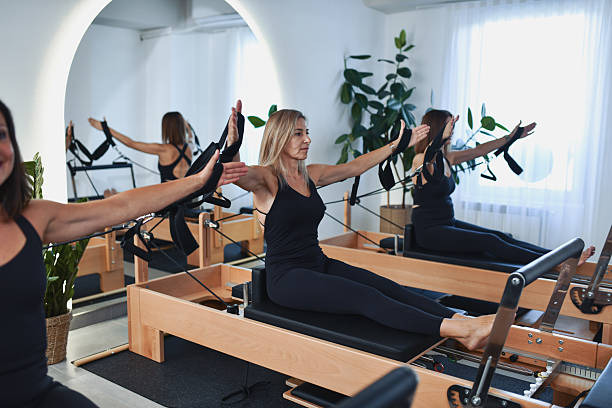
Pilates is often praised for its controlled movements, focus on technique and ability to build strength without relying on heavy weights. But if you have been doing the same Pilates routine for months, you may eventually reach a point where the exercises no longer feel challenging.
That does not necessarily mean you need to jump into the hardest reformer class you can find. It may simply mean your program needs to change.
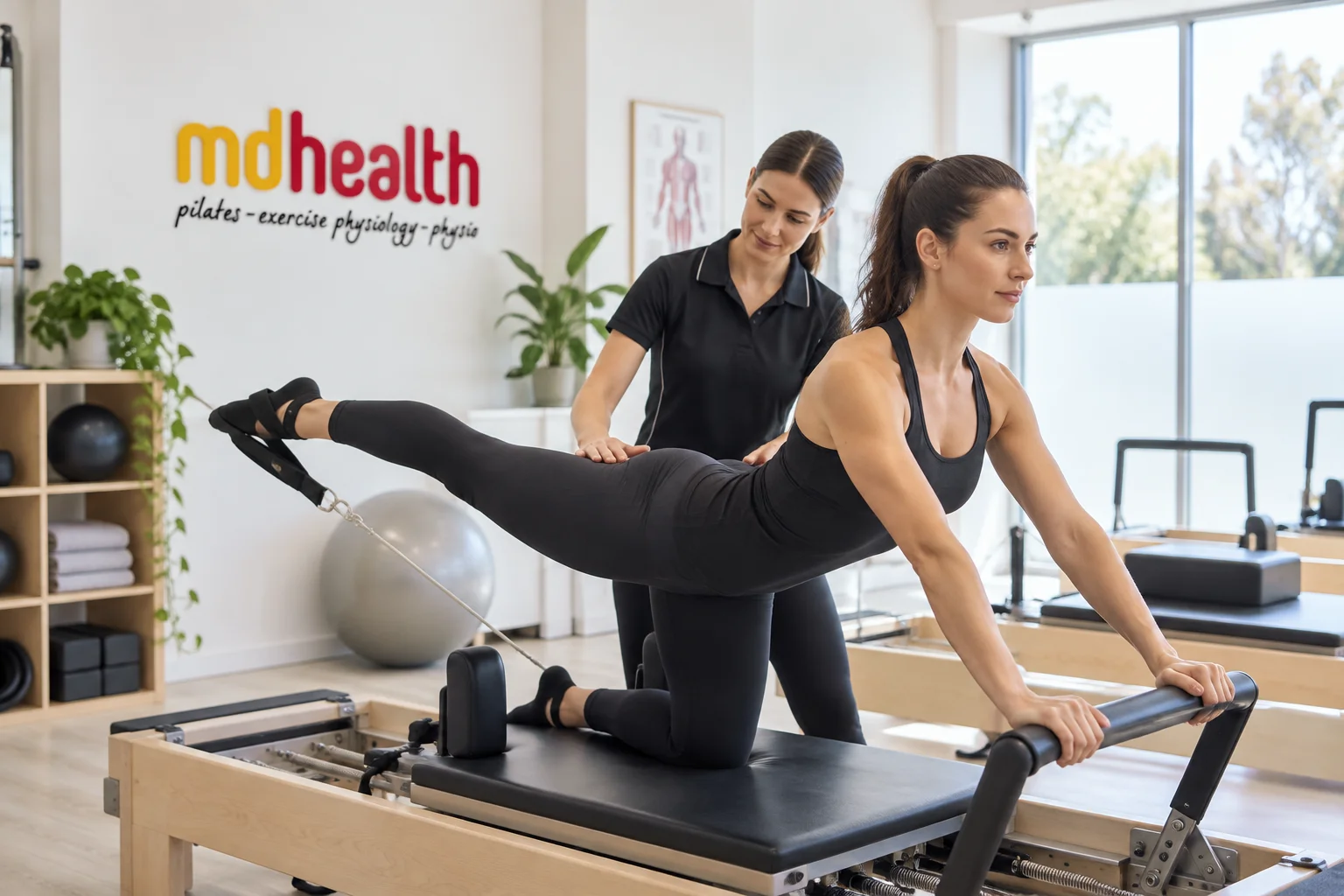
Progression is an important part of Clinical Pilates. As your strength, movement control and confidence improve, your exercises can be adjusted to give your body a new challenge. At MD Health, Clinical Exercise and Pilates programs are built around an individual's assessment, goals and progress rather than following one fixed routine.
So, how do you know when it is time to progress your Pilates exercises?
What Does Progression Mean in Pilates?
Progression does not always mean doing a more complicated exercise.
It could mean:
- Adding resistance
- Increasing repetitions
- Holding a position for longer
- Moving through a greater range
- Improving control
- Reducing assistance
- Introducing a new movement
- Combining Pilates with strength exercises
For example, a beginner may perform a supported leg exercise with a light resistance. After several weeks, they may be ready for more resistance, a larger range of movement or a more demanding variation.
The right progression depends on the person.
This is particularly important with Clinical Pilates, where exercises can be adjusted according to your movement ability, symptoms, previous injuries and goals. MD Health uses a combination of reformer, body-weight and strength and conditioning exercises where appropriate.
7 Signs Your Pilates Routine May Be Too Easy
1. You Finish Every Session Feeling Like You Could Do Much More
It is normal for some Pilates sessions to feel easier than others. However, if you consistently finish your workout without feeling that your muscles have had to work, it may be time to review your program.
Your exercises should match your current ability.
If an exercise that once required concentration now feels almost automatic, your body may have adapted to the workload.
That does not mean every session needs to leave you exhausted. Pilates is about controlled movement, not simply chasing fatigue.
The question is whether the exercise is still giving you enough of a challenge to support your current goal.
2. Your Exercises Have Not Changed for Months
Doing familiar exercises can be useful. Repetition helps you learn technique and become comfortable with movement.
But there is a difference between practising a movement and staying permanently at the same level.
Imagine walking the same distance at the same pace every week. Initially, it may improve your fitness. After a while, your body becomes accustomed to it.
The same principle can apply to Pilates.
If your routine has remained almost identical for a long period and you are no longer seeing meaningful changes in strength, control or function, a review may be worthwhile.
3. You Can Perform Every Exercise Without Much Effort
Good technique should always come first.
Once you can perform an exercise with steady control, good breathing and consistent positioning, your practitioner may decide that you are ready for a greater challenge.
That could involve increasing resistance on the reformer, changing the exercise position or introducing another movement.
For example, a basic bridge may eventually progress into a single-leg variation if that suits your ability and goals.
The aim is not to make an exercise difficult for the sake of it. The aim is to give your body an appropriate challenge.
4. Your Strength Has Improved
This is one of the clearest reasons to review your Pilates routine.
Perhaps you started because you felt weak through your hips, struggled with balance or found certain everyday movements difficult.
Now you may notice that:
- Stairs feel easier
- You can walk for longer
- Getting out of a chair takes less effort
- Your balance has improved
- You can control movements more easily
- Your usual Pilates exercises feel much lighter
These are positive changes.
They can also be a sign that your program needs to move forward.
At MD Health, personalised strength and fitness training is described as an extension of its Clinical Pilates program, allowing exercise to progress as a person's capacity develops.
5. Your Main Goal Has Changed
Your Pilates program should have a reason behind it.
Perhaps your original goal was to manage discomfort and become comfortable with basic movement. Now you might want to return to running, play golf, go hiking or build more general strength.
Your exercise needs may change with that goal.
For example, someone preparing to return to running may eventually need more than Pilates-based control work. Their program may also need progressive leg strength, balance, conditioning and movements that prepare them for the demands of running.
This is why progression should be linked to function rather than simply making exercises harder.
6. You Are Looking for More Strength
Pilates can be useful for building strength, particularly when exercises are appropriately selected and progressed.
However, there can come a point where adding more resistance through traditional strength exercises makes more sense.
MD Health discusses this distinction in its Pilates and strength training content, noting that Pilates can build foundational strength but may reach a point where additional loading is needed for further strength gains.
That does not mean you need to stop Pilates.
In many cases, Pilates and strength training can sit alongside each other.
You might use Pilates to work on control and movement quality, then include squats, rows, presses or other resistance exercises to build greater overall strength.
7. Your Everyday Activities Are Getting Easier
This one is easy to overlook.
Progress is not always about what happens inside the Pilates studio.
Maybe you used to avoid carrying shopping bags because your back felt uncomfortable. Perhaps getting down onto the floor was difficult. Maybe walking up several flights of stairs left you tired.
If these activities are becoming easier, your program may already be doing its job.
The next question is: What do you want to be able to do next?
Your next stage of Pilates or exercise should help you move towards that goal.
MD Health's recent content also places emphasis on practical changes in everyday movement, such as getting out of a chair, carrying groceries, climbing stairs and reaching overhead.
How Can Pilates Exercises Be Progressed?
There are several ways to make a Pilates exercise more challenging without simply choosing a completely different movement.
Increase Resistance
On a reformer, spring resistance can be adjusted depending on the exercise and the person.
A small change in resistance can make a familiar exercise feel quite different.
Increase Control
Sometimes the next step is not more resistance.
Slowing an exercise down, improving alignment or controlling the return phase can create a different challenge.
Increase Range of Movement
If you have developed enough control and mobility, your practitioner may gradually increase the range used during an exercise.
This should be appropriate for your body and goals.
Change the Position
Moving from a supported position to a less supported position can require more balance and control.
For example, an exercise that is easy lying down may feel very different when performed standing.
Add Strength Training
For people whose goals require greater strength, adding resistance exercises may be the logical next step.
This could include movements such as squats, lunges, rows or loaded carries, depending on the individual's needs.
Progression Should Not Mean Pushing Through Pain
This is an important point.
A harder exercise is not automatically a better exercise.
If you have pain, a previous injury or are returning to exercise after surgery, progressing too quickly may not be appropriate.
Pay attention to how your body responds during and after exercise.
A useful question is not simply:
"Could I do a harder exercise?"
Instead, ask:
"Would a harder exercise help me move closer to my goal right now?"
MD Health's Clinical Pilates approach places emphasis on assessment, individual programming and adjusting exercise according to a person's presentation and goals.
What If Your Pilates Routine Is Too Hard?
The opposite problem can happen too.
If your exercises are consistently leaving you sore, affecting your normal activities or causing symptoms to flare, the program may need to be adjusted in the other direction.
Good progression is not a straight line.
Some weeks you may be ready for more. At other times, reducing the workload may be sensible.
For people recovering from injury or surgery, the next-day response can also provide useful information about whether a particular workload was suitable.
The goal is to find the right level of challenge for where you are now.
Why Regular Pilates Program Reviews Matter
Your body does not stay exactly the same.
Your strength changes. Your mobility changes. Your goals change. Your daily activities change.
That is why a Pilates program should not simply be written once and followed forever.
A regular review gives you and your practitioner an opportunity to look at what has improved, what still needs attention and what should happen next.
MD Health's approach begins with a Full Body Assessment and develops an individualised treatment and exercise plan. The program can then be reviewed and adjusted according to progress.
A Simple Way to Check Your Progress
Every few weeks, ask yourself:
What feels easier now? Think about everyday activities as well as your Pilates exercises.
What feels stronger? Consider your balance, legs, core, arms and general physical capacity.
What still feels difficult? These areas may need more attention.
What is my next goal? Your next goal can help shape the next stage of your program.
This gives you a much better picture of progress than simply counting how many Pilates sessions you have completed.
The Bottom Line
If your Pilates routine feels too easy, it may be time to review your program rather than simply doing more repetitions.
Improvement can come from greater resistance, better control, more challenging positions, increased range of movement or adding strength training. The right choice depends on your body and what you are trying to achieve.
Clinical Pilates should not be about making every session harder. It should be about giving you the right challenge at the right stage.
At MD Health, Clinical Exercise and Pilates programs are based on individual assessment, personal goals and ongoing progression.
If you have been doing the same exercises for months and feel ready for a new challenge, a professional review may be a good place to start.
Frequently Asked Questions
1. How do I know if my Pilates routine is too easy?
If your exercises consistently feel effortless and you are no longer seeing improvements in strength, control or everyday movement, your program may need a review. Progress does not always mean making every exercise harder.
2. How often should Pilates exercises be progressed?
There is no fixed timeframe that suits everyone. Progression should depend on your strength, technique, symptoms, goals and how your body responds to your current workload.
3. Can I make Pilates harder without changing exercises?
Yes. You can sometimes increase resistance, change your position, increase range, slow the movement or reduce support. A qualified practitioner can decide which option suits you.
4. Is Clinical Pilates enough for building strength?
Clinical Pilates can help develop strength and movement control, but some people may benefit from additional resistance training as their goals and physical capacity develop. Pilates and strength training can work well together.
5. Should I continue Pilates if I have pain?
That depends on the type and severity of the pain. If you have persistent pain or an injury, it is sensible to have your exercise program reviewed by an appropriately qualified health professional.