Sign up with Google
 Sign in with Zoho

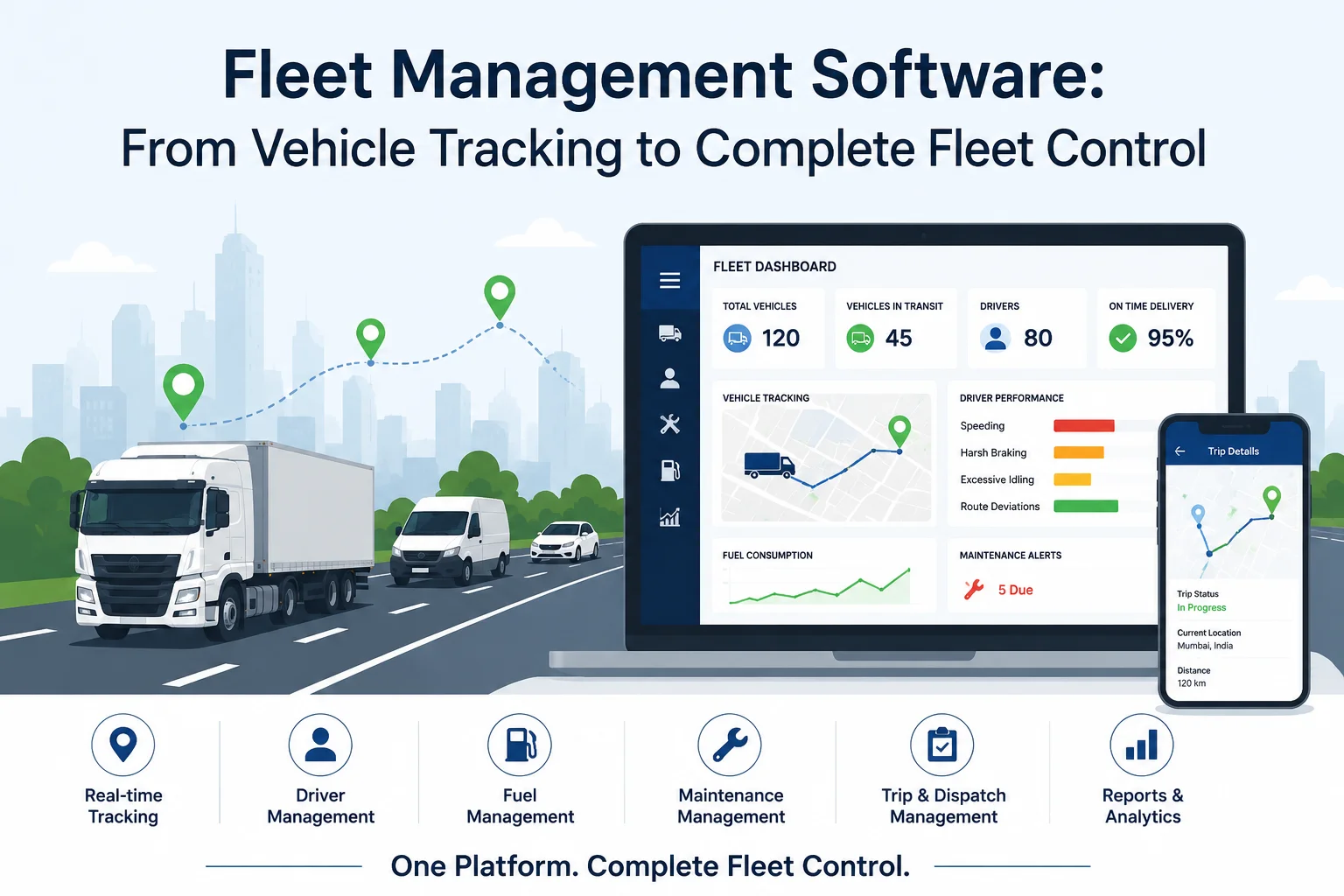
Managing a fleet is no longer limited to knowing the location of vehicles. As transportation businesses grow, fleet managers need to coordinate vehicles, drivers, trips, maintenance, fuel, routes, and deliveries while keeping operating costs under control.
Traditional methods such as spreadsheets, paper records, phone calls, and manual updates can make fleet operations difficult to manage. Important information may be scattered across different systems, making it harder to respond quickly to delays, breakdowns, or unexpected expenses.
This is where Fleet Management Software becomes valuable. It brings vehicle tracking, driver management, maintenance, fuel monitoring, trip planning, and reporting together on a centralized platform.
What Is Fleet Management Software?
Fleet Management Software is a digital platform that helps businesses manage and monitor their vehicles, drivers, trips, maintenance, and fleet performance from one place.
Instead of handling every activity separately, fleet managers can use one system to monitor daily operations and make decisions based on real-time information.
Depending on the solution, fleet management software can include:
- Vehicle tracking
- Driver management
- Trip and dispatch management
- Route optimization
- Vehicle maintenance
- Fuel management
- Digital Proof of Delivery
- Compliance management
- Reports and analytics
- Mobile access
The main objective is to provide better visibility and control over the entire fleet.
Why Vehicle Tracking Alone Is Not Enough
GPS tracking is one of the most useful fleet management technologies, but modern fleet operations require more than knowing a vehicle's location.
A fleet manager may also need to know:
- Is the vehicle available for the next trip?
- Is the driver following the planned route?
- When is the vehicle due for maintenance?
- How much fuel is being consumed?
- Is the driver spending too much time idling?
- How efficiently is the vehicle being utilized?
- Has the delivery been completed?
- How much did the trip cost?
Fleet Management Software connects these different pieces of information to provide a broader view of fleet performance.
From Vehicle Tracking to Complete Fleet Control
Real-Time GPS Vehicle Tracking
Real-time GPS tracking gives managers visibility into vehicle locations and trip progress.
Managers can monitor routes, identify unexpected stops, check route deviations, and respond to delays more quickly. This improves operational visibility and helps businesses provide customers with more accurate delivery updates.
Driver Management
Drivers have a direct impact on safety, fuel consumption, delivery performance, and overall fleet productivity.
Fleet management systems can help businesses manage driver assignments, trip schedules, performance, and driving behavior from a centralized platform.
Managers can monitor indicators such as speeding, harsh braking, excessive idling, and route deviations. With E-commerce Delivery Management Software, these insights help encourage safer driving and improve delivery efficiency.
Trip and Dispatch Management
Managing multiple trips manually can become difficult as fleet operations grow.
Fleet Management Software helps teams create trips, assign vehicles and drivers, manage dispatch, and monitor trip progress. This reduces manual coordination and helps operations teams respond faster to daily transportation requirements.
Route Optimization
Choosing the right route can affect fuel consumption, travel time, and delivery performance.
Route optimization tools help managers plan efficient routes based on pickup and delivery locations, vehicle availability, and trip requirements.
Better routes can reduce unnecessary mileage and help vehicles complete trips more efficiently.
Vehicle Maintenance Management
Unexpected breakdowns can disrupt transportation schedules and increase repair costs.
Fleet management software helps managers schedule preventive maintenance, maintain service records, and receive reminders for upcoming vehicle servicing.
This allows businesses to move from reactive repairs toward more proactive vehicle maintenance.
Fuel Management
Fuel is one of the major operating expenses for transportation businesses.
Fuel management features help managers monitor fuel consumption, identify unusual usage patterns, and compare fuel performance across vehicles.
When combined with route and driver data, this information can help identify areas of fuel wastage and improve cost control.
Digital Proof of Delivery
For logistics and delivery businesses, confirming successful delivery is an important part of fleet operations.
Digital Proof of Delivery allows drivers to capture signatures, photographs, OTP verification, or other delivery confirmation details directly through a mobile device.
This reduces paperwork and creates a digital record of completed deliveries.
How Fleet Management Software Improves Fleet Efficiency
Better Vehicle Utilization
A clear view of vehicle availability, location, and trip schedules helps managers assign vehicles more effectively.
Better utilization reduces unnecessary idle time and helps businesses get more value from their existing fleet.
Reduced Operating Costs
Fleet management software can help control costs through better route planning, fuel monitoring, preventive maintenance, and improved vehicle utilization.
Instead of relying on assumptions, managers can use actual operational data to identify areas where expenses can be reduced.
Less Vehicle Downtime
Preventive maintenance schedules and service alerts help businesses identify maintenance requirements before they become major problems.
Fewer unexpected breakdowns mean more vehicles remain available for daily trips.
Improved Driver Productivity
Centralized driver information and performance monitoring make it easier to identify operational issues and provide targeted training. Full Truckload Management Software helps transport businesses improve driver coordination, monitor trip performance, and manage FTL operations more efficiently.
Faster Decision-Making
Real-time information allows managers to respond quickly when a vehicle is delayed, a driver becomes unavailable, or a route changes.
Instead of waiting for manual updates, teams can access important information from a centralized dashboard.
Better Customer Service
Customers increasingly expect visibility into their shipments and deliveries.
Real-time tracking and digital delivery updates help businesses provide more accurate information and communicate proactively when delays occur.
Important Features to Look For
Real-Time GPS Tracking
Choose software that provides reliable live vehicle tracking, trip status, route visibility, and location information.
Automated Dispatch Management
The system should make it easier to assign vehicles and drivers based on availability, location, capacity, and trip requirements.
Preventive Maintenance
Look for maintenance schedules, service reminders, repair history, and vehicle maintenance records.
Driver Performance Monitoring
The platform should provide useful insights into driving behavior, trip performance, and driver productivity.
Fuel Monitoring
Fuel tracking and consumption reports can help businesses identify unusual usage and control transportation expenses.
Reports and Analytics
A good system should turn operational data into useful insights about fleet performance, costs, utilization, and productivity.
Mobile Access
Mobile applications allow drivers and field teams to receive trip information, update delivery status, and complete operational activities from anywhere.
Integration Capabilities
Fleet management software should be able to integrate with other systems used by the business, such as ERP, accounting, GPS, GST, FASTag, and transportation management platforms.
How Data Helps Managers Take Better Fleet Decisions
One of the biggest advantages of digital fleet management is the availability of centralized operational data.
Instead of looking at individual spreadsheets or manually collecting information, managers can analyze data across the fleet.
For example, reports can help answer:
- Which vehicles are being utilized most efficiently?
- Which vehicles have high maintenance costs?
- Which drivers require additional training?
- Which routes are creating unnecessary mileage?
- Where is fuel consumption higher than expected?
- Which trips are taking longer than planned?
These insights help managers identify operational problems and make decisions based on actual fleet performance.
Fleet Management Software for Growing Transport Businesses
A small fleet may be manageable through spreadsheets and manual processes. However, as the business adds more vehicles, drivers, customers, and locations, manual management becomes increasingly difficult.
A scalable fleet management system can help businesses manage growing operations without increasing administrative work at the same rate.
It provides a structured way to manage:
- Multiple vehicles
- Multiple drivers
- Multiple branches
- Daily trips
- Customer deliveries
- Maintenance activities
- Fuel expenses
- Operational reports
This makes fleet management more organized as the business expands.
How to Choose the Right Fleet Management Software
Understand Your Fleet Requirements
Start by identifying your fleet size, number of drivers, operating locations, daily trips, and current management challenges.
Choose features based on your actual business requirements rather than selecting software simply because it has a long feature list.
Check Ease of Use
The system should be easy for managers, dispatchers, drivers, and other users to understand.
A complicated interface can slow down adoption and reduce the value of the software.
Evaluate Scalability
Choose software that can support additional vehicles, users, locations, and transportation volumes as your business grows.
Check Integration Options
If your business already uses accounting, ERP, GPS, GST, or other logistics systems, check whether the fleet platform can integrate with them.
Consider Implementation and Support
Good onboarding, training, and ongoing technical support can make it easier for your team to adopt the system successfully.
Why Choose LogiBrisk for Fleet Management?
LogiBrisk provides transportation and fleet management solutions designed to help businesses manage their operations from a centralized platform.
The platform supports key fleet and transportation activities, including:
- Fleet Management
- Real-Time GPS Tracking
- Driver Management
- Route Optimization
- Vehicle Maintenance
- Fuel Management
- Trip & Dispatch Management
- Digital Proof of Delivery
- GST & E-Way Bill Management
- Billing & Accounting
- Reports & Analytics
By connecting these activities, LogiBrisk helps transport and logistics businesses improve visibility, reduce manual work, control operating costs, and manage their fleets more efficiently.
Conclusion
Modern fleet management is about much more than tracking vehicle locations. Businesses need visibility across vehicles, drivers, trips, routes, maintenance, fuel, deliveries, and operating costs.
Billing and account management connect these activities and gives managers the tools they need to move from basic vehicle tracking to complete fleet control.
With real-time visibility, automated workflows, preventive maintenance, fuel monitoring, driver insights, and operational reporting, businesses can improve fleet efficiency while reducing unnecessary costs and delays.
For growing transportation and logistics companies, adopting the right fleet management solution can create a more connected, efficient, and scalable operation.
Frequently Asked Questions
What is Fleet Management Software?
Fleet Management Software is a digital platform that helps businesses manage vehicles, drivers, trips, maintenance, fuel, tracking, deliveries, and fleet performance from one centralized system.
How does Fleet Management Software improve fleet control?
It provides real-time visibility into vehicles, drivers, trips, maintenance, fuel usage, and operational performance, allowing managers to make faster and more informed decisions.
Is GPS tracking included in Fleet Management Software?
Most modern fleet management solutions include GPS tracking or integrate with it to provide real-time vehicle location and trip visibility.
Can Fleet Management Software reduce fuel costs?
Yes. Fuel monitoring, route optimization, driver behavior analysis, and reduced idling can help businesses identify fuel waste and improve fuel efficiency.
Is Fleet Management Software useful for small transport businesses?
Yes. Scalable fleet management solutions can help small businesses organize their operations and continue supporting them as the fleet grows.


.webp)