Sign up with Google
 Sign in with Zoho
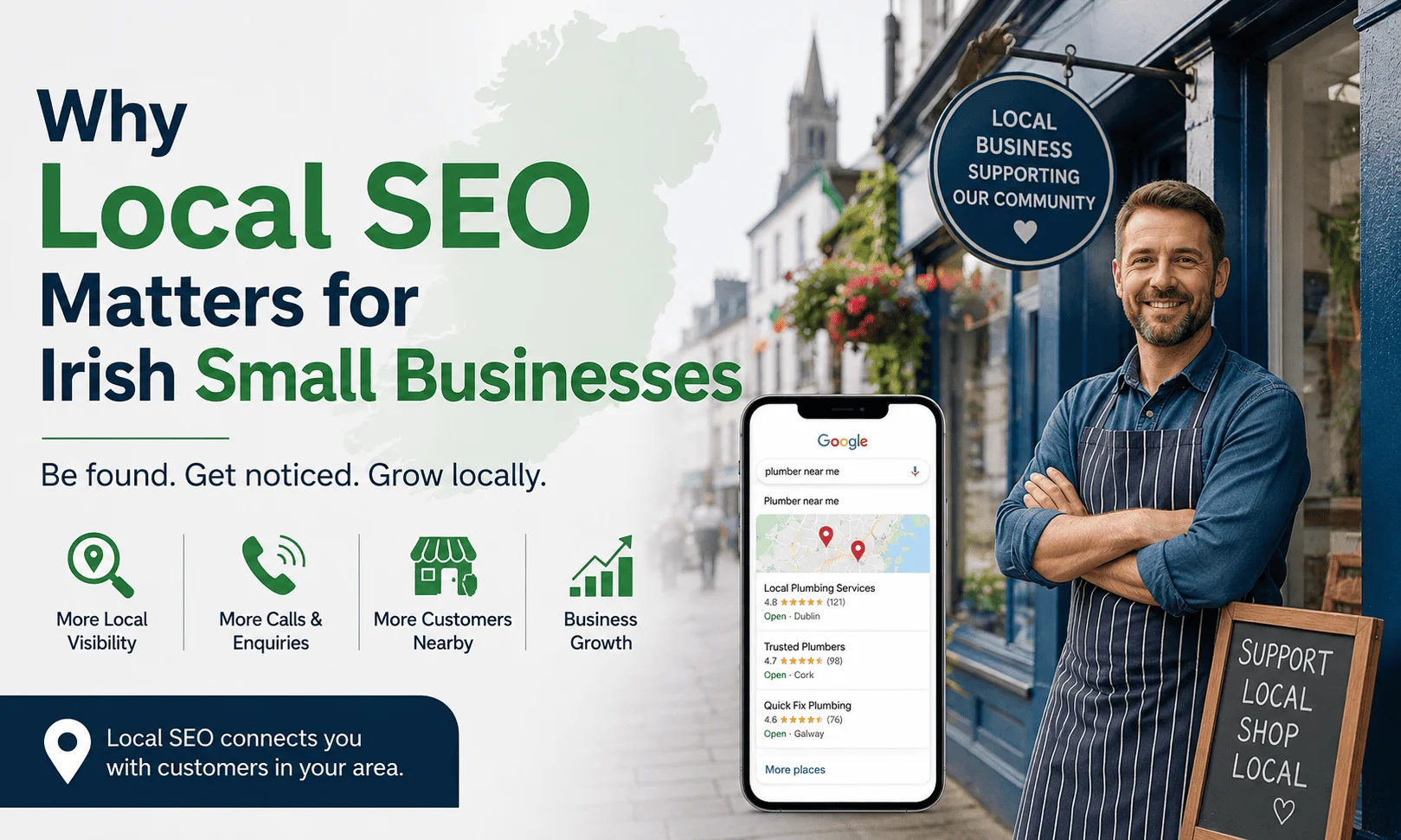
When someone searches for “plumber near me”, “Italian restaurant in Cork” or “family solicitor Galway”, they are usually looking for a business they can contact, visit or book soon. These searches are different from broad informational queries because they carry a clear local intention. The searcher is not simply learning about a product. They are considering a real-world action.
For small businesses in Ireland, this creates an important opportunity. A café in Kilkenny, an electrician serving Limerick, a physiotherapist in Sligo or a guesthouse in Killarney does not need to reach every person online. It needs to be visible to the right people in the locations it serves. Local SEO helps make that possible by improving a business’s presence in location-based search results, Google Maps and other online directories.
A strong local search presence cannot guarantee a particular ranking. However, it can make it easier for potential customers to discover a business, understand what it offers and take the next step. That next step might be a phone call, website visit, directions request, enquiry or booking.
What Is Local SEO and Why Does It Matter in Ireland?
Local SEO is the process of improving a business’s online visibility for searches connected to a specific location. It includes the business website, Google Business Profile, online directories, customer reviews and other signals that help search engines understand where a business operates and which customers it serves.
General SEO may target topics or services nationally or internationally. Local SEO adds geographical relevance. A dentist may want to appear for searches related to teeth whitening, but a practice in Drogheda will also want to be found for “teeth whitening Drogheda” or “dentist near me”. Similarly, a roofing contractor may serve several towns in County Clare rather than the entire country.
This distinction matters in the Irish market because many purchasing decisions are shaped by proximity, reputation and convenience. Customers often want a nearby tradesperson who can attend a property, a retailer they can visit, or a healthcare provider within a manageable journey. Local SEO Ireland therefore needs to reflect the real areas a business serves, including cities, towns, villages and counties rather than relying only on broad national keywords.
Location-based results can also be highly competitive. In many towns, several plumbers, restaurants, hotels or accountants offer similar services. A small business with a limited marketing budget may not be able to compete with large national brands for broad search terms. Competing in a defined local area is often more focused and practical. It allows the business to build visibility among people who are more likely to become customers.
How Local SEO Helps Small Businesses Attract More Customers
The most visible local search feature is often the Google Business Profile listing. This profile can show a business name, category, address or service area, opening hours, phone number, website, photos, reviews and other information. It may appear in Google Search and Google Maps when users look for a relevant business nearby.
A complete and accurate profile helps searchers answer basic questions quickly. Is the business open? Does it provide the required service? Is it close enough? Can the customer call or request directions? If the information is outdated or incomplete, a potential customer may choose another option before visiting the website.
Local visibility can support several customer journeys:
•Phone calls: A person searching for an emergency electrician may call directly from a local result.
•Website visits: A prospective customer may click through to compare services, pricing information or availability.
•Directions and foot traffic: A shop, restaurant or hotel may receive more visits when its location and hours are easy to find.
•Enquiries and bookings: A clear profile and useful website can encourage users to complete a contact form or reservation.
•Trust: Reviews, photographs and consistent information provide context before someone makes contact.
Consider a restaurant in Waterford. A customer may search Google Maps for places serving brunch, compare photographs and read recent reviews before choosing where to eat. A hotel in Westport may be discovered by visitors planning a trip, while local residents may search for availability, parking or facilities. In both cases, local search visibility brings the business into consideration at a relevant moment.
Reviews are especially important because they show how previous customers experienced the business. Businesses should invite genuine feedback in an appropriate, non-coercive way and respond professionally to both positive and negative reviews. Reviews do not replace good service, but they can help demonstrate reliability and give new customers more confidence.
Key Local SEO Strategies for Irish Businesses
Local SEO works best as a consistent process rather than a single change. The following steps provide a practical starting point for many Irish businesses.
Optimise the Google Business Profile
Claim and verify the profile, choose the most accurate primary category, and complete relevant service or product fields. Add a concise business description, current opening hours, high-quality photographs and a working website link. If the business travels to customers, such as a plumber or electrician, define the service area accurately rather than displaying an address that customers cannot visit.
Research local search terms
Identify the words customers actually use when searching for the business. These may include a service and a town, city or county, such as “kitchen fitter Naas” or “accountant Dundalk”. Review the language used in customer enquiries, competitor listings and website analytics. The goal is not to insert a location into every sentence. It is to create useful, natural content that clearly explains the services and areas served.
Keep business details consistent
The business name, address and phone number, commonly called NAP information, should be accurate and consistent wherever they appear online. Differences in spelling, phone numbers or addresses can create confusion for customers and search engines. Businesses should check their website, directories, social profiles, industry listings and other citations for outdated information.
Build relevant local citations and links
A local citation is a mention of a business in an online directory or publication. Useful examples may include reputable Irish directories, trade associations, local chambers of commerce, tourism listings or community organisations. Quality matters more than collecting large numbers of low-value listings.
Relevant local backlinks can also support discovery and credibility. A feature in a local newspaper, sponsorship page, business association directory or community website may be more meaningful than an unrelated link. Link building should focus on genuine relationships and useful local information, not schemes designed only to manipulate rankings.
Create useful location pages and local content
A business serving several distinct areas may benefit from well-written location-specific landing pages. Each page should offer genuinely relevant information about the service in that area. It should not be a template with only the town name changed. For example, a heating company could explain the types of properties it serves in particular towns, common local customer needs and how to request an appointment.
Local content can also answer practical questions. A hotel might publish a guide to attractions and transport options nearby. A healthcare practice could explain how new patients can prepare for an appointment. A retailer could highlight seasonal events or local delivery arrangements. This content supports customers first while giving search engines clearer context.
Make the website mobile-friendly
Many local searches happen on mobile devices, particularly when users are travelling or looking for an urgent service. Pages should load efficiently, display clearly on smaller screens and make important actions easy to find. A click-to-call phone number, visible address, directions link and simple contact form can reduce friction.
Where appropriate, an SEO agency may also implement local structured data, check technical issues, improve internal linking and monitor how important pages perform. These technical improvements should support a clear user experience rather than exist as isolated tasks.
Should You Work With a Local SEO Agency in Ireland?
Some business owners can manage the basics themselves, particularly when they have time to update listings, request reviews and create useful local content. Professional support may become valuable when local visibility is important but internal resources are limited, information is inconsistent or previous efforts have produced unclear results.
A local SEO agency Ireland can help a business define its priority towns, counties or service areas and develop a realistic plan around them. It may review competitors, improve the Google Business Profile, audit citations, identify technical problems, plan location pages and monitor changes over time. An SEO agency with local expertise can also help connect these activities so that the website, listings, reviews and content communicate consistent information.
The right provider should explain its methods clearly and avoid guarantees about rankings or a fixed number of leads. Business owners should ask what will be measured, how recommendations will be prioritised and how progress will be reported. Useful measures may include profile views, calls, direction requests, website visits, enquiry quality and visibility for relevant local searches.
Local SEO is not a substitute for strong customer service, accurate information or a competitive offering. It is a way to ensure that the people already looking for those qualities can find the business. For an overview of how this work can be approached, businesses can explore these local SEO services as part of their research.
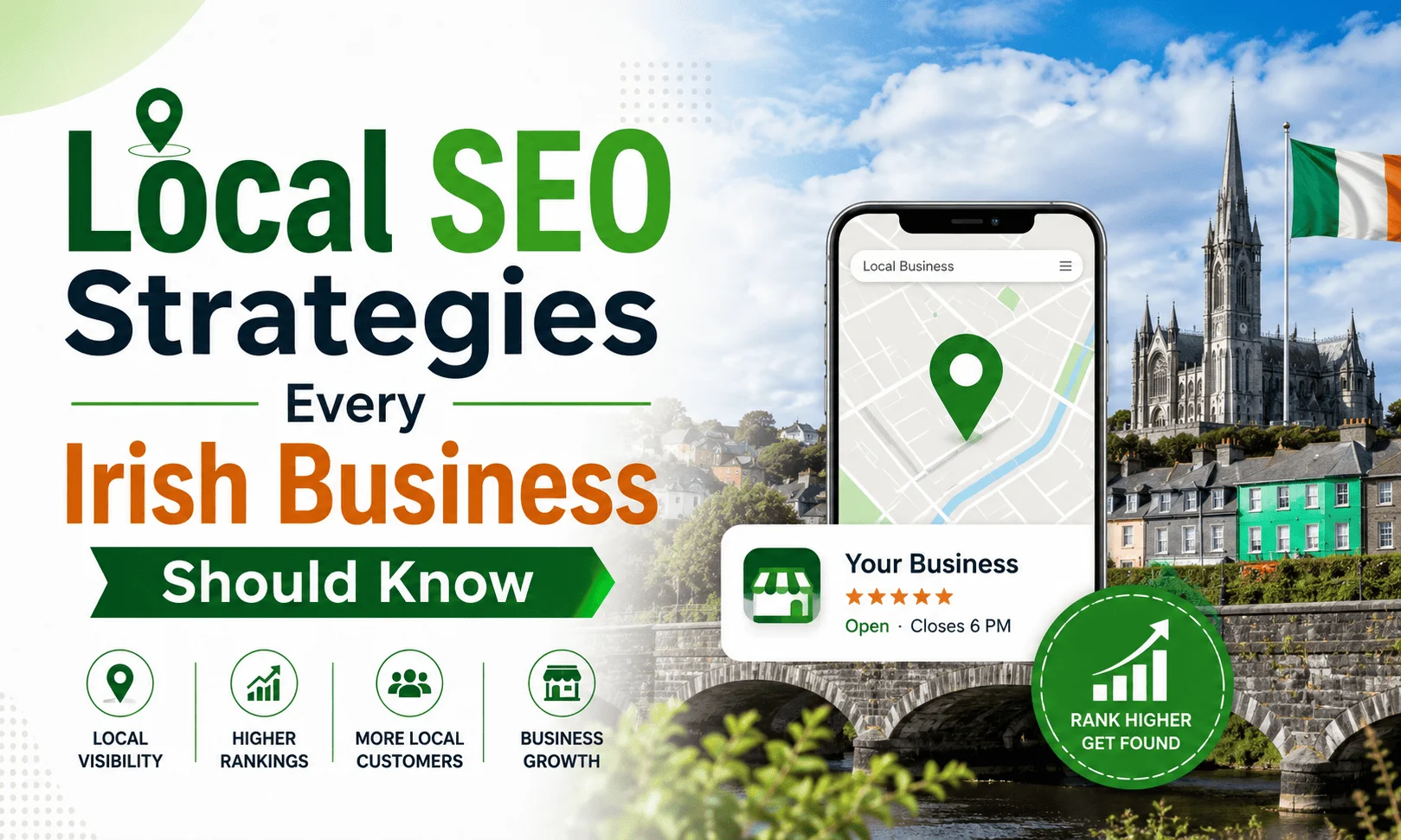
For small businesses across Ireland, local SEO offers a focused way to compete for attention in the places that matter most. By maintaining an accurate Google Business Profile, using natural local keywords, earning genuine reviews, keeping citations consistent and creating useful location-based content, a business can improve its chances of being considered by nearby customers. Whether these steps are managed in-house or with professional support, a steady and customer-focused strategy is more valuable than quick fixes or unsupported promises.


.webp)