Sign up with Google
 Sign in with Zoho
What is local SEO, and why does it matter in Ireland?
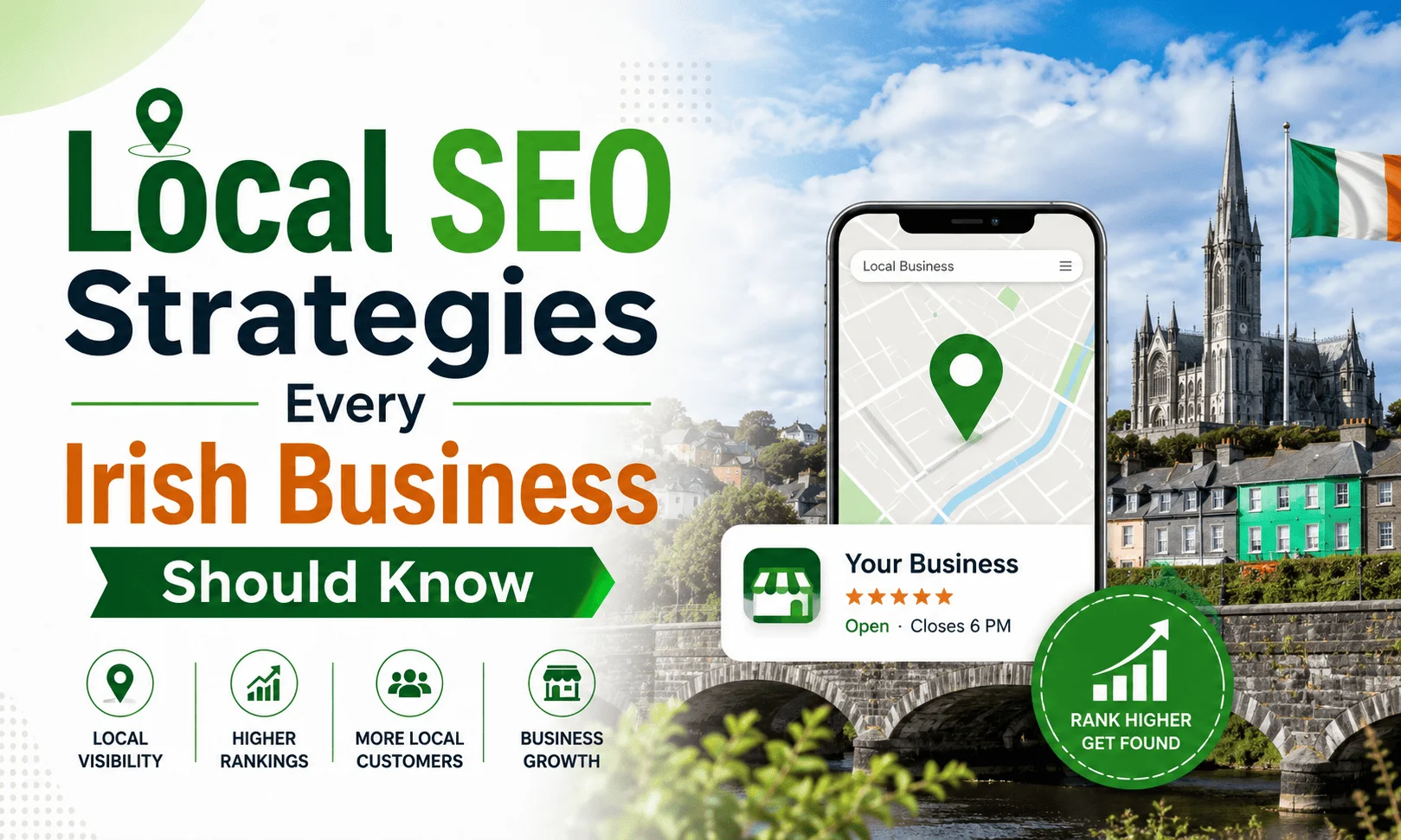
Local SEO is the process of improving your online presence so that your business is more likely to appear for searches connected to a specific place. These searches may include phrases such as “accountant in Galway”, “emergency plumber near me” or “coffee shop Dublin 8”. Google assesses signals such as relevance, distance and prominence when presenting local results. Your job is to provide accurate, useful and consistent information that helps both search engines and people understand where you operate and what you offer.
This matters because local search intent is often practical. Someone searching for a solicitor in Cork, a dentist in Limerick or a wedding photographer in Waterford may be comparing providers with the intention of making contact soon. Strong visibility puts your business in front of that audience at the moment of need.
Appearing in local search is not simply a matter of adding a town name to every page. Irish businesses need accurate listings, useful content, a credible reputation, a mobile-friendly website and genuine community connections.
Optimise your Google Business Profile
Your Google Business Profile is one of the most important assets in a local search strategy. It can influence how your business appears in Google Maps and the local results section, so treat it as an active business channel rather than a one-time form to complete.
Start by checking the essentials. Use your real business name, select the most accurate primary category and add relevant secondary categories where appropriate. Make sure your address, service area, telephone number, opening hours and website link are correct. If your hours vary for bank holidays or seasonal periods, update them in advance. Incorrect information can cause frustration and may lead potential customers to choose a competitor.
Add clear photographs that reflect the real business. Depending on your sector, this could include your premises, team, vehicles, completed work, products or reception area. Write a concise business description that explains what you do, where you serve customers and what makes your offering useful. Avoid stuffing it with repeated keywords or making claims you cannot substantiate.
Use the profile’s updates and services features when they genuinely help customers. A restaurant might highlight a new menu, while a tradesperson could explain emergency call-out availability. Monitor questions and suggested edits so the listing stays accurate.
Research local keywords and search intent
Keyword research should begin with your customers’ language, not a list of phrases chosen solely because they have high search volume. Consider what someone in Dublin, Cork or Galway would type when looking for your service, and distinguish between research searches and action-oriented searches.
Create a simple list of combinations involving your service, location and customer need. A financial adviser might investigate “financial adviser Cork”, “pension advice Galway” and “retirement planning near me”. A building company may need terms such as “home extensions Limerick” or “renovation contractor Waterford”. Include variations that describe the problem customers want solved, not only the name of the service.
Review the language used in enquiries, emails, reviews and conversations with staff. These sources often reveal valuable local keywords and questions that conventional tools miss. Also examine the results for your target searches. Are they dominated by map listings, service pages, directories, guides or large national brands? The result type indicates what Google believes users want and helps you choose the right content format.
Map important terms to specific pages. A core service page may target a broad service and county, while a location page can address a genuine branch or service area. Avoid dozens of near-identical town pages; thin, repetitive content rarely provides a good experience.
Build useful location pages and local content
A location page should do more than replace one town name with another. It should demonstrate that your business understands the area and can serve customers there. Explain the services available, the areas covered, practical travel or appointment information, and any legitimate local considerations that affect the customer’s decision.
For example, a property maintenance company serving Dublin could describe the types of homes and buildings it works with, how inspections are arranged and which surrounding areas are covered. A physiotherapy clinic with a Cork location could provide directions, accessibility details, parking information and an explanation of the treatments offered at that practice.
Use internal links to guide visitors from informational articles to relevant services. For example, this guide can naturally point readers towards local SEO services if they need help implementing a wider strategy. Keep the anchor text descriptive and ensure the linked page genuinely fulfils the reader’s next need.
Keep your business information consistent
NAP stands for name, address and phone number. Consistency across your website, Google Business Profile, local directories and social profiles helps reduce uncertainty about your business. Check for old phone numbers, former addresses, inconsistent abbreviations and duplicate listings.
Keep a master record of your preferred business name, address, phone number, website URL, opening hours and service areas. Prioritise reputable directories, professional associations, chambers of commerce and relevant local organisations.
Earn genuine reviews and manage your reputation
Online reviews influence customer confidence and provide valuable feedback about the real experience your business delivers. Ask satisfied customers for an honest review at an appropriate point—after a completed project, successful appointment or delivered order. Make the process straightforward by providing a direct review link, but never pressure customers to leave a particular rating or offer incentives that could undermine authenticity.
Respond to reviews individually and professionally. Thank customers who share positive experiences and address legitimate criticism without becoming defensive. Keep any personal details out of public replies.
Look for recurring themes in feedback. Reviews may reveal questions to answer on your website, services customers value most or operational problems that need attention. Reputation management can improve the customer journey as well as visibility.
Build local links and community connections
Links from relevant, trustworthy websites can strengthen your site’s authority and connect your business to its local community. Prioritise real relationships, such as partnerships with local suppliers, appropriate community initiatives, chambers of commerce, professional associations and local publications.
A Galway restaurant might collaborate with a local producer, while a Cork consultancy could contribute guidance to a business network’s resource centre. These activities should make sense commercially and socially even if no link is guaranteed.
Avoid buying large batches of low-quality links or creating misleading listings. Sustainable local visibility is built through relevance, expertise and participation—not shortcuts that may damage trust.
Strengthen technical SEO and mobile experience
Technical problems can prevent good local content from performing. Make sure search engines can crawl your important pages, your website uses secure HTTPS, and each page has a clear title and description. Use descriptive headings, logical URLs and one clear primary topic per page. Check that location and service pages are not blocked, duplicated or disconnected from the rest of the site.
Mobile optimisation deserves particular attention because local searches often happen while people are travelling, comparing options or trying to contact a business quickly. Test your site on a phone. Can a visitor tap the phone number, find the address, understand opening hours and complete an enquiry without excessive scrolling? Are forms easy to use and pages quick enough on a typical mobile connection?
Add clear calls to action such as “Book an appointment”, “Request a quote” or “Get directions”. Structured data should support visible information, not replace it.
Measure local SEO performance and know when to get help
Track outcomes, not vanity metrics alone. Useful measures include calls, direction requests, contact-form submissions, bookings, sales from local visitors and the visibility of important searches in Google Maps and organic results. Compare performance by location and service where possible. A rise in impressions is encouraging, but enquiries and qualified customers show whether the strategy is producing business value.
Review profile insights, website analytics and enquiry records regularly. Compare results after updating categories, publishing a location page, improving reviews or resolving technical issues.
An SEO Agency Ireland can be worthwhile when you have several locations, a competitive market, limited internal time or technical issues that are difficult to diagnose. Before appointing one, ask how it will understand your customers, what work will be completed, how progress will be reported and which outcomes matter to your business. Be cautious of guarantees of a number-one position or strategies based on copied content and bulk links.
Conclusion
Effective local SEO is a long-term process of making your business easier to find, understand and trust. For Irish businesses, that means maintaining an accurate Google Business Profile, researching genuine local search intent, creating useful location content, keeping listings consistent, earning honest reviews, building relevant community links and providing a strong mobile experience.
Start with the basics, measure meaningful actions and improve steadily. Whether you serve one neighbourhood in Dublin or customers across Ireland, a clear and trustworthy local presence can help the right people discover your business when they are ready to act.
For more information visit our website: https://localseoagencyireland.ie