Sign up with Google
 Sign in with Zoho

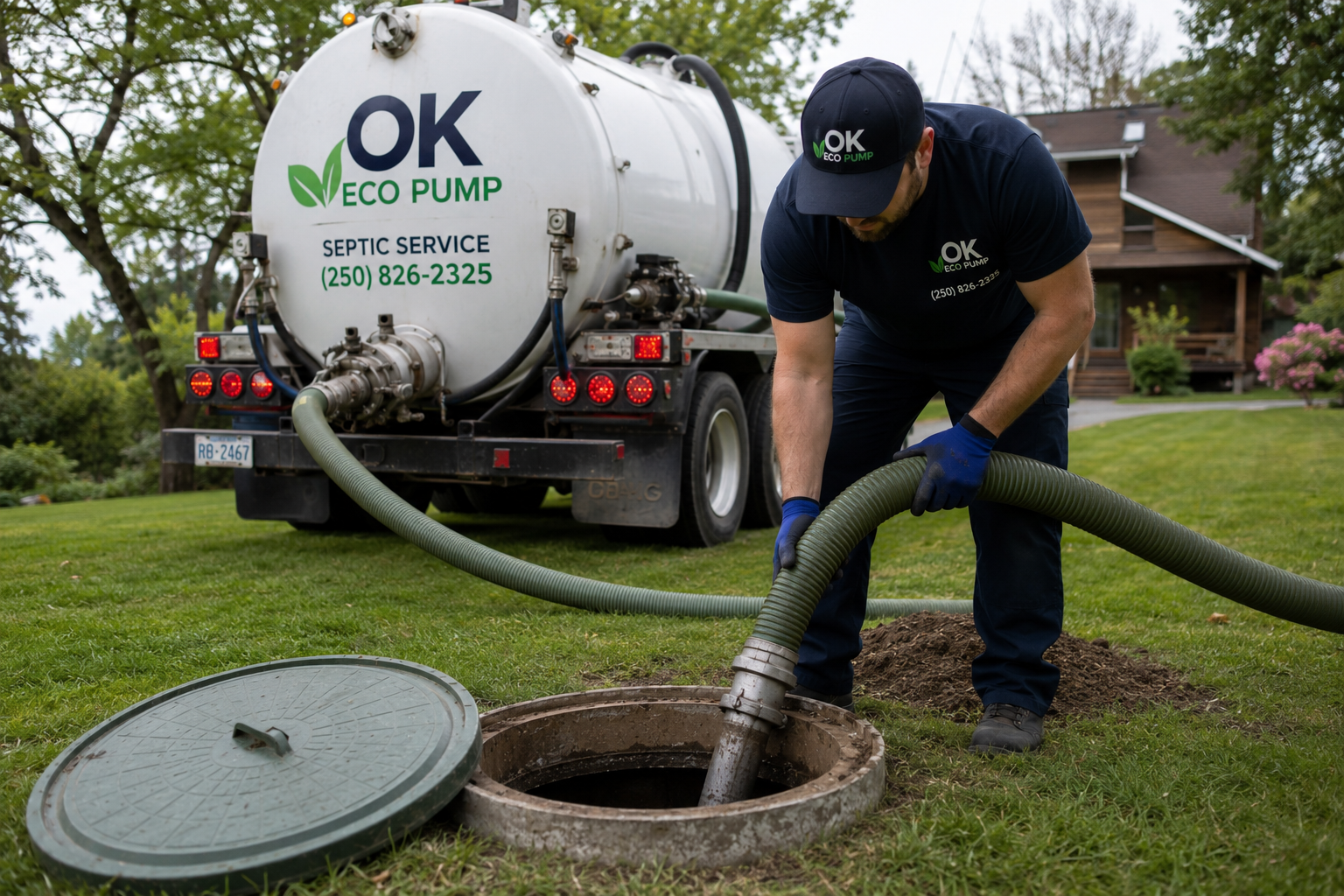
A septic system collects, treats, and disperses household wastewater underground using a tank and drain field. This guide explains exactly how it works, what can go wrong, and how to maintain it properly.
WHAT IS A SEPTIC SYSTEM?
A septic system is a private underground wastewater treatment system installed on residential properties not connected to a municipal sewer. It collects all wastewater from the home — toilets, sinks, showers, and appliances — and treats it on-site before returning it safely to the ground.
Septic systems are common in rural and semi-rural areas. In Kelowna and the broader Okanagan region of British Columbia, a significant number of homes rely on private septic systems rather than municipal sewer connections.
HOW DOES A SEPTIC SYSTEM WORK?
A standard septic system works in four stages:
Stage 1 — Wastewater exits the home
All wastewater from toilets, sinks, showers, dishwashers, and washing machines flows through the home's internal plumbing into a single outlet pipe leading to the septic tank.
Stage 2 — The tank separates waste into layers
Inside the septic tank, wastewater naturally separates into three distinct layers. Understanding this process helps homeowners see why regular septic tank service is essential for preventing sludge buildup, maintaining system efficiency, and protecting the drain field from damage.
• Scum layer (top) — fats, oils, and lightweight solids float to the surface.• Effluent layer (middle) — clarified liquid wastewater sits between the layers.• Sludge layer (bottom) — heavy solids sink and are partially broken down by anaerobic bacteria."
Stage 3 — Liquid effluent moves to the drain field
Only the middle liquid layer (effluent) exits the tank through an outlet baffle and flows into the drain field — a network of perforated pipes buried in gravel trenches beneath the soil.
Stage 4 — Soil filters the effluent
As liquid slowly seeps through the soil, naturally occurring microorganisms remove remaining bacteria, viruses, and nutrients. Clean water eventually reaches the groundwater below.
WHAT ARE THE MAIN PARTS OF A SEPTIC SYSTEM?
A standard septic system has two main components:
1. Septic Tank — A buried, watertight container (typically concrete, fibreglass, or polyethylene) that holds and partially treats wastewater. Most residential tanks range from 1,000 to 1,500 gallons in capacity.
2. Drain Field (Leach Field) — A subsurface area of perforated pipes and gravel that disperses treated liquid into the surrounding soil for final filtration.
Additional components include inlet and outlet baffles, a distribution box (in some systems), and access lids or risers for maintenance.
HOW OFTEN SHOULD A SEPTIC TANK BE EMPTIED?
Most residential septic tanks should be emptied every 3 to 5 years. The exact frequency depends on:
• Household size — more occupants produce more wastewater and fill the tank faster.
• Tank capacity — smaller tanks require more frequent emptying.
• Water usage habits — high-volume use shortens the interval between service visits.
• Presence of a garbage disposal — disposals increase the solid load entering the tank.
A tank that is never emptied will eventually overflow sludge into the drain field, causing costly and difficult-to-repair damage.
WHAT IS SEPTIC TANK EMPTYING?
Septic tank emptying (also called pumping) is the process of removing accumulated sludge and scum from the tank using a vacuum truck. A licensed technician opens the access lid, inserts a suction hose, and removes the waste for disposal at an approved facility.
Emptying is the most fundamental form of septic tank service and is required regardless of how well the system otherwise performs.
WHAT IS THE DIFFERENCE BETWEEN SEPTIC TANK EMPTYING AND SEPTIC TANK CLEANING?
Septic tank emptying removes the accumulated sludge and liquid waste from the tank.
Septic tank cleaning goes further — it includes flushing the interior tank walls, breaking up compacted sludge deposits, removing grease buildup, and clearing bacterial residue. Cleaning restores the tank to a higher level of function and extends its operational lifespan.
In short: emptying removes what's inside; cleaning restores the condition of the tank itself.
WHAT IS A SEPTIC TANK INSPECTION?
A septic tank inspection is a professional assessment of the condition and performance of a septic system. It typically includes:septic tank inspectio
• Visual and physical check of the tank structure for cracks or damage
• Inspection of inlet and outlet baffles
• Measurement of sludge and scum layer depths
• Assessment of drain field function and absorption capacity
• Check for signs of groundwater contamination or surface breakout
• Review of compliance with local regulations
Inspections are recommended every 1 to 3 years, or when buying or selling a property with a septic system.
WHAT IS SEPTIC SNAKING AND DECLOGGING?
Snaking is a plumbing technique used to clear blockages from the pipes connected to a septic system. A flexible auger (snake) is fed into the pipe to break up or remove obstructions caused by grease buildup, hair, debris, or partial root intrusion.
Declogging is recommended when:
• Multiple drains in the home are running slowly
• Gurgling sounds occur after flushing
• Unpleasant odours come from drains
Professional snaking clears the full blockage rather than simply displacing it.
WHAT IS A SEPTIC CAMERA INSPECTION?
A septic camera inspection uses a waterproof, high-definition camera fed through a pipe to provide a live visual of the interior condition of underground septic pipes and components.
Camera inspections are used to diagnose:
• Cracks, fractures, or deterioration in pipes
• Tree root intrusion
• Collapsed or misaligned pipe sections
• Blockages that could not be cleared by snaking alone
• The precise location of leaks or failures
Camera inspection eliminates guesswork and allows technicians to identify problems accurately without unnecessary excavation.
WHAT COUNTS AS A SEPTIC EMERGENCY?
A septic emergency is any situation where the system poses an immediate risk to health, property, or the environment. Common septic emergencies include:
• Sewage backing up into sinks, toilets, or showers inside the home
• Overflowing septic tank with waste surfacing in the yard
• Strong sewage odour inside the home or around the tank area
• Large wet patches or pooling near the drain field
• Complete loss of drainage across multiple fixtures simultaneously
Septic emergencies require same-day or immediate professional attention. Delayed response increases the risk of contamination, structural damage, and regulatory violations.
WHAT SHOULD YOU NEVER PUT INTO A SEPTIC SYSTEM?
The following items damage septic systems and should never enter through drains or toilets:
• Wet wipes and "flushable" wipes — do not break down in the tank
• Cooking oils and grease — solidify and cause pipe blockages
• Harsh chemical drain cleaners — kill beneficial bacteria in the tank
• Medications — disrupt bacterial balance and contaminate groundwater
• Coffee grounds, eggshells, or food waste (via garbage disposal) — accelerate sludge accumulation
• Paper towels, cotton balls, or feminine hygiene products — do not decompose
Only human waste and toilet paper should enter a septic system through the toilet.
WHAT ARE THE WARNING SIGNS OF A FAILING SEPTIC SYSTEM?
Early warning signs of a septic system problem include:
• Slow-draining sinks, showers, or toilets throughout the home
• Gurgling sounds in pipes after flushing or draining
• Sewage odours near drains, in the yard, or around the tank
• Unusually green or lush grass directly over the drain field
• Wet or soggy ground near the drain field after dry weather
• Sewage appearing at the surface of the yard
These symptoms indicate that the system is under stress and requires immediate professional assessment.
HOW LONG DOES A SEPTIC SYSTEM LAST?
A well-maintained septic system can last 25 to 40 years or more. The lifespan depends on:
• Quality of the original installation
• Soil conditions and drain field design
• Regularity of professional maintenance
• Household usage habits
• Whether the system has experienced major failures
The drain field typically determines the overall lifespan of the system. Protecting it through regular septic tank service is the single most effective way to extend system life.
FINAL THOUGHTS
A septic system works by collecting household wastewater, separating solids from liquids inside a septic tank, and allowing treated effluent to filter through a drain field. When properly maintained, a septic system can operate efficiently for decades.
Most septic problems result from neglected maintenance, excessive water usage, or improper materials entering the system. Regular tank emptying, routine inspections, and responsible household habits help prevent failures and protect both property and groundwater quality.
Understanding how a septic system works is the first step toward extending its lifespan, reducing repair costs, and ensuring reliable wastewater treatment for years to come.