Sign up with Google
 Sign in with Zoho

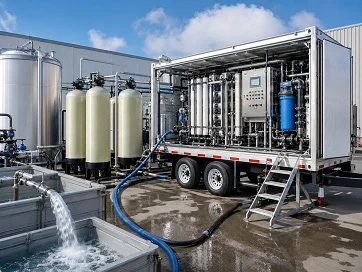
Water treatment rental solutions can be used to overcome short term water supply issues, maintenance interruptions and wastewater scenarios by using correctly sized water treatment equipment. It is best practice to analyze your water source to understand what type of equipment will be needed for the application. This will normally consist of analyzing pH, Turbidity and Conductivity. Depending on the risks at the site, we will also select the right chemical and microbial analysis that will be needed. Accurate results help us provide the correct equipment for your application and realistic expectations of how it will perform.
Understanding Your Water Needs
Depending on the application (Factory, Construction Site, Utilities or Remote Accommodation Facilities), the focus for the water treatment will vary. Drinking water will need to be analyzed for microbial and chemical risks. Whereas Industrial applications may require certain minerals to be in the water.
It is important to know if the water will be used for consumption, manufacturing, recycling or discharge. As recommended by Australian guidelines, it is best practice to analyse based upon risks by choosing which parameters to monitor. This can help provide a clear conversation when speaking with global suppliers.
Physical Parameters
Turbidity, pH, Temperature and Electrical Conductivity should be analyzed. If applicable, Suspended Solids should also be analyzed. This will help with understanding the feed water.
If there are high or variable solids, extra filtration may be required prior to membrane treatments. Providing information relating to seasonal variations and peak loading will help to ensure the proposal provided by our supplier considers these factors.
Chemical Risks
If Reverse Osmosis has been suggested as a treatment, Hardness, Alkalinity, Silica, Iron and Manganese may all need analyzing. This will help our supplier understand the risk of scaling and fouling.
Based upon the source, further analysis may be required. If there has been industrial contamination you may want to analyze for metals, hydrocarbons or PFAS. If the surrounding area is agricultural, it may be worth investigating nutrients or pesticides. These cannot be identified by regular measurements so we recommend working with qualified professionals to decide what testing should be performed.
Sampling
Ask your lab what sampling vessels, preservation methods and turnaround times are required. Sample from areas that represent what the actual water going into the equipment will look like. Record the conditions during sampling.
In Australia, ensure you work with a NATA-accredited lab that can provide the analysis you require. If outside of Australia, ensure you work with an equivalent recognized accreditation. It is important the samples are taken accurately and with good quality control to ensure they aren’t compromised due to any handling errors.
Specifying Output Requirements
Your Water Treatment Rental should have clear output requirements; start up checks and monitoring requirements. Ensure you have clarity around the capacity, maintenance support, consumables and waste management costs.
As one sample cannot represent all future scenarios, re-sample if the source has changed. If you aren’t sure how the treatment will perform, consider running some pilot tests.
Author Resource:-
Lee Wood writes about sustainable and scalable water and wastewater treatment solutions.