Sign up with Google
 Sign in with Zoho

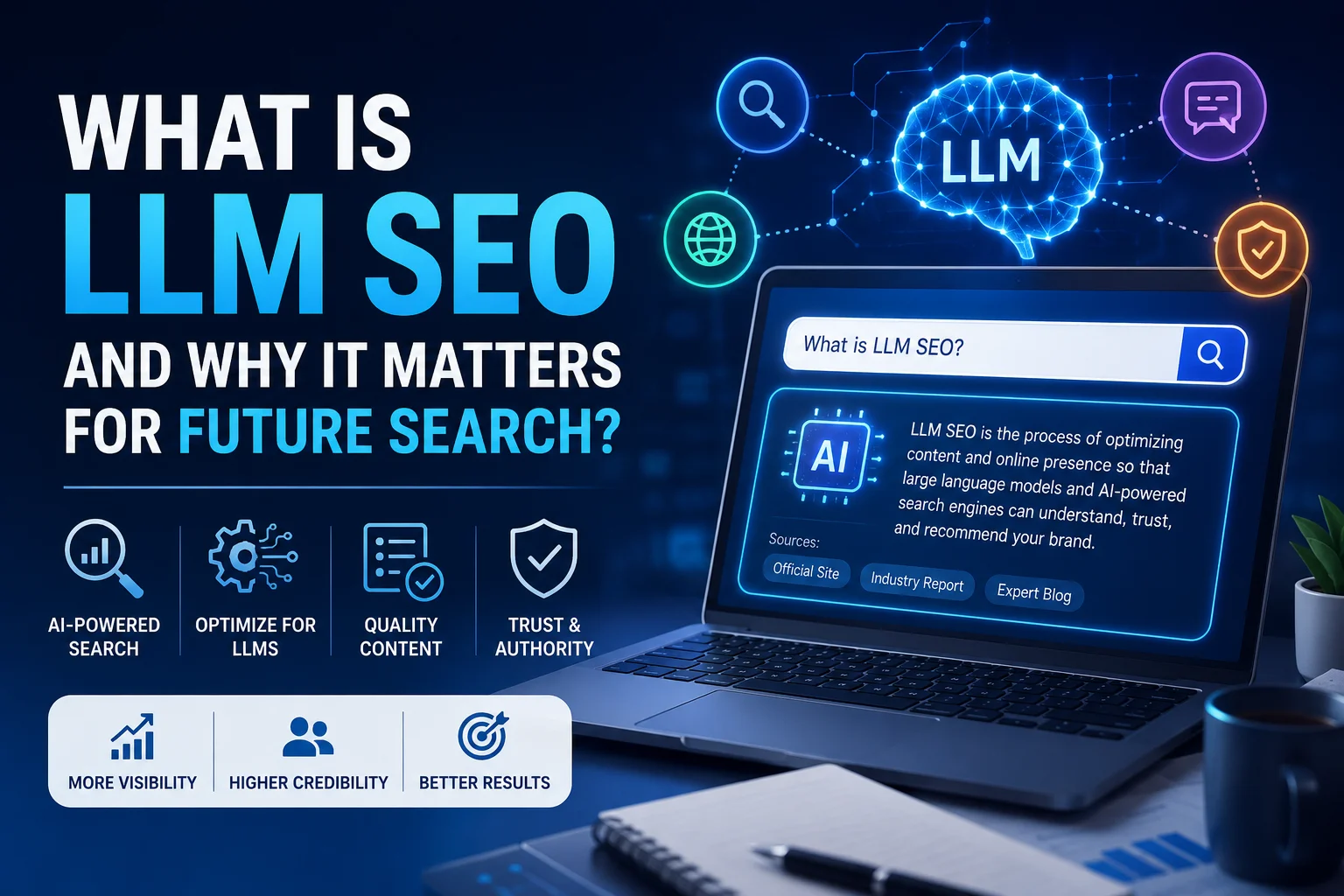
The search landscape is evolving faster than ever. For years, businesses focused on traditional SEO strategies to rank on search engines, optimize webpages, build backlinks, and improve keyword visibility. Today, a new shift is transforming how users discover information online. Large Language Models (LLMs) are becoming a major source of answers, recommendations, and research for millions of users worldwide.
As AI-powered search experiences continue to grow, businesses can no longer rely solely on traditional ranking tactics. This is where LLM SEO comes into the picture. Organizations that understand and implement LLM SEO today will be better positioned to maintain visibility, authority, and traffic in the future.
Understanding LLM SEO
LLM SEO (Large Language Model Search Engine Optimization) refers to the process of optimizing content so that AI-powered search systems, conversational assistants, and generative search engines can easily understand, trust, and reference it when providing answers to users.
Unlike traditional SEO, which focuses on ranking webpages in search engine results pages (SERPs), LLM SEO focuses on increasing the likelihood that AI systems cite, mention, summarize, or recommend your content when generating responses.
Modern AI platforms analyze vast amounts of information to answer user questions directly. Instead of presenting a list of links, these systems often provide synthesized responses. As a result, content creators must optimize not only for search engines but also for language models that interpret and deliver information.
The Rise of AI-Powered Search
Search behavior is changing rapidly. Users increasingly expect instant answers rather than scrolling through multiple websites. AI search tools provide direct responses, reducing the need for users to click through numerous pages.
Several factors are driving this transformation:
- Faster information retrieval
- Natural language interactions
- Conversational search experiences
- Personalized recommendations
- Multi-step reasoning capabilities
- Context-aware responses
This shift means businesses need content that can be understood, verified, and referenced by AI systems.
How LLM SEO Differs from Traditional SEO
While traditional SEO remains important, LLM SEO introduces new priorities.
Traditional SEO aims to place webpages at the top of search results. LLM SEO aims to make content a trusted source that AI systems confidently reference.
Why LLM SEO Matters for Future Search
1. AI Is Becoming the First Point of Discovery
More users are turning to AI assistants for recommendations, research, and purchasing decisions. Instead of searching for ten different websites, users ask one detailed question and receive a complete answer.
If your content is not optimized for AI discovery, your brand may never appear in those responses.
2. Brand Visibility Extends Beyond Search Engines
Future visibility will depend on appearing across multiple AI platforms. Businesses that focus only on traditional search rankings may lose opportunities as users shift toward conversational search experiences.
Being referenced by AI systems can significantly increase credibility and brand awareness.
3. Authority Matters More Than Ever
Language models prioritize information from trusted and authoritative sources. Companies that demonstrate expertise, experience, authority, and trustworthiness gain a competitive advantage.
This makes content quality more important than keyword stuffing or outdated optimization tactics.
4. Search Intent Is Becoming More Complex
Modern search queries are increasingly conversational. Users ask detailed questions, compare products, request recommendations, and seek expert guidance.
LLM SEO helps ensure your content aligns with these natural language search patterns.
Key Elements of a Successful LLM SEO Strategy
Create Comprehensive Topic Coverage
AI models favor content that thoroughly addresses a topic. Instead of producing multiple shallow articles, focus on creating comprehensive resources that answer related questions within a single piece.
Comprehensive content helps establish topical authority and improves the likelihood of being referenced.
Use Clear and Structured Formatting
Well-organized content is easier for both humans and AI systems to understand.
Best practices include:
- Descriptive headings
- Logical content hierarchy
- Clear explanations
- Bullet points where appropriate
- FAQ sections
- Summaries and key takeaways
Structured content improves readability and machine interpretation.
Demonstrate Expertise and Experience
AI systems increasingly value trustworthy information.
Content should include:
- Original insights
- Industry expertise
- Practical examples
- Real-world experience
- Case studies
- Accurate data
Demonstrating expertise strengthens content credibility and increases AI trust signals.
Answer Questions Directly
Many AI-generated responses are built around direct answers.
Instead of hiding information behind lengthy introductions, answer important questions clearly and early in your content.
Direct responses improve content accessibility and increase the chances of being referenced.
Build Strong Entity Associations
Entities play a major role in modern search.
Brands should consistently associate themselves with:
- Industry topics
- Services
- Products
- Geographic locations
- Industry expertise
Strong entity relationships help AI systems understand what your brand represents.
The Role of EEAT in LLM SEO
Google's EEAT framework—Experience, Expertise, Authoritativeness, and Trustworthiness, has become increasingly relevant in the AI era.
Language models often rely on signals that indicate content quality and reliability. Websites that demonstrate strong EEAT principles are more likely to become trusted sources.
To strengthen EEAT:
- Publish expert-written content
- Include author credentials
- Cite credible sources
- Maintain content accuracy
- Update information regularly
- Showcase real-world experience
EEAT is no longer optional; it is a foundational component of future search visibility.
Content Types That Perform Well in LLM Search
Certain content formats are particularly effective for AI discovery.
Ultimate Guides
Comprehensive guides provide extensive coverage and answer multiple user questions within one resource.
Frequently Asked Questions
FAQ sections align naturally with conversational search behavior and AI-generated responses.
Case Studies
Real-world examples demonstrate expertise and provide unique insights that AI systems value.
Industry Research
Original research and proprietary data create strong authority signals.
Comparison Content
Detailed comparisons help users make decisions and are frequently referenced in AI-assisted recommendations.
Common LLM SEO Mistakes to Avoid
Many businesses continue relying on outdated SEO approaches.
Common mistakes include:
- Overusing keywords
- Publishing thin content
- Ignoring user intent
- Creating generic AI-generated articles
- Neglecting content updates
- Failing to establish authority
- Prioritizing quantity over quality
The future belongs to brands that focus on usefulness, trust, and expertise.
How Businesses Can Prepare for the Future of Search
The future of search will combine traditional search engines, AI assistants, voice search, and generative search experiences.
To stay ahead, businesses should:
- Invest in authoritative content.
- Build topical expertise.
- Create user-focused resources.
- Optimize for conversational queries.
- Improve content structure.
- Strengthen brand authority.
- Develop original research and insights.
- Continuously update existing content.
Organizations that adapt early will gain a significant advantage as AI-driven search continues to evolve.
The Future of LLM SEO
LLM SEO represents the next major evolution of digital visibility. As AI systems increasingly shape how users discover information, businesses must rethink traditional optimization strategies.
Success will no longer be measured solely by rankings. Instead, brands will need to become trusted information sources that AI platforms can confidently reference. High-quality content, strong authority signals, topical expertise, and user-focused information will define the winners in this new era.
The organizations that embrace LLM SEO today will be better positioned to capture visibility, trust, and growth opportunities tomorrow. Future search is not just about being found—it is about being recognized as a reliable source of knowledge across the expanding ecosystem of AI-powered search experiences.
Frequently Asked Questions
What does LLM SEO stand for?
LLM SEO stands for Large Language Model Search Engine Optimization. It focuses on optimizing content so AI-powered search systems can understand, trust, and reference it in generated responses.
Is LLM SEO replacing traditional SEO?
No. Traditional SEO and LLM SEO work together. Businesses should optimize for both search engine rankings and AI visibility.
Why is LLM SEO important in 2026 and beyond?
As AI search adoption grows, users increasingly receive direct answers from language models. LLM SEO helps brands maintain visibility within those responses.
How can businesses improve LLM SEO?
Businesses can improve LLM SEO by creating authoritative content, demonstrating expertise, covering topics comprehensively, answering questions directly, and maintaining strong EEAT signals.
What is the biggest benefit of LLM SEO?
The biggest benefit is increased visibility across AI-powered search platforms, helping brands reach users even when traditional search results are bypassed.