Sign up with Google
 Sign in with Zoho

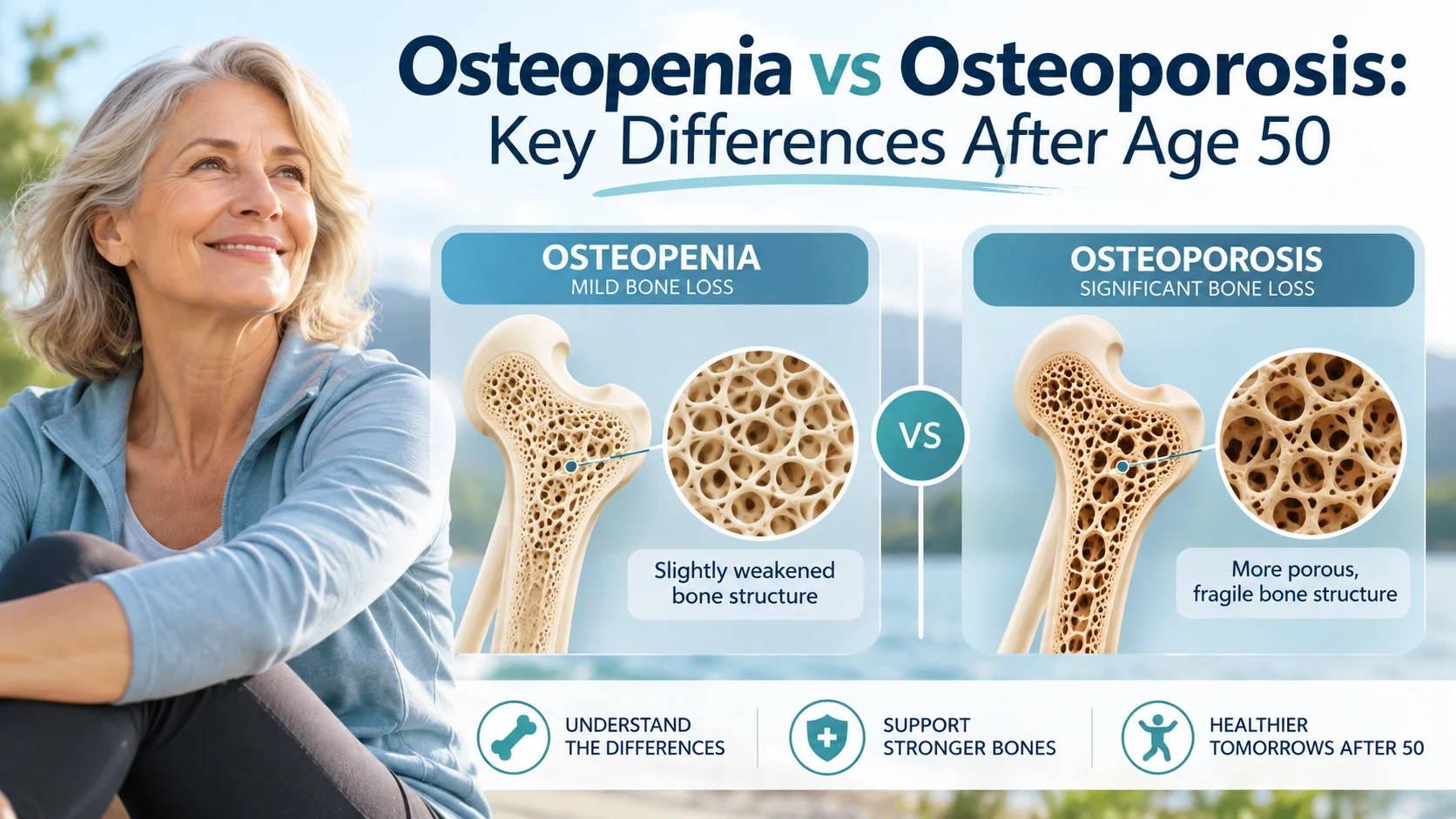
Hearing that your bone density is lower than normal can be worrying, especially when terms like osteopenia and osteoporosis are used. Although the two conditions are closely related, they are not the same.
Both describe a loss of bone density, but osteoporosis represents a more advanced level of bone loss. Osteopenia falls between normal bone density and osteoporosis. After age 50, understanding the difference becomes increasingly important because bone density naturally tends to decline with age.
Knowing where you stand can also help you make informed decisions about exercise, nutrition, screening, and other habits that support long-term bone health.
What Is Osteopenia?
Osteopenia means your bone mineral density is lower than what is considered normal, but it has not fallen low enough to meet the definition of osteoporosis. It can be helpful to think of osteopenia as a sign that your bones have lost some density and deserve more attention. It does not mean that osteoporosis is guaranteed to develop.
Many people live with osteopenia for years without experiencing a fracture or progressing to osteoporosis, particularly when risk factors are identified and managed. Like osteoporosis, osteopenia usually does not cause noticeable symptoms. You cannot feel your bone density becoming lower, which is why testing plays such an important role.
How Is Osteoporosis Different?
Osteoporosis involves more significant bone loss. Bones become weaker and more vulnerable to fractures, sometimes from falls or impacts that would not normally cause a serious injury. The hips, spine, and wrists are common sites of osteoporosis-related fractures.
Because osteoporosis can develop silently, some people first discover they have it after breaking a bone. Others learn about it through routine bone density screening before a fracture occurs. Understanding how bones respond to aging, activity, and mechanical forces remains an active area of bone research, especially as researchers continue looking at ways to preserve skeletal strength later in life.
T-Scores Help Show the Difference
A bone density test, commonly called a DXA or DEXA scan, is one of the main tools used to evaluate bone mineral density. The test often produces a T-score, which compares your bone density with that of a healthy young adult.
In general:
- A T-score of -1.0 or higher is considered normal.
- A T-score between -1.0 and -2.5 falls within the osteopenia range.
- A T-score of -2.5 or lower is considered osteoporosis.
The number is important, but it is not the only factor a healthcare professional considers. Age, previous fractures, family history, medications, body weight, and other health conditions may also influence fracture risk.
Why Bone Loss Becomes More Important After 50
Bones are constantly changing. Old bone tissue is broken down while new bone is formed in its place. Earlier in life, the body generally builds bone effectively enough to maintain strong bone mass. With age, however, bone breakdown can gradually begin to happen faster than replacement.
For women, menopause can accelerate this change because lower estrogen levels affect the normal process of bone remodeling. Men also lose bone with age, although the pattern is usually more gradual. Changes in muscle strength and activity can matter too. Less movement means bones may receive fewer of the mechanical loads that normally occur during walking and other weight-bearing activities.
These connections are why many healthy aging topics involve muscles, balance, mobility, and bone health together rather than treating each one as completely separate.
Who Is More Likely to Develop Bone Loss?
Age is an important risk factor, but it is not the only one. A family history of osteoporosis can increase risk. Smoking, excessive alcohol consumption, limited physical activity, poor nutrition, and low calcium or vitamin D intake may also contribute.
Certain medical conditions and medications can affect bone density as well. Long-term use of some corticosteroids, for example, may increase the risk of bone loss. Women after menopause deserve particular attention, but men should not assume osteoporosis is only a women's health issue. Bone density can decline in both sexes.
Talking with a healthcare professional about your personal risk factors can help determine when screening is appropriate.
Exercise Can Support Bone and Muscle Health
Movement is an important part of maintaining physical function as you age. Weight-bearing activities such as walking, stair climbing, and dancing place controlled forces through the skeleton. Resistance exercises challenge muscles while also creating forces where muscles pull on bones. Stronger muscles can also support better balance and mobility, which becomes especially important when bone density is lower.
People who cannot comfortably perform high-impact exercise may use gentler forms of activity or low-impact options as part of a broader movement routine. The right exercise program depends on your health and current bone strength. Someone with established osteoporosis or a history of fractures may need different exercise guidance than someone with mild osteopenia.
Nutrition Matters Too
Bones need adequate nutrients to maintain their structure. Calcium is an essential mineral in bone tissue, while vitamin D helps the body absorb calcium effectively. Protein also matters because muscles depend on it for maintenance and repair. Dairy products, leafy greens, fortified foods, tofu, and certain fish can provide calcium. Vitamin D may come from sunlight, fortified foods, fatty fish, or supplements when recommended.
Rather than relying on one supplement or food, aim for a balanced diet that supports overall health. If blood tests show a deficiency or you have osteoporosis, your healthcare provider may recommend specific nutritional changes or supplements.
Osteopenia Does Not Always Become Osteoporosis
One of the biggest misconceptions is that an osteopenia diagnosis automatically means osteoporosis is next. It does not. Osteopenia indicates that bone density is below normal, but the rate of future bone loss varies considerably between people. Some may remain in the osteopenia range for many years.
Regular screening helps healthcare professionals see whether bone density is stable, improving, or declining. That information can guide decisions about exercise, nutrition, lifestyle changes, and medication when needed.
Take Bone Health Seriously Without Panicking
Neither osteopenia nor osteoporosis should be ignored, but an abnormal bone density result does not mean you have lost control over your health. Understanding your T-score, knowing your personal risk factors, staying active, eating well, avoiding tobacco, limiting excessive alcohol, and following medical advice can all become part of a long-term plan.
After 50, bone health deserves regular attention just like blood pressure, heart health, or vision. The main difference between osteopenia and osteoporosis is the degree of bone loss. Recognizing that difference early gives you more information and more opportunity to protect your strength, mobility, and independence as you age.