Sign up with Google
 Sign in with Zoho

Why Accurate Oven Temperature Matters
If you’ve ever pulled a tray of cookies out of the oven only to find the bottoms burned and the centers raw, you know how frustrating an inaccurate oven can be. High-end wall ovens are built with sensitive electronic controls, dual-convection fans, and heavy-duty heating elements meant to take the guesswork out of cooking.
When your oven’s internal thermometer is off—especially by something drastic like 50 degrees—all that high-end engineering goes out the window. Roasts dry out, delicate pastries collapse, and food safety becomes a real concern when meats don't hit their proper internal temperatures.
What Is Wall Oven Calibration?
Wall oven calibration is the process of fine-tuning your oven’s internal settings so the temperature on the display actually matches the heat inside the cavity.
Every modern oven relies on a conversation between the temperature sensor, the electronic control board, and the heating elements. Over years of high-heat cycles (and especially after self-cleaning cycles), components wear down and readings drift. Booking a professional wall oven calibration in Brooklyn helps you figure out whether your oven just needs a simple digital offset adjustment or if a failing part is throwing the whole system off.
Homeowners often ask if they can just adjust the oven's settings themselves instead of calling for a repair. While most manuals show you how to adjust the temperature offset by 5 to 35 degrees, calibration and sensor replacement solve two completely different problems:
- Calibration is for an oven that heats evenly and holds its temperature steady, but consistently runs slightly hot or cold (usually within 10 to 25 degrees).
- Temperature Sensor Replacement is needed when the sensor itself is failing, sending erratic resistance readings to the control board, or causing wild temperature swings.
If your oven is off by 50 degrees, recalibrating the dial is just putting a band-aid on a broken part. In fact, most manufacturers don't even allow you to calibrate an oven beyond a 35-degree offset because a gap that wide almost always points to a hardware failure.
Why Built-In Ovens Can Be Off by 50 Degrees
When a built-in oven suddenly starts running 50 degrees too hot or too cold, a mechanical or electrical component is usually to blame.
1. A Failing Temperature Sensor (Thermistor)
That thin metal rod sticking out of the back upper corner of your oven is the temperature sensor. As the oven heats up, the electrical resistance inside that rod changes, telling the control board how hot it is. If the sensor goes bad, it feeds false numbers to the board, causing the oven to either shut off way too early or broil your dinner at 450°F when you asked for 350°F.
2. A Malfunctioning Thermostat or Control Board
Older wall ovens use mechanical capillary thermostats, while modern luxury models rely on digital relay boards. If a relay sticks closed on the control board, the heating element will keep getting power long after the oven hits its target temperature. An experienced tech can test the voltage outputs on the board to see if the brain of the oven is misfiring.
3. Burned-Out or Weak Heating Elements
In electric wall ovens, both the hidden bake element under the floor and the broil element at the top work together during preheating and baking. If the bake element develops a pinhole blister or burns out, the oven tries to compensate with the top element, leading to wildly uneven heat and a massive drop in overall temperature.
4. A Torn or Flattened Door Gasket
Run your hand around the perimeter of your oven door when it's warm. If you feel a blast of hot air escaping, the fiberglass or silicone gasket sealing the door is likely worn out. When heat constantly leaks into your kitchen, the oven struggles to hold its target temperature, extending your cook times and driving up your utility bills.
How Our Technicians Diagnose Oven Temperature Issues
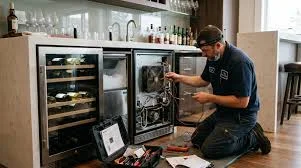
Guesswork has no place in luxury appliance repair. When we troubleshoot a temperature discrepancy, we follow a strict diagnostic checklist rather than just swapping out parts at random.
- Tracking Multiple Heating Cycles: Ovens don't hold a flat, static temperature; they cycle up and down around your target setting. We use commercial-grade digital probes to log the temperature across three to four full heating cycles after preheating, giving us the true average temperature inside the cavity.
- Testing Sensor Resistance (Ohms): We disconnect the temperature sensor and test it with a multimeter. At room temperature, a standard oven sensor should read right around 1,080 to 1,090 ohms. If that number is way off—or if the wiring harness is brittle and scorched—we know we’ve found the culprit.
- Inspecting the Heating System: We check the amperage draw on the bake and broil elements, verify that the convection fan blades are spinning freely to circulate air, and inspect the door hinges and gaskets for heat loss.
- Calibrating or Repairing on the Spot: If the hardware checks out and the oven simply has a minor, consistent offset, we’ll recalibrate the digital controls to factory accuracy. If a sensor or element is dead, we replace the faulty part first and then verify the calibration before wrapping up.
Why Fix It Now? The Value of Precision Oven Repair
Living with an unpredictable oven is a headache, especially in Brooklyn where kitchen space is tight and built-in appliances are a major investment. Getting your oven dialed back in pays off in a few practical ways:
- No More Ruined Groceries: You shouldn't have to do mental math every time you preheat the oven or throw out a ruined Sunday roast.
- Lower Energy Bills: An oven fighting a bad door seal or a weak element runs much longer than it should, pulling heavy wattage the entire time.
- Protecting a High-End Investment: Replacing a built-in wall oven involves carpentry, electrical work, and thousands of dollars in equipment costs. Catching a bad sensor or relay early keeps the rest of the system from overheating and burning out.
- Peace of Mind in the Kitchen: Runaway heating elements and shorted wiring aren't just bad for baking—they’re a fire hazard. Having a licensed pro check the electrical load keeps your kitchen safe.
Full-Service Kitchen & Laundry Appliance Repair in Brooklyn
While precision oven calibration and repair are one of our specialties, we keep all the major appliances in your home or commercial kitchen running smoothly:
- Oven & Range Repair: Fixing temperature swings, dead bake elements, faulty igniters, unresponsive touchpads, and broken door hinges.
- Refrigerator Repair: Solving warm fridge compartments, ice maker leaks, noisy evaporator fans, worn door gaskets, and sealed-system cooling issues.
- Washer Repair: Clearing out clogged drain pumps, fixing off-balance drum vibrations, replacing torn door boots, and repairing spin-cycle failures.
- Dryer Repair: Troubleshooting dryers that take two cycles to dry clothes, replacing snapped drive belts and noisy drum rollers, and fixing burnt heating coils.