Sign up with Google
 Sign in with Zoho

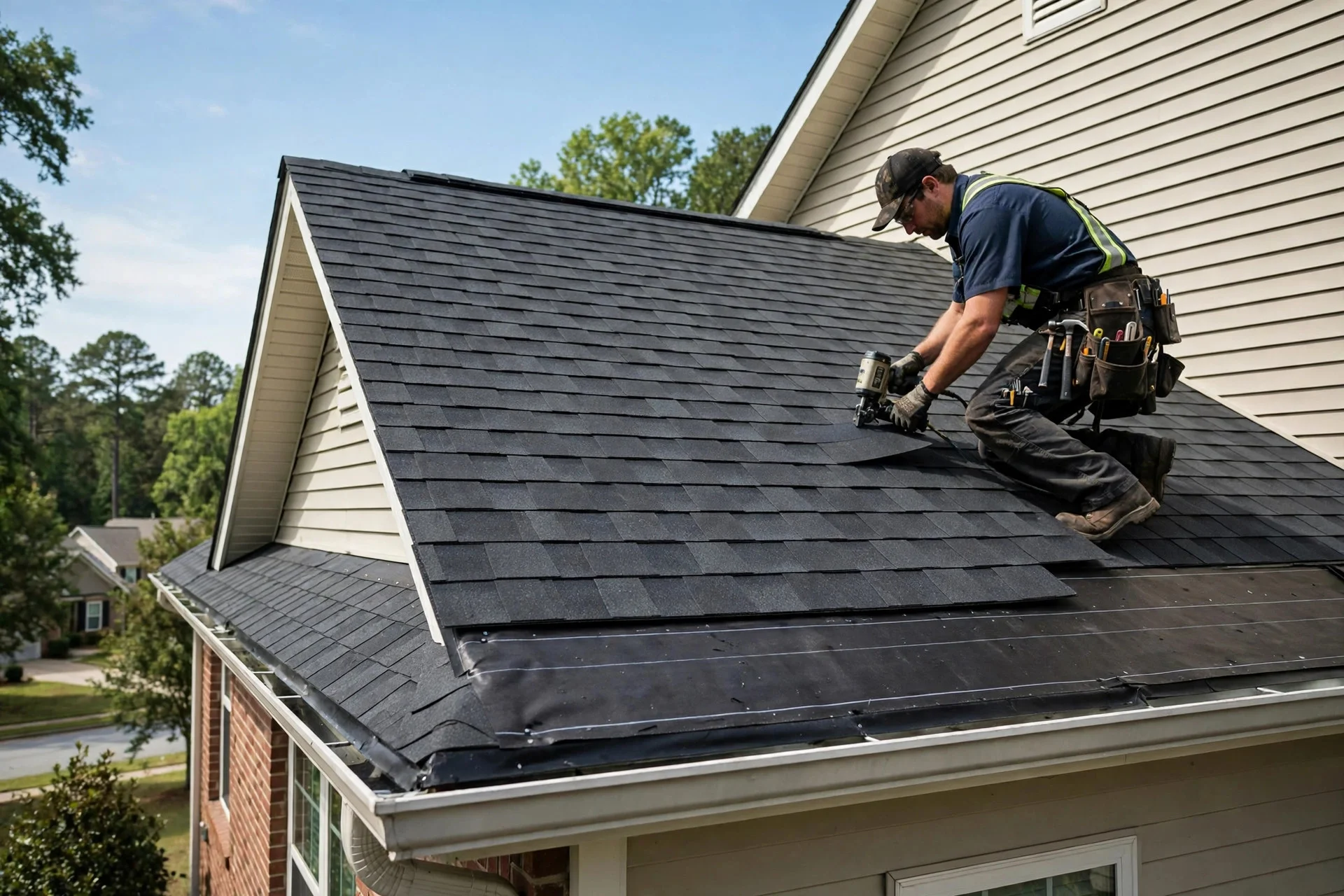
The Shortcut Every Roofer Gets Asked About
Every estimate conversation eventually reaches the same question: can you just shingle over what is already there? The appeal is real. Skipping the tear-off saves the labor of stripping the old roof, the dump fees, and a day of noise, and the price difference shows it. In many places a second layer is perfectly legal, and sometimes it is even the reasonable choice. But an overlay is also a decision about what nobody will see for the next twenty years — the surface of the deck, the state of the flashing, the evidence of every slow leak. That trade deserves more than a shrug and a discount.
What a Second Layer Hides
A tear-off is the only moment in a roof's life when the decking is fully visible, and it is the inspection that finds the soft spots, the stained plywood, and the slow-leak trails that never reached the ceiling. An overlay buries all of it under two layers of shingles. The new roof also inherits the old one's shape: curled, uneven shingles telegraph their bumps through the new layer, which then lies imperfectly, seals imperfectly, and ages faster than the same shingles on a clean deck. None of this shows in the first year. It shows in year eight, when the problems surface together and the only way to see the deck is to remove two roofs.
When an Overlay Is Honest Work
There are roofs where a second layer is a fair deal. The existing layer must be single, flat, and sound — no curling, no widespread granule loss. The deck should be verified from the attic: firm everywhere, no staining, no soft spots. The house should have no history of leaks whose sources were never found. All flashing must still be replaceable properly, because flashing buried under a second layer is flashing abandoned. And the owner's horizon matters: an overlay that honestly serves a home being sold or held for a decade is a different decision from one asked to be the roof for thirty years.
The Weight and Warranty Questions
Two layers of asphalt shingles roughly double the dead load the framing carries, which older homes and long rafter spans feel the most; a roofer who overlays without asking about the structure is guessing with your house. Warranties need the same honesty. Many manufacturers reduce or condition material coverage on overlays, and workmanship coverage depends on the installer standing behind a surface he did not prepare. This is the conversation Roof Repair Durham NC has in writing before any overlay: what the manufacturer will actually honor, what the code allows — two layers total is the common cap — and what it means for the next replacement, when both layers must come off at once.
The Tear-Off Dividend
The money a tear-off costs buys a system, not just a surface. Fresh underlayment across the whole deck. Modern ice-and-water protection at the eaves and valleys where leaks are born. New flashing at every chimney, wall, and vent, fitted to the new roof instead of inherited from the old. Decking repaired the same day it is exposed. A roof built this way starts its twenty years with every hidden part new, which is why tear-off replacements so often outlive overlays by years that dwarf the original saving. The dividend is not visible from the street. It is visible in the absence of callbacks.
How to Decide on Your Roof
Ask four questions and let the answers decide. How many layers are on the roof now? What does the deck look like from the attic — not from the driveway? What happens to every piece of flashing in each option? And what does each warranty say, in writing, about this exact installation? An overlay that survives those questions is a legitimate economy. One that needs the questions skipped is a loan taken against the house, at roof-repair interest. The shingles on top are the cheapest part of the story; it is the layers nobody sees that decide how it ends.

.webp)