Sign up with Google
 Sign in with Zoho

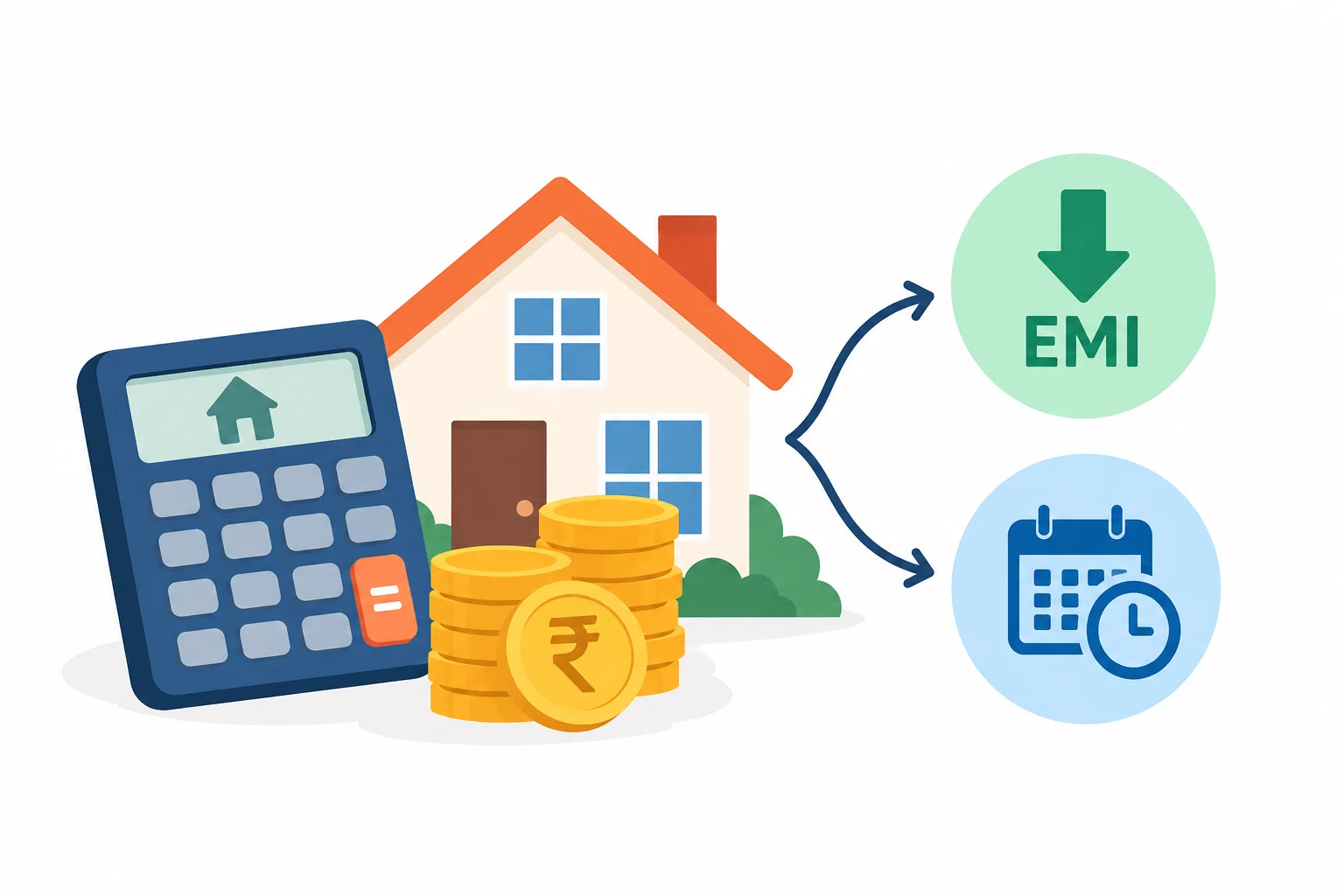
When a borrower makes a prepayment on their home loan, most lenders offer a choice: reduce the monthly EMI while keeping the tenure unchanged, or keep the EMI the same while shortening the loan tenure. A home loan prepayment calculator can model both outcomes, but understanding the underlying trade-off matters just as much as running the numbers. This blog discusses how each approach works and what factors should influence the decision.
What Happens When You Reduce the EMI
Reducing the EMI keeps the loan tenure as originally agreed, while lowering the monthly repayment amount going forward. This approach directly improves monthly cash flow, freeing up funds for other financial priorities or day-to-day expenses.
The trade-off is that the loan continues running for its full original duration. Because interest continues accruing over a longer period, the overall interest paid across the tenure tends to be higher compared to shortening the tenure instead.
What Happens When You Shorten the Tenure
Shortening the tenure keeps the EMI unchanged, applying the prepayment entirely towards reducing how long the loan runs. Since the outstanding principal reduces faster under this approach, the loan closes earlier and total interest paid over its lifetime is generally lower.
The trade-off here is that monthly cash flow remains unchanged, offering no immediate relief on the household budget. Borrowers choosing this route are prioritising long-term savings over short-term flexibility.
Comparing the Two Approaches
The table below summarises how the two strategies typically differ:
Neither approach is inherently better; the right choice depends entirely on individual financial priorities and circumstances at the time of prepayment.
Which Approach Might Suit You Better
A few practical considerations can help guide this decision, and are worth reviewing before committing to either path:
- Current cash flow pressures: If monthly expenses feel tight, reducing the EMI may offer more immediate relief than a longer-term saving.
- Income stability and growth moti e: Borrowers with a rising income may prefer shortening the tenure, since future EMIs will feel comparatively lighter over time.
- Overall cost sensitivity: Those focused primarily on minimising total interest paid tend to benefit more from tenure reduction.
- Property location and loan size: In higher-value markets, the difference between the two strategies can be more pronounced. A borrower managing a home loan in Pune, for instance, may find that shortening the tenure has a more noticeable long-term impact, given the scale of loan amounts typical in such markets.
- Future financial plans: Borrowers anticipating other major expenses in the near term may prefer the flexibility that comes with a reduced EMI.
Weighing these factors together, rather than defaulting to one option automatically, tends to produce a more informed decision.
Using the Calculator to Compare Both Scenarios
Rather than choosing intuitively, it helps to model both outcomes side by side using a calculator, entering the same prepayment amount under each scenario. This allows for a direct comparison of the resulting EMI, revised tenure, and total interest implications before finalising a decision.
It is also worth confirming with the lender which option they support by default, as some lenders may require a specific request to shorten the tenure rather than automatically reducing the EMI.
Conclusion
Choosing between reducing the EMI and shortening the tenure ultimately comes down to individual financial priorities, rather than a universally correct answer. Running both scenarios through a home loan prepayment calculator before deciding helps ensure the chosen strategy genuinely aligns with the borrower’s broader financial goals.