Sign up with Google
 Sign in with Zoho
Your brand is more than what people see. It is what they recognise, feel, remember and connect with.
In today's competitive marketplace, businesses are constantly competing for attention. New products, services and companies emerge every day, making it increasingly difficult for brands to stand out. While having a great product or service is essential, how your business presents itself to the world plays an equally important role.
This is where Brand Identity Design comes in.
A strong brand identity is not simply about having an attractive logo or choosing the right colours. It is about creating a consistent visual and verbal language that communicates your brand's personality, values, purpose and promise.
Let's understand what brand identity design really means and why it is one of the most important investments a business can make.
1. What Is Brand Identity Design?
Brand identity design is the process of creating a distinctive and consistent identity for a business through visual elements, communication styles and design systems.
It defines how your brand looks, sounds and expresses itself across every customer touchpoint.
Think of it as the personality of your business translated into a recognisable design language.
A comprehensive brand identity typically includes:
- Logo Design: The primary visual symbol that represents your brand.
- Colour Palette: A carefully selected combination of colours that reflects your brand's personality.
- Typography: Fonts and typographic styles that establish visual character and readability.
- Graphic Elements: Patterns, illustrations, icons and supporting visual assets.
- Brand Imagery: Photography and visual styles that communicate your brand's world.
- Packaging Design: How your products look and feel when presented to customers.
- Brand Collaterals: Business cards, stationery, presentations, brochures and marketing materials.
- Digital Identity: Website design, social media templates and other digital brand experiences.
Together, these elements create a brand experience that makes your business recognisable and memorable.
2. Why Is Brand Identity Important for Your Business?
That is the power of a well-developed brand identity.
Here are five reasons why it matters:
1. Creates a Strong First Impression
Your visual identity is often the first interaction a potential customer has with your business. A professional and thoughtfully designed identity communicates credibility, confidence and attention to detail.
2. Builds Brand Recognition
Consistency across your website, packaging, social media and marketing materials helps customers identify your brand quickly.
3. Establishes Trust and Credibility
A cohesive identity makes your business appear more professional and dependable. Customers are more likely to engage with brands that communicate clearly and consistently.
4. Differentiates You from Competitors
Your identity gives your business a distinctive visual personality. It helps communicate what makes your brand different rather than allowing it to blend into the marketplace.
5. Creates an Emotional Connection
Colours, typography, imagery and design can evoke emotions and influence how people perceive a brand. A thoughtfully designed identity helps create meaningful connections with your audience.
3. The Key Elements of a Successful Brand Identity
A successful brand identity is built through a combination of strategic thinking and creative execution.
Let's explore its essential components.
Logo: The Face of Your Brand
A logo is one of the most recognisable elements of a brand. However, a good logo should do more than look aesthetically pleasing. It should be relevant, distinctive, versatile and aligned with the brand's positioning.
Colours: Creating the Right Perception
Colours influence how people interpret and emotionally respond to a brand. For example, green may communicate nature and sustainability, while blue often conveys trust and reliability.
The right colour palette should reflect your brand's personality and appeal to your target audience.
Typography: Giving Your Brand a Voice
Typography plays a significant role in establishing brand character. Elegant serif fonts, contemporary sans-serif typefaces or expressive display fonts can each create a different impression.
The key is to select typography that communicates your brand's personality while maintaining readability.
Visual Language: Creating Consistency
Patterns, illustrations, icons, photography and graphic compositions add depth to your identity. These elements help establish a recognisable visual language beyond the logo.
Brand Applications: Bringing Identity to Life
A brand identity becomes meaningful when applied consistently across real-world and digital touchpoints, including packaging, websites, social media, advertising, stationery and customer experiences.
4. Brand Identity vs. Branding: What's the Difference?
These two terms are often used interchangeably, but they represent different aspects of building a brand.
Brand Identity is the collection of visual and verbal elements that express that brand to the world.
In simple terms:
- Branding defines who you are and what you stand for.
- Brand identity determines how you express that through a consistent design and communication system.
- Brand perception is how your audience actually experiences and understands you.
All three work together to build a strong and meaningful brand.
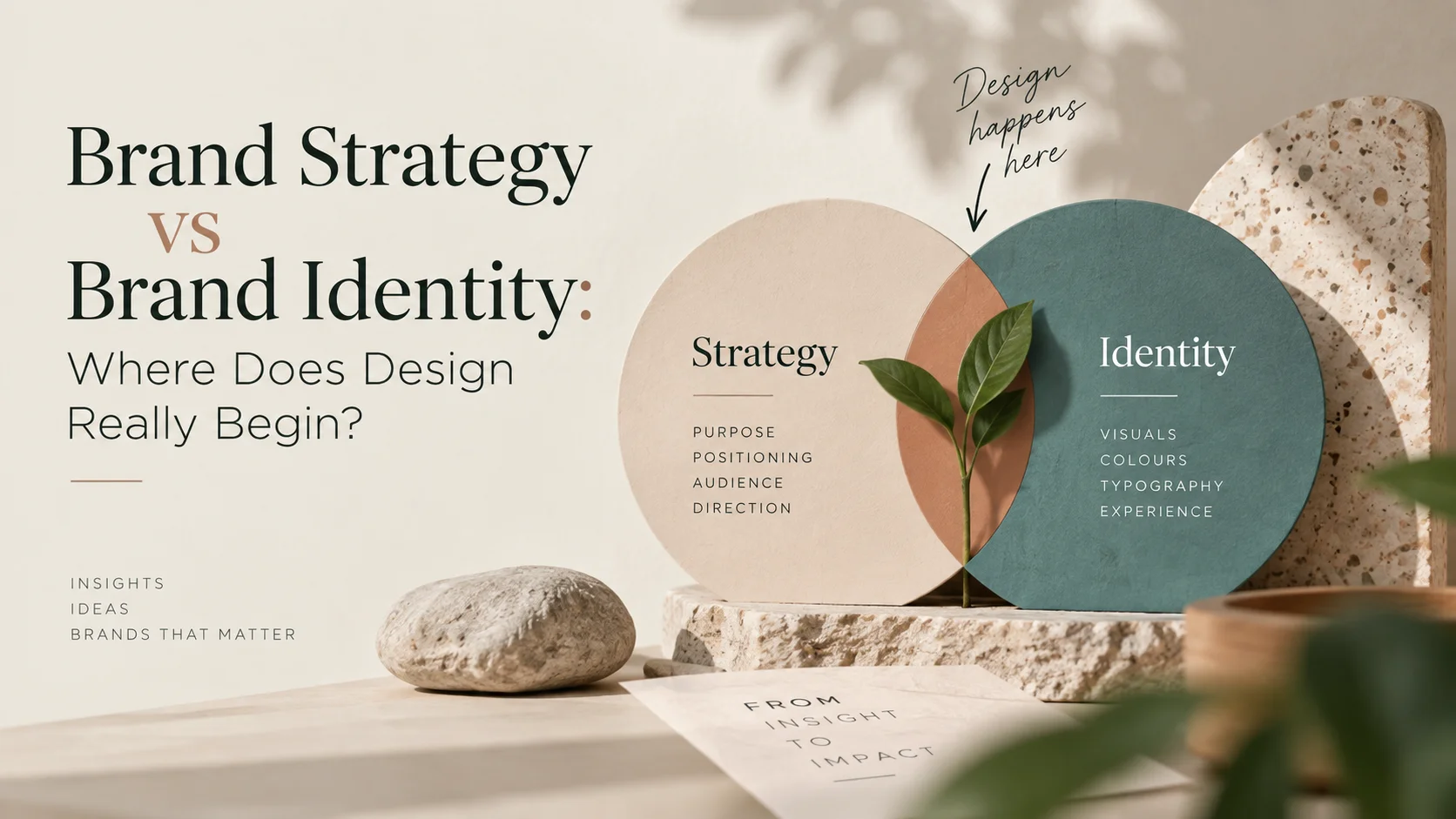
5. Why Brand Strategy Should Come Before Brand Identity Design
One of the biggest mistakes businesses make is jumping directly into logo design without understanding their brand.
A visually attractive logo cannot compensate for unclear positioning or an undefined brand personality.
Before beginning the design process, it is important to answer a few fundamental questions:
- Who are you as a brand?
- What is your purpose and vision?
- Who is your ideal customer?
- What makes you different from your competitors?
- What values do you want your brand to communicate?
- How do you want people to perceive and remember you?
This is where brand strategy becomes essential.
We believe that meaningful design begins with meaningful discovery. Understanding the business, its audience, market landscape and aspirations helps create an identity that is not just visually appealing but strategically relevant.
Strategy gives design its direction. Creativity gives it expression.
6. The Brand Identity Design Process: From Discovery to Recognition
Creating a successful brand identity requires a structured approach.
Here is how a professional brand identity design process typically works:
Step 1: Brand Discovery
Understanding the business, its vision, mission, values, products, services and long-term objectives.
Step 2: Research and Analysis
Studying the target audience, industry trends, competitors and market opportunities to identify areas of differentiation.
Step 3: Brand Strategy and Positioning
Defining the brand's core message, personality, positioning, value proposition and communication direction.
Step 4: Creative Exploration
Developing visual concepts, moodboards, design directions, colour palettes and typography options that reflect the brand strategy.
Step 5: Logo and Identity Development
Designing the logo and developing the supporting visual identity system.
Step 6: Brand Applications
Applying the identity across stationery, packaging, marketing collaterals, digital platforms and other customer touchpoints.
Step 7: Brand Guidelines
Creating a brand guideline document that defines how the identity should be used to maintain consistency across all communication.
7. When Should Your Business Invest in Brand Identity Design?
Brand identity is not just for new businesses. Established companies may also need to revisit their identity as their business evolves.
You should consider investing in professional brand identity design when:
- You are launching a new business or startup.
- Your existing identity looks outdated or inconsistent.
- You are entering a new market or expanding your product range.
- Your business has evolved, but your identity no longer reflects it.
- You are struggling to differentiate yourself from competitors.
- You want to reposition your business for a premium audience.
- Your brand communication lacks consistency across platforms.
A well-planned identity can help your business communicate its next chapter with clarity and confidence.
8. Common Brand Identity Design Mistakes to Avoid
Even businesses that invest in professional design sometimes overlook important aspects of brand identity.
Watch out for these common mistakes:
- Designing a logo without understanding brand strategy.
- Following trends instead of creating a distinctive identity.
- Using too many colours and fonts without a consistent system.
- Copying competitors instead of developing an original visual language.
- Ignoring the importance of digital applications.
- Treating brand guidelines as optional.
- Changing visual elements frequently without a clear reason.
Remember, a successful brand identity is not about following what looks fashionable today. It is about creating something relevant, recognisable and adaptable for the future.
Final Thoughts: Build a Brand That Stands for Something
Your brand identity is one of your most valuable business assets. It influences how people discover, recognise, understand and connect with your business.
But great branding is never just about aesthetics.
It is about finding the right balance between strategy and creativity, between what your business stands for and how your audience experiences it.
A powerful brand identity doesn't simply make your business look different. It gives people a reason to remember you.
At Ideoholics Design Studio, we believe that every brand has a story worth telling. Our approach brings together strategic thinking and creative design to build distinctive brand identities that connect with people and grow with businesses.
Whether you are launching a new venture or redefining an existing brand, let's create an identity that reflects who you are and where you want to go.
Ready to build a brand that stands out?
Explore our branding and brand identity design services at Ideoholics Design Studio.





.webp)