Sign up with Google
 Sign in with Zoho


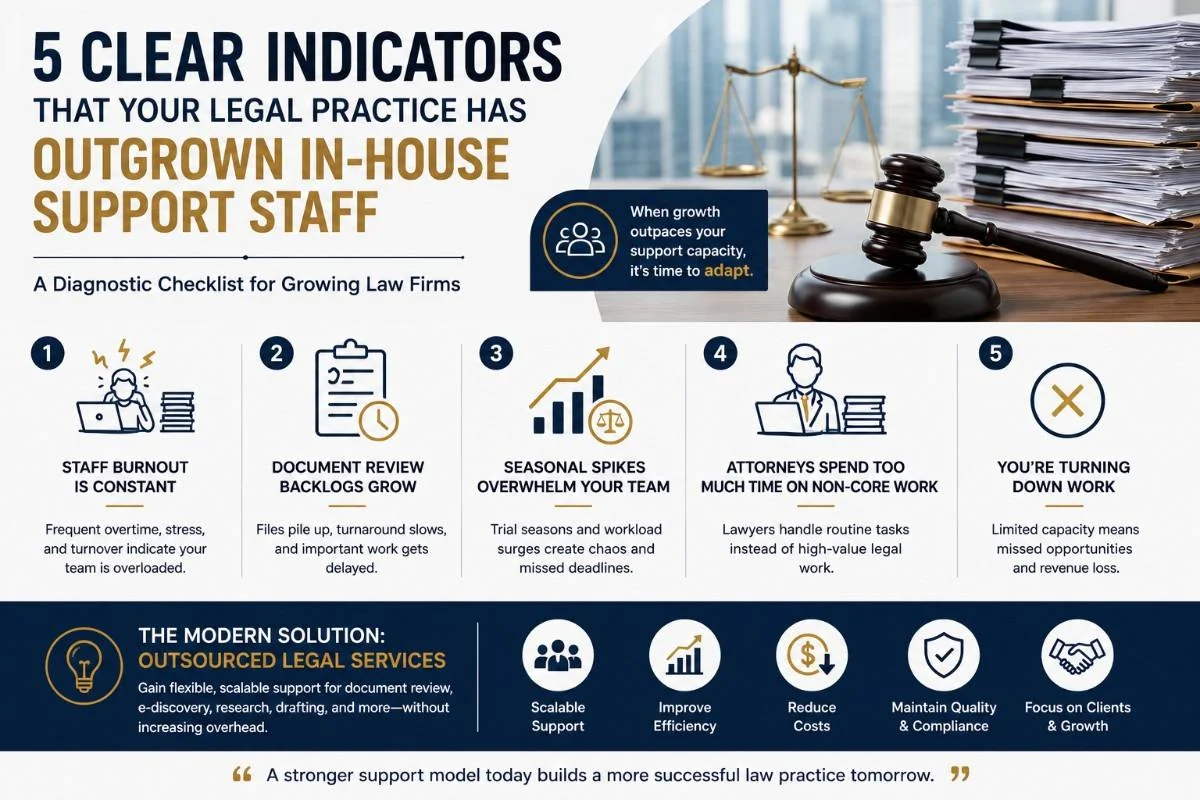
Mid-market organizations often reach a stage where financial transaction volumes grow faster than their internal accounting capacity. Invoice processing begins to slow down, reconciliations take longer, ledger updates fall behind, and month-end reporting becomes increasingly difficult to complete on schedule. These operational bottlenecks can affect the quality and speed of financial decision-making.
The challenge is not always a lack of accounting expertise. In many cases, the internal team is simply handling an expanding volume of repetitive and time-sensitive activities while also being expected to support planning, reporting, compliance, and management decisions. As workloads increase, routine processes can consume a disproportionate amount of available resources.
Why Accounting Capacity Becomes a Growth Constraint
A growing organization may experience capacity pressure across several financial workflows, including accounts payable, accounts receivable, bank and credit card reconciliations, general ledger maintenance, expense processing, vendor management, and financial reporting.
When these activities depend entirely on a limited in-house team, periods of rapid growth, seasonal demand, employee turnover, or unexpected workload spikes can create delays. A backlog in one process can also affect downstream reporting and make it harder for leadership teams to access current financial information.
Building a larger internal department is one possible solution, but it also increases fixed costs and requires ongoing investment in recruitment, training, technology, management, and workforce retention.
Building a More Flexible Financial Operations Model
Many organizations are addressing this challenge by creating a blended financial operations structure. Internal finance leaders retain responsibility for oversight, controls, planning, and strategic decision-making, while specialized external teams support defined transactional and back-office functions.
Working with providers of expert outsourced accounting services can help businesses add operational capacity without restructuring their entire internal finance department. Depending on the organization’s requirements, support may extend across Procure-to-Pay (P2P), Order-to-Cash (O2C), Record-to-Report (R2R), bookkeeping, reconciliations, reporting support, and other accounting workflows.
The objective is not simply to transfer work outside the organization. A well-designed operating model should establish clear responsibilities, documented workflows, approval structures, data security practices, and communication processes between internal stakeholders and the extended accounting team.
Supporting Controllers and CFOs With Better Operational Capacity
As routine accounting activities become more structured and scalable, controllers and finance leaders can devote greater attention to higher-value responsibilities. These may include cash flow planning, financial analysis, forecasting, internal controls, profitability assessment, and business performance management.
A flexible support model can also help organizations respond more effectively when transaction volumes change. Instead of continuously expanding fixed administrative infrastructure, businesses can align operational resources more closely with actual workload requirements.
Maintaining Control While Improving Scalability
Outsourcing financial workflows does not remove the need for internal governance. Strong oversight remains essential. Organizations should establish measurable service expectations, approval procedures, access controls, documentation standards, and regular performance reviews.
The most effective model combines operational support with internal financial leadership. Routine processes receive dedicated attention, while management maintains visibility and control over financial priorities and business decisions.
For organizations facing recurring accounting bottlenecks, the long-term opportunity lies in designing financial operations that can scale with the business. A combination of internal expertise, standardized processes, and specialized external support can create a more adaptable foundation for managing increasing financial complexity.