Sign up with Google
 Sign in with Zoho


If you're deciding between a camera-mount wireless mic and a phone wireless mic, the answer depends almost entirely on which device you actually film with most — not which system sounds "more professional." This guide breaks down the real differences so you buy the right one the first time, instead of discovering a compatibility mismatch after your purchase. Whether you're considering the LARK M2 Mini Combo or another wireless microphone system, understanding device compatibility before buying can save both time and money.
Hope Enterprises has supplied both camera-focused and mobile-focused wireless audio gear to Pakistani creators for years as an authorized distributor, and the comparison below reflects the compatibility issues and buying regrets creators most commonly run into locally.
Why Solo Creators Don't Need Multi-Channel Systems
A lot of solo YouTubers unknowingly overspend on dual or multi-channel wireless kits designed for interviews, when a simple single-transmitter setup covers everything they actually film.
Real scenario: A Lahore-based tech reviewer starting his YouTube channel initially bought a 2-transmitter kit "in case he interviewed guests later," but a year into solo talking-head reviews, the second transmitter had never left its case — money that could have gone toward a better camera or lighting instead.
When you'd actually need more than one channel:
- If you regularly plan guest interviews or collab videos.
- If you record voiceovers separately from on-camera dialogue and want them on distinct tracks.
For pure solo content, a single-channel wireless mic and receiver handles the job completely.
What "Compact" Should Mean for a Solo Setup
Compact isn't just about the transmitter's physical size — for solo creators, it also means minimal setup friction, since you're often filming, directing, and operating the camera all at once.
Look for:
- Quick auto-pairing — you shouldn't need to fumble with app settings before every recording session.
- Small, lightweight transmitter (under 20g) that clips discreetly and doesn't tug on clothing during movement.
- Simple one-button mute/record control so you can start recording without walking back to the camera.
- A receiver that mounts cleanly on your specific recording device — camera cold shoe or phone charging port, depending on what you use.
Comparing Two Compact Single-Channel Options
Honest verdict: For most solo YouTubers just starting out or working with a modest budget, the more affordable option delivers everything needed for talking-head and tutorial content. Creators filming longer sessions regularly — extended tutorials, live-format long-form videos — may find the extra battery life on the pricier option genuinely useful rather than just a nice-to-have.
Matching Your Mic Combo to Your Content Type
Real scenario: A Karachi-based cooking channel host films long-form recipe videos lasting 40-60 minutes per take, often without stopping to reset. She found her original budget transmitter's 5-hour battery occasionally cut it close on double-recipe filming days, and upgraded specifically for the longer runtime — not for any audio quality difference, since both mics sounded equally clear for her content.
Match your kit to your actual filming pattern:
- Short-form content (under 15 minutes per session) — almost any compact single-channel kit will comfortably last the session.
- Long-form tutorials or live-style recording — prioritize battery life over other features.
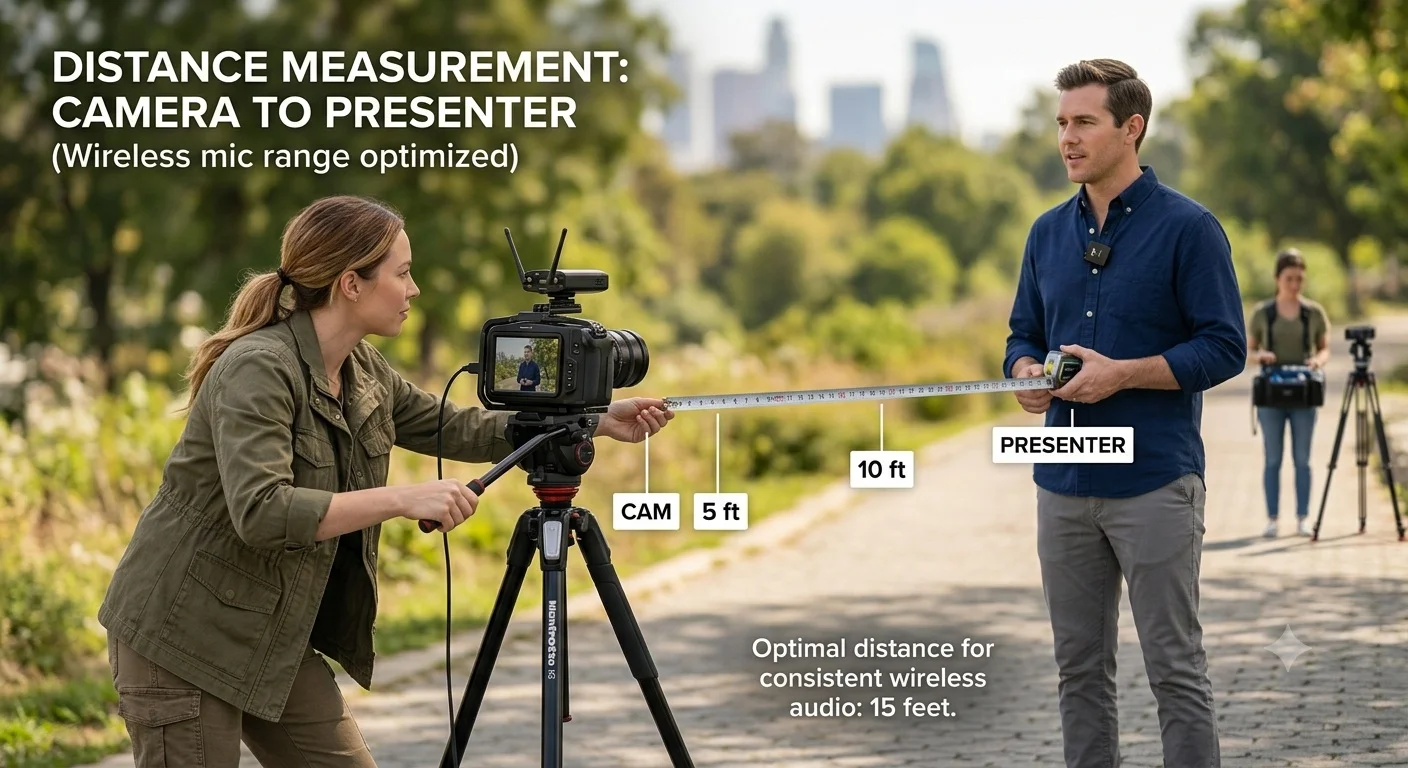
- Frequent outdoor or on-location solo vlogging — check range specs even for single-channel use, since you may move further from your camera than expected during walk-and-talk segments.
Setting Up Your Solo Wireless Mic for the First Time
Real scenario: A first-time YouTuber in Islamabad struggled with inconsistent audio levels across his first few uploads, later realizing he'd never done a proper sound check before recording — he simply clipped the mic on and hit record each time, assuming the auto-pairing meant the levels were automatically correct too.
Practical first-setup steps:
- Do a 10-second test recording and actually listen back before your first real take, checking for clipping (distortion) or levels that are too quiet.
- Position the transmitter 15-20cm below your collarbone, angled slightly toward your mouth, avoiding synthetic fabric that causes rustle noise.
- Confirm your camera or phone is set to use external audio input, not the built-in mic — a common oversight even with wireless gear properly connected.
- Keep the receiver within reasonable range of the transmitter even for solo work, especially if you move around while presenting.
Takeaway
For solo YouTubers in Pakistan, a single-channel compact wireless mic is almost always the right choice over a multi-channel kit built for interviews — save the extra cost unless you genuinely plan to record guests regularly. Match your specific pick to your filming pattern: shorter sessions can use almost any budget-friendly compact kit, while long-form or frequent outdoor solo content benefits more from extended battery life. Always run a quick sound check before your first real recording to catch level issues early.
FAQs
1. Do solo YouTubers need a dual-channel wireless mic? Not usually — a single-channel kit covers most solo talking-head, tutorial, and vlog content fully; dual-channel systems are mainly useful if you plan regular interviews or collabs.
2. How much does a good compact wireless mic cost for a solo YouTuber in Pakistan? Budget-friendly single-channel kits start around Rs. 8,000-14,000, while premium options with longer battery life and app control run Rs. 18,000-25,000.
3. Can I use a compact wireless mic with both my phone and camera? Only if the kit includes the correct receiver type for each device (USB-C/Lightning for phone, 3.5mm for camera) or offers swappable receivers; otherwise you may need a separate adapter.
4. How long does a compact wireless mic battery typically last for solo filming? Most compact single transmitters run 6-10 hours per charge, which comfortably covers most solo recording sessions without needing a mid-day recharge.
5. Is range important for a solo YouTuber who mostly films at a desk? Not particularly, since desk-based creators rarely move far from the camera — range becomes more relevant only for solo creators who film walk-and-talk or on-location content.