Sign up with Google
 Sign in with Zoho


Somewhere between the rise of D2C fashion brands and the slow decline of generic gadget gifting, a category has been quietly building momentum that most retail coverage has missed entirely: wearable LED tech, sold not as a gadget but as a gift.
The Quiet Rise of Wearable Tech as a Gifting Category
If you'd asked most people in Indian retail five years ago what “tech gifting” meant, the answer would have been narrow and predictable: power banks, earphones, maybe a smartwatch if the budget stretched far enough. Functional, slightly impersonal, rarely the centrepiece of an actual gifting occasion.
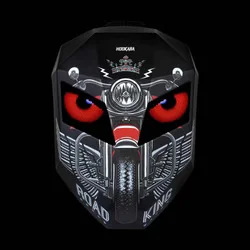
That definition has quietly expanded. A small but growing set of Indian D2C brands have built entire catalogues around a different premise — that wearable tech doesn't have to be purely functional to sell well as a gift. LED backpacks with programmable displays, light-up glasses, glow accessories: products that didn't really exist as a retail category in India a few years ago are now showing up in birthday wishlists, college fest merchandise, and even corporate gifting budgets.
This shift has gone largely unnoticed in mainstream retail coverage, mostly because it didn't arrive as a single, headline-grabbing launch. It built gradually, through a handful of D2C brands finding product-market fit in a gap that bigger, broader electronics retailers were never structurally positioned to serve.
What's Driving Demand — Three Underlying Trends
Gen Z's Preference for 'Experience-Adjacent' Physical Gifts
Younger Indian consumers have grown up with subscription services, digital experiences, and an abundance of disposable content — which has, somewhat counterintuitively, made them more drawn to physical gifts that feel like an experience rather than just an object. A wearable that lights up, reacts, or can be customised through an app sits closer to “experience” than “product” in a way that a traditional gadget gift doesn't.
The Instagram/Social Visibility Factor in Gift Selection
There's a more practical driver too: gifts that photograph well are increasingly favoured, consciously or not, by a generation that documents most social occasions. LED and wearable tech products have an obvious advantage here — they're visually distinctive in a way a power bank simply isn't, which makes them more likely to be worn, photographed, and shared at the events they're bought for.
D2C Brands Filling a Gap Traditional Electronics Retailers Ignore
Large-format electronics retail is built around broad, repeatable inventory — the same handful of smartwatch and earphone brands, repeated across every store. That structure works well for commodity electronics, but it's poorly suited to niche, design-led categories like wearable LED products, which need a narrower, more curated catalogue and a direct relationship with a specific buyer mindset rather than broad shelf placement.
Who's Building in This Space
A handful of Indian D2C brands have moved into this category over the past few years, each carving out slightly different territory — some focused on fashion-forward accessories, others leaning into event and festival merchandise. Brands like Hookaba have built their entire catalogue around this shift, offering tech gifts under 5000 in the form of LED backpacks, glasses, and accessories designed specifically as gifting products rather than everyday tech, which is a meaningfully different positioning from a conventional electronics brand that happens to also sell wearables.
What's notable across these brands isn't just the product category itself, but the gifting-specific signals built into how they operate — gift wrapping options, gift-note add-ons, and seasonal demand patterns that spike around birthdays and festivals rather than running flat year-round the way typical consumer electronics sales tend to.
What This Means for the Broader Gifting and Retail Industry
For an industry that's historically treated “tech gift” and “fashion gift” as separate aisles, wearable LED products sit in an interesting middle ground that's worth paying attention to. They suggest a broader pattern: categories that combine visual distinctiveness with genuine usability tend to outperform either purely functional or purely decorative gifts, particularly with younger buyers.
It also points to a structural opportunity that larger retailers have been slow to act on. The brands succeeding here aren't winning on price or distribution scale — they're winning on having built a catalogue specifically for the gifting use case, down to details like packaging and seasonal merchandising, that a generalist electronics retailer typically doesn't prioritise.
Where This Category Is Headed Next
If current trends hold, expect two things to happen over the next few years. First, personalisation will likely become a bigger differentiator within the category — app-controlled customisation, names, and patterns displayed dynamically rather than fixed, moving from a premium feature to something closer to standard. Second, expect the category to keep expanding beyond its current core use cases (birthdays, college fests) into adjacent gifting moments — corporate gifting and event merchandise in particular look like natural next steps, given how well the visual, interactive nature of these products already maps onto event and celebration contexts.
None of this guarantees wearable LED tech becomes a mainstream gifting default the way smartwatches or earphones have. But the underlying signal — a niche product category building real, repeatable demand specifically because it was designed around how people actually gift, rather than how electronics are typically sold — is worth watching, regardless of how large any individual brand in the space eventually gets.