Sign up with Google
 Sign in with Zoho

Goat Milk Skin Care: Why Your Skin Might Be Craving It
A simple look at why goat milk soap works so well for dry, irritated skin — and how to spot the good stuff from the marketing hype.
So you get out of the shower and your skin's already tight. Maybe a little itchy too. Happens more in winter, but honestly some people deal with this year-round and just assume it's normal. It's not, by the way. Most of the time it's the soap.
I've heard this complaint from so many people over the years that I stopped being surprised by it. Someone switches soap, nothing changes, they figure their skin is "just like that." Usually it's not the skin. It's what they're washing it with.
That's basically the whole reason goat milk skin care keeps coming up in conversations about dry or reactive skin. Not because it's trendy (people have actually used goat milk for skin for ages), but because of what it does once it's on your skin, not just what's printed on the label.
Regular soap is designed to strip things off you. Dirt, oil, sweat — gone, no questions asked. Problem is, your skin needs some of that oil. There's a barrier up there made of lipids and natural oils that keeps moisture locked in. Most soap doesn't know the difference between the oil that's bothering you and the oil that's protecting you. It just takes it all.
Goat milk doesn't work like that.
What Makes It Different
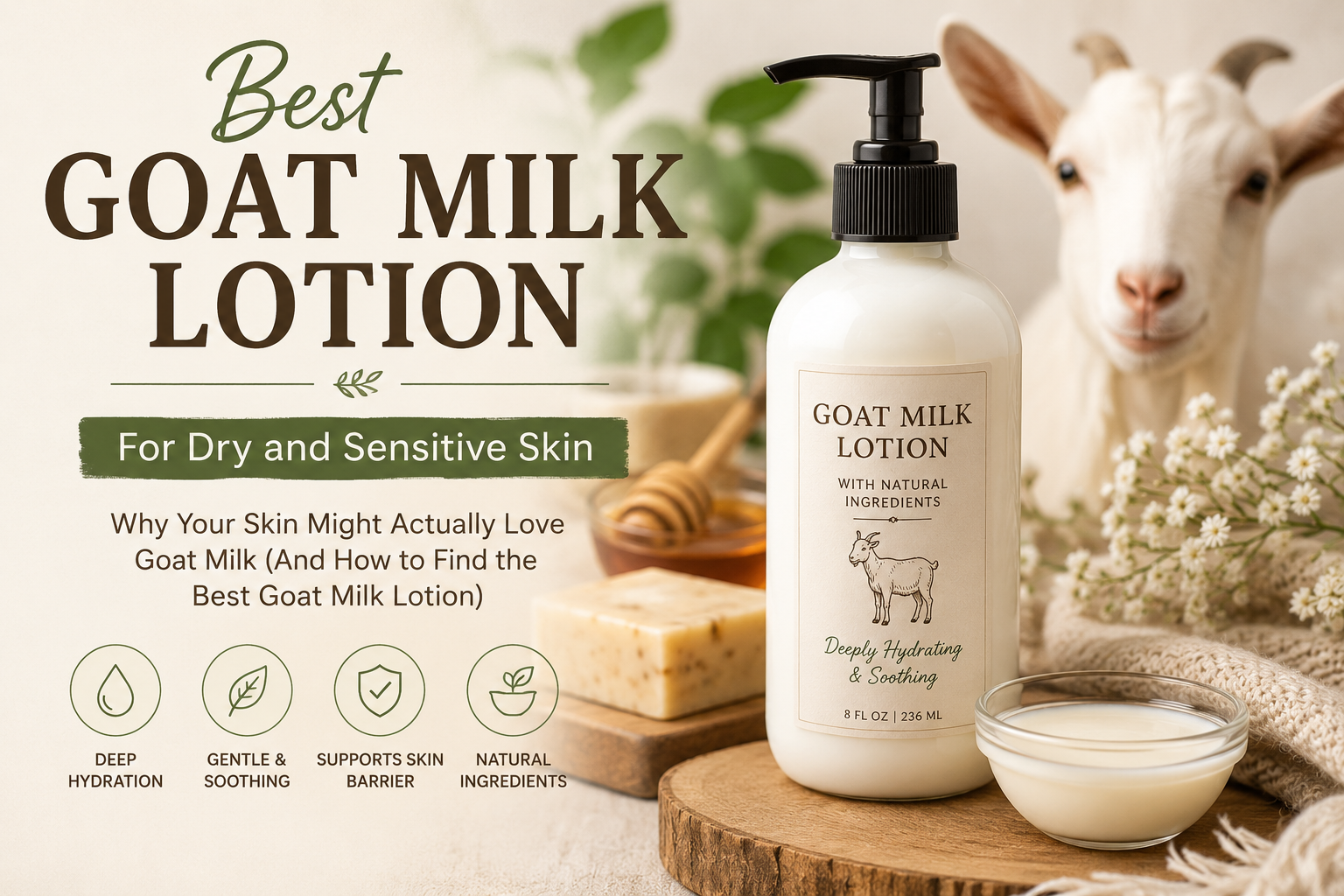
Goat milk's fat content is oddly similar to the oils our own skin makes. It also has lactic acid in it naturally, which helps slough off dead skin cells without scrubbing your face raw. Vitamin A and D show up in there too, and both play a role in skin repair — though I won't pretend that's the main reason people notice a difference. Mostly they notice because their skin stops feeling like sandpaper.
Try this sometime — use a bar of handmade goat milk soap for a week, then go back to whatever drugstore bar you had before. You'll feel it right away. One leaves your skin normal. The other leaves it feeling stripped, almost papery.
Here's Where It Gets Tricky
Not every "goat milk soap" on the shelf actually has much goat milk in it. Some brands add just enough to slap it on the label and call it a day. If you're trying to actually help dry or sensitive skin, that matters. You want goat milk near the top of the ingredient list, not buried somewhere after a bunch of fillers.
A few things I'd personally check before buying a bar: Is goat milk actually listed high up, or is it an afterthought? Any added fragrance that might set off sensitive skin? Was it cold-processed, since that tends to preserve more of the good stuff? And does it have anything else worth mentioning mixed in, like shea butter or honey?
Speaking of shea butter — a lot of the better bars pair it with goat milk. You'll come across things labeled as african soap with shea butter, which tends to be a good pick for anyone dealing with really dry, cracked skin, especially on hands or elbows. Shea alone can feel heavy on its own, but mixed with goat milk it soaks in easier and doesn't leave that greasy film behind.
Honey gets added a lot too. Honey & goat milk handmade soap is one combo that keeps showing up, and it's not just for the smell (though that helps). Honey has some natural antibacterial qualities, and it just makes the lather feel a little richer. Small detail, but when you're using something daily, small details add up.
Why People Move Toward Smaller Soap Makers
At some point a lot of people give up on big-name soap brands entirely and start looking at smaller, independent makers instead. Handmade goat milk soap made in small batches usually means less filler and more of the actual ingredient doing the work — no random preservatives just to stretch shelf life for a warehouse somewhere.
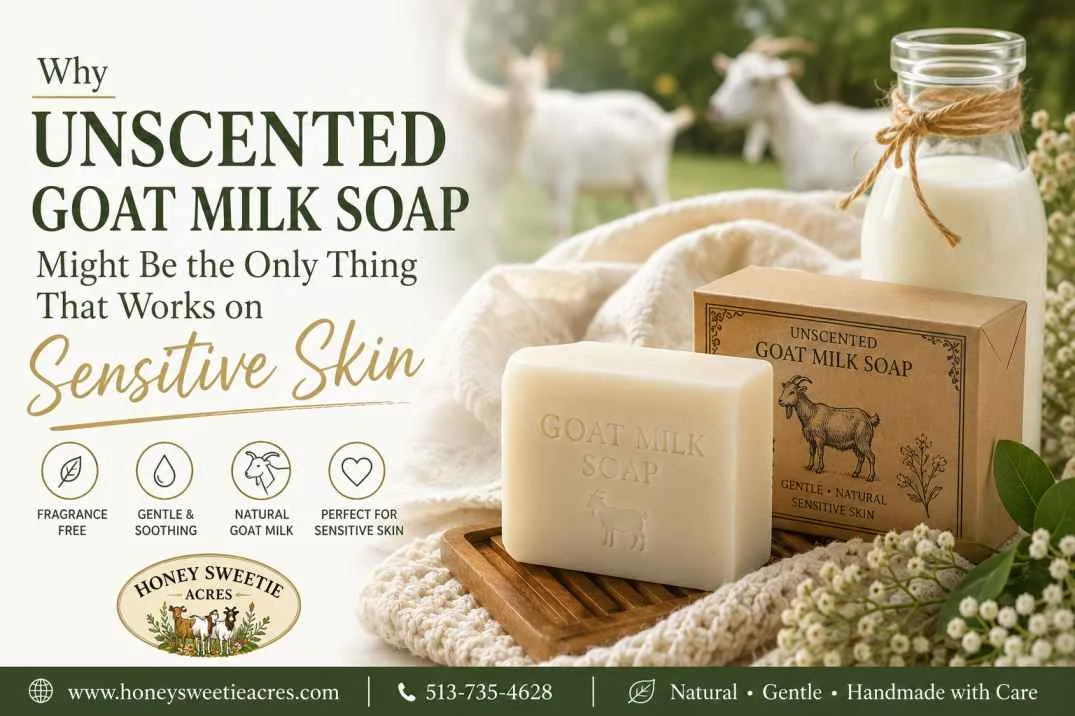
That's part of why some people end up trying small-batch options like Honey Sweetie Acres — not because big brands are bad exactly, but smaller operations tend to pay closer attention to what's actually going into each bar.
If you're trying to figure out what's actually top rated goat milk soap and not just well-marketed, skip the star rating for a second and read the actual reviews. Look for people mentioning their dryness getting better, or their skin not reacting the way it used to. That tells you a lot more than four-point-five stars ever will.
A Couple Honest Observations
Winter really is when this stuff shows up the most. Cold air outside, dry heat blasting inside — skin takes a beating from both directions. Switch to a goat milk bar during those months and people tend to say the same thing: less flaking, less tightness, skin just feels calmer overall.
Nothing magic about it. It's just soap that isn't working against you for once.
If your skin's been off for a while and you can't quite pin down why, it might be worth looking at what's actually touching it every day. Sometimes that's the whole fix.