Sign up with Google
 Sign in with Zoho

Data is now a major part of how businesses understand customers, improve operations and make everyday decisions. From online shopping and banking to healthcare, education and technology, organisations generate large amounts of data every day. But collecting data is only the first step. Businesses also need professionals who can analyse that data, identify patterns and build models that can support better decisions.
This growing requirement has made data science an attractive career option for students, graduates and working professionals. For beginners who want to enter this field, choosing the right Data Science Course in Delhi can provide a structured way to learn important concepts, tools and practical techniques.
At Gyansetu, we focus on helping learners build practical knowledge of data science through technical training, projects and career-oriented guidance. This guide explains what beginners should know before starting a Data Science Course in 2026.
What Is Data Science?
Data science is a field that combines statistics, programming, mathematics and business understanding to extract useful information from data.
A data scientist may work with large datasets to identify patterns, predict future outcomes or solve business problems. For example, an e-commerce company may use data science to predict which products a customer is likely to purchase. A bank may use predictive models to assess financial risks, while a healthcare organisation may analyse data to identify trends in patient information.
The work involves several stages, including collecting data, cleaning it, analysing it, building models and communicating results.
Because of this, data science requires a combination of technical and analytical skills.
Why Learn Data Science in Delhi?
Delhi is one of India's major education, business and technology centres. The wider NCR region, including Gurgaon and Noida, has a strong presence of IT companies, consulting firms, startups, financial organisations and multinational companies.
For someone planning a career in data science, learning in this environment can provide access to a broad professional ecosystem.
A Data Science Course in Delhi can also provide beginners with a structured learning path. Instead of trying to learn Python, statistics, machine learning and data visualisation separately, students can study these areas as interconnected parts of the data science process.
What Will You Learn in a Data Science Course?
A comprehensive Data Science Course should cover the fundamentals before moving towards advanced concepts. Beginners should ideally develop their skills step by step.
Python for Data Science
Python is one of the most commonly used programming languages in data science. It is popular because of its relatively simple syntax and wide range of libraries.
Beginners can start with:
- Variables and data types
- Conditional statements
- Loops
- Functions
- Lists and dictionaries
- File handling
- Object-oriented programming basics
After learning Python fundamentals, students can work with libraries such as NumPy and Pandas for data analysis.
Statistics
Statistics plays an important role in understanding data. Without basic statistical knowledge, it can be difficult to interpret results correctly.
A beginner-level course may cover:
- Mean, median and mode
- Variance and standard deviation
- Probability
- Distributions
- Correlation
- Regression
- Sampling
- Hypothesis testing
These concepts help learners understand the meaning behind numbers rather than simply processing them.
Data Cleaning and Analysis
Real-world data is rarely perfect. It may contain missing values, duplicate records, inconsistent formats or incorrect entries.
Data cleaning involves identifying and handling these issues before analysis.
Using Python libraries such as Pandas, learners can practise:
- Removing duplicate data
- Handling missing values
- Changing data formats
- Filtering records
- Combining datasets
- Identifying patterns
- Performing basic analysis
This is an important part of the data science workflow because the quality of the input data can affect the results.
Data Visualisation
Numbers are often easier to understand when presented visually. Data visualisation helps communicate trends, comparisons and relationships.
Students may learn tools and libraries such as Matplotlib and Seaborn to create charts and graphs.
They can practise creating:
- Bar charts
- Line charts
- Histograms
- Scatter plots
- Box plots
- Distribution charts
Good visualisation is not simply about making charts look attractive. It is about selecting the right visual format to communicate the information clearly.
Introduction to Machine Learning
Machine learning is one of the most important areas of data science.
Instead of giving a computer explicit instructions for every situation, machine learning algorithms can learn patterns from existing data and use those patterns to make predictions or classifications.
A beginner-friendly programme may introduce concepts such as:
- Supervised learning
- Unsupervised learning
- Regression
- Classification
- Clustering
- Model training
- Model evaluation
- Feature selection
Common algorithms may include linear regression, logistic regression, decision trees, random forests and clustering techniques.
The focus should be on understanding how and when these methods are used rather than simply memorising algorithm names.
Importance of Practical Projects
One of the most important aspects of learning data science is practical experience.
Reading about machine learning or watching videos about Python can help build basic knowledge, but working with actual datasets provides a different type of learning experience.
For example, students might work on a sales prediction project, customer segmentation analysis or a classification problem.
A project generally involves several steps:
- Understanding the business problem
- Collecting or receiving the dataset
- Cleaning the data
- Performing exploratory analysis
- Selecting relevant features
- Building a model
- Evaluating the results
- Presenting the findings
This process helps learners understand how different concepts connect.
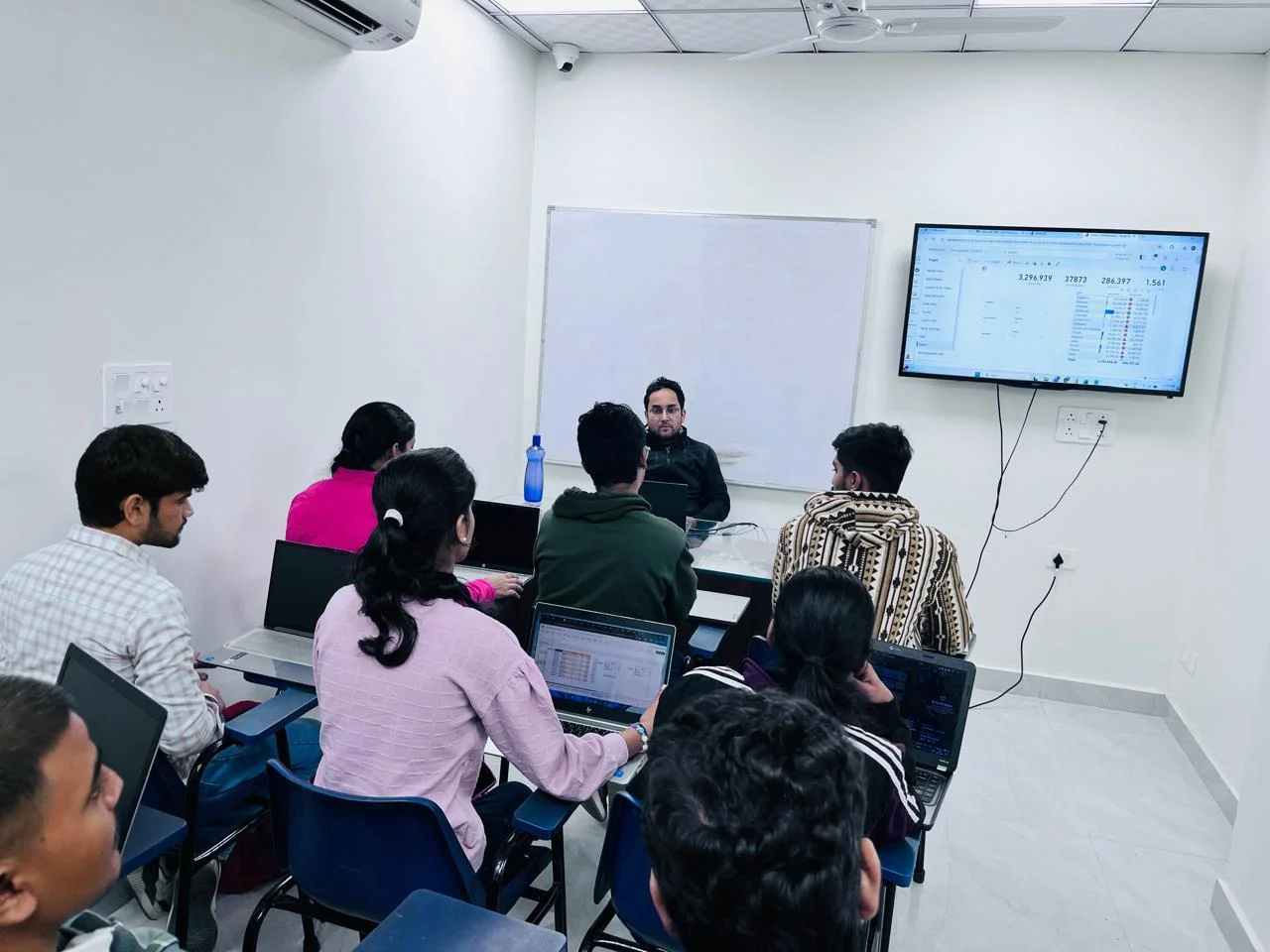
At Gyansetu, practical assignments and projects form an important part of our training approach. The aim is to help students move beyond theoretical learning and gain confidence in applying their knowledge.
Who Can Join a Data Science Course?
A Data Science Course can be considered by learners from different academic backgrounds.
It may be suitable for:
- College students
- Fresh graduates
- Engineering graduates
- Commerce graduates
- Mathematics students
- Management professionals
- Working professionals
- People planning a career change
- Beginners interested in technology and analytics
You do not necessarily need advanced programming knowledge before starting. Beginners can start with programming fundamentals and gradually move towards data analysis and machine learning.
However, consistency is important. Data science includes several technical concepts, so learners should be prepared to practise regularly.
Career Opportunities in Data Science
After developing the required skills, candidates can consider different roles depending on their education, project experience and technical knowledge.
Some possible career paths include:
- Data Scientist
- Junior Data Scientist
- Machine Learning Associate
- Data Analyst
- Business Intelligence Analyst
- Python Developer
- Machine Learning Engineer
- Business Analyst
Job responsibilities vary between organisations. Some roles may focus more on data analysis, while others may involve machine learning, programming or statistical modelling.
This is why students should build a broad foundation before deciding on a specific career direction.
Placement Support and Career Preparation
Technical skills are important, but getting your first job also requires preparation.
Students should learn how to present their projects, write a clear resume and explain technical concepts during interviews. They should also become comfortable discussing how they approached a problem and why they selected a particular method.
At Gyansetu, placement support is included as part of our career-focused approach. Learners can receive guidance related to resumes, interviews and available job opportunities.
The objective is to help students approach the recruitment process with better preparation and a clearer understanding of what employers look for.
Why Choose Gyansetu?
Gyansetu has been providing professional training since 2012. Over the years, we have focused on helping learners develop skills in areas such as data science, data analytics, artificial intelligence, Python, Power BI and other technology domains.
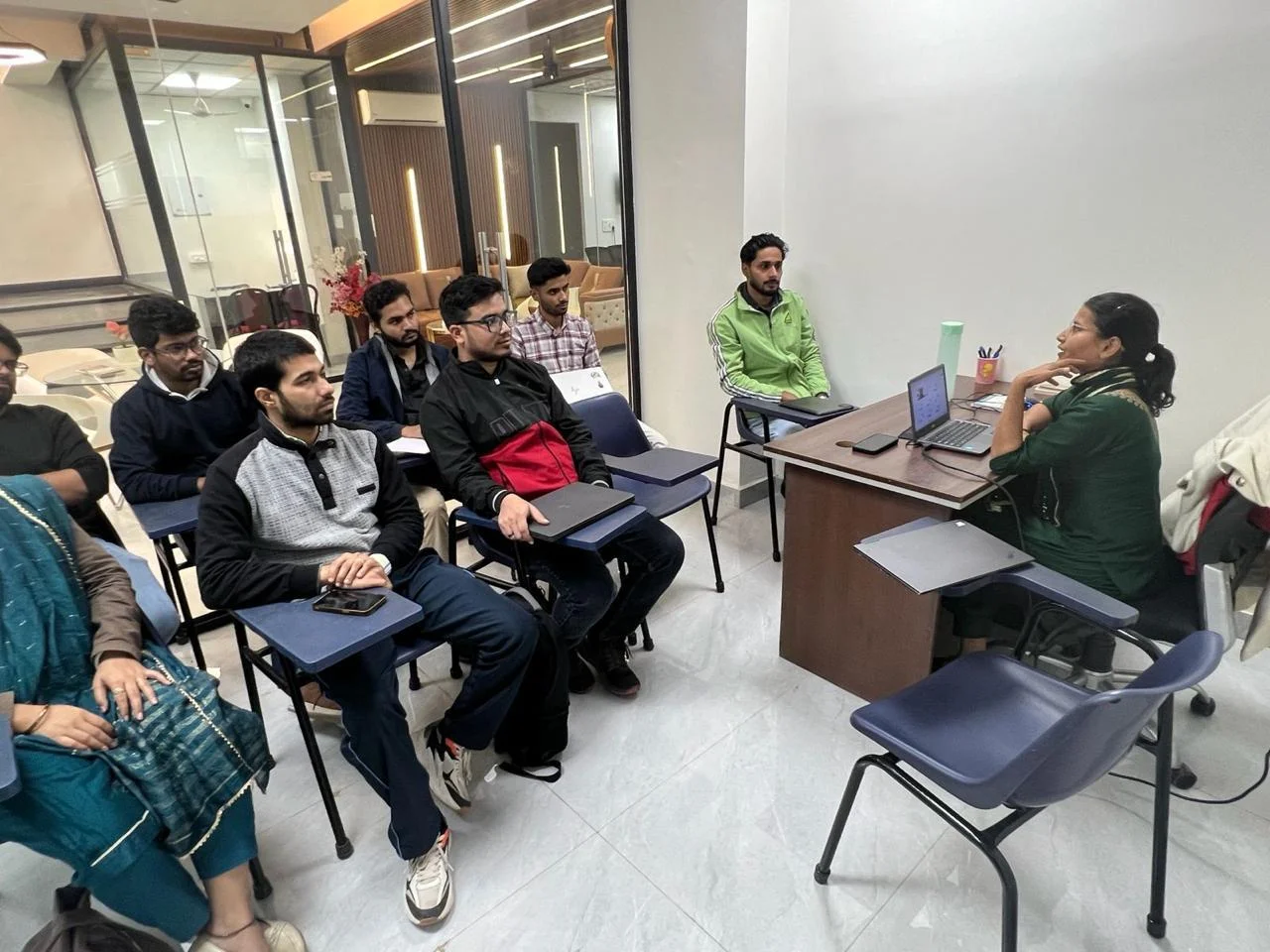
Our learning approach combines classroom instruction with practical assignments and project work. We encourage learners to ask questions and practise concepts instead of simply memorising information.
For beginners, this can be particularly helpful because data science may initially appear complicated. Once the concepts are broken into smaller topics and practised regularly, the learning process becomes easier to manage.
Our trainers focus on explaining concepts in a practical manner and connecting technical topics with real-world applications.
How Beginners Can Prepare for Data Science
If you are considering a Data Science Course in Delhi, you can begin preparing before joining the programme.
Start with basic mathematics and statistics. It is also useful to develop a basic understanding of Excel and computer operations.
Once you begin learning Python, practise small programs regularly. Do not worry if your first programs are simple. Writing and debugging code is part of the learning process.
You should also develop the habit of asking questions about data. For example, if you see a dataset containing monthly sales, ask yourself which month performed best, which product generated the most revenue and whether there are any noticeable patterns.
This kind of curiosity can help develop an analytical mindset.
Final Thoughts
Data science offers a wide range of opportunities for people interested in programming, statistics, technology and problem-solving. However, becoming comfortable with data science takes time and consistent practice.
A Data Science Course in Delhi can provide beginners with a structured learning environment where they can study Python, statistics, data analysis, visualisation and machine learning in a logical sequence.
At Gyansetu, our goal is to make the learning process practical and career-oriented through technical training, projects and placement guidance.
If you are starting from zero, you do not need to know everything immediately. Begin with the fundamentals, practise regularly and gradually take on more complex datasets and projects. With patience, consistent effort and the right guidance, you can build a strong foundation for a career in data science in 2026 and beyond.