Sign up with Google
 Sign in with Zoho
You’re standing in your backyard staring at a tree that doesn’t look right. Maybe the leaves turned yellow too early. Maybe there’s a crack running up the trunk after last week’s storm. Or perhaps whole branches are just... dead. And now you’re wondering — do I cut this thing down, or is there still hope?
This is one of the most common questions homeowners face, and the answer isn’t always obvious. Trees are resilient. They’ve survived centuries of storms, droughts, and disease. But they’re not invincible. Knowing when to fight for a tree and when to let it go takes real expertise — the kind that comes from years of hands-on work, not a quick internet search.
What Actually Happens When an Arborist Looks at Your Tree
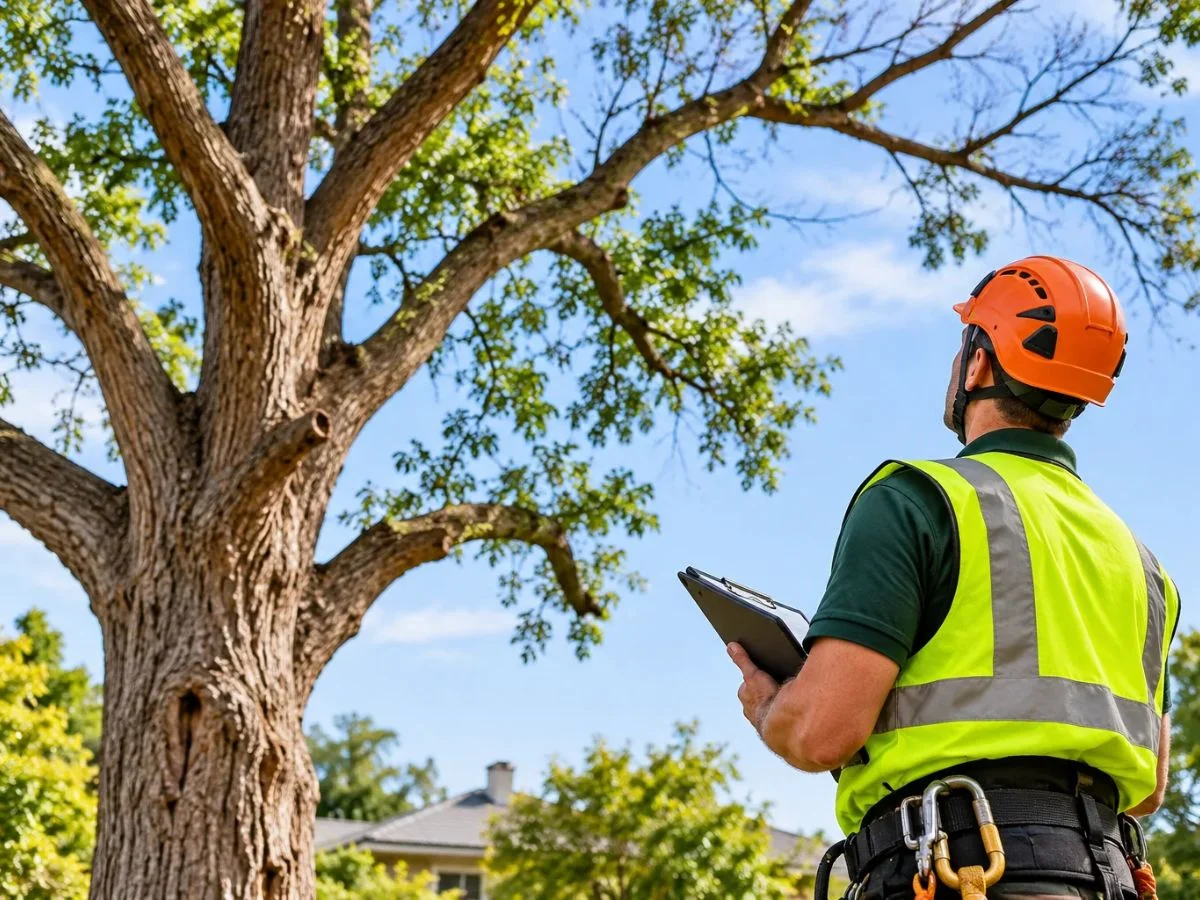
When a trained arborist walks up to a struggling tree, they’re not just glancing at it. They’re reading it — like a doctor examining a patient. They check the bark for cracks, cankers, or unusual discoloration. They look at the root zone for signs of rot or soil compaction. They examine branch structure to see if the weight distribution creates a falling hazard.
A damaged tree isn’t automatically a dead tree. That’s the first thing most arborists will tell you. A tree that lost a major limb in a storm might heal perfectly fine with proper pruning and care. One with a hollow trunk, on the other hand, might look healthy on the outside but be structurally compromised enough to come down in the next strong wind.
Here’s what the assessment usually covers:
- Structural integrity — Is the trunk sound? Are there cracks or splits near the base?
- Root health — Fungal growth near the base, soft soil, or lifted ground can signal root rot
- Crown density — Sparse foliage often points to stress, disease, or root issues
- Pest activity — Boreholes, sawdust-like residue, or unusual bark patterns suggest infestation
- Wound response — Is the tree actively trying to compartmentalize (seal off) damaged areas?
That last one matters more than people realize. Trees don’t heal the way humans do — they compartmentalize. They wall off damaged tissue and grow around it. A tree actively doing this is fighting for its life. One that isn’t? That’s a different conversation.
Diseased or Dying — Is There a Real Difference?
Yes, and it matters enormously. A diseased tree has a problem that may be treatable. A dying tree is past the point of intervention.
Diseases like oak wilt, Dutch elm disease, or fire blight are serious — but catching them early changes everything. Professional tree care can include targeted fungicide treatments, pruning infected branches well outside the affected zone, improving soil health, and adjusting watering practices to reduce stress. None of this is guesswork. It’s based on what the tree is actually showing, not what someone assumes.
A tree weakened by years of compacted soil and drought stress is more vulnerable to disease and pests. Sometimes treating the underlying stress is what saves the tree, not just the visible symptom. This is why a surface-level look rarely tells the whole story.
There’s also a timing factor. Trees that show signs of decline in spring have a different prognosis than those showing the same signs in late summer. A good arborist tree service accounts for the season, the species, and the specific history of that individual tree.
The Removal Question — When Is It the Right Call?
Saving a tree is almost always the preferred outcome. Mature trees add property value, provide shade, and support local wildlife. In fact, the Australian Government’s Department of Climate Change, Energy, the Environment and Water recognizes that mature trees play a critical role in maintaining local biodiversity and ecosystem balance — which is exactly why removal should always be the last option, not the first instinct. They take decades to replace, and the environmental cost of losing one is real.
But removal becomes the responsible choice when:
- More than 50% of the tree is damaged or dead
- The trunk has a large hollow cavity affecting structural stability
- The tree is leaning significantly and the root system is compromised
- It’s sitting over a structure, driveway, or area with heavy foot traffic
- The disease has progressed too far for meaningful recovery
Homeowners often wait too long before reaching out to a professional — sometimes because they hope the problem will resolve itself, sometimes because they’re worried about cost. But waiting rarely helps. A tree that’s borderline saveable in March might be unsalvageable by July. And a tree that could’ve been treated for a few hundred dollars can turn into a hazardous removal that costs significantly more.
If you’re noticing warning signs — unusual leaf drop, dead wood at the crown, bark falling off, mushrooms growing at the base — that’s the moment to call, not wait. An arborist tree service can walk you through what’s actually happening and give you real options, not just a sales pitch for removal.
Species Matter More Than Most People Think
Not every tree responds the same way to damage or disease. A silver maple and a white oak facing the same storm damage may have entirely different outcomes. Some species compartmentalize wounds exceptionally well. Others are prone to decay once the outer bark is broken.
Fruit trees, ornamentals, and native hardwoods each come with their own vulnerabilities and strengths. What works as a treatment for one might be completely ineffective — or even harmful — for another. This species-specific knowledge is a huge part of what separates a trained arborist from someone with a chainsaw and good intentions.
What You Can Do Before the Arborist Arrives
If you’re waiting on a consultation, there are a few things worth noting so you can share them:
- When did you first notice the problem?
- Has the tree been through any recent construction, digging, or soil disturbance nearby?
- Any changes in watering — either drought or overwatering?
- Have you applied any fertilizer, herbicide, or pesticides around the tree recently?
This context helps the arborist piece together what might have triggered the decline. Trees don’t get sick overnight. There’s almost always a chain of events, and understanding it leads to better decisions.
The Bottom Line on Tree Decisions
Deciding whether a tree lives or comes down isn’t something to rush. It’s also not something to guess at. Trees that look dead sometimes recover with the right intervention. Trees that look fine can be dangerously unstable. That gap between appearance and reality is exactly where professional judgment earns its value.
The goal of a good arborist isn’t to sell you a service — it’s to give you an honest answer. Sometimes that means a treatment plan. Sometimes it means removal. And sometimes it means monitoring the tree through another season before making a final call. What it never means is a snap judgment based on how something looks from the street.
If you’re unsure about a tree on your property, get it looked at. The worst outcome from a consultation is that you learn everything’s fine. The worst outcome from skipping one is a lot harder to fix.



 (1).webp)