Sign up with Google
 Sign in with Zoho

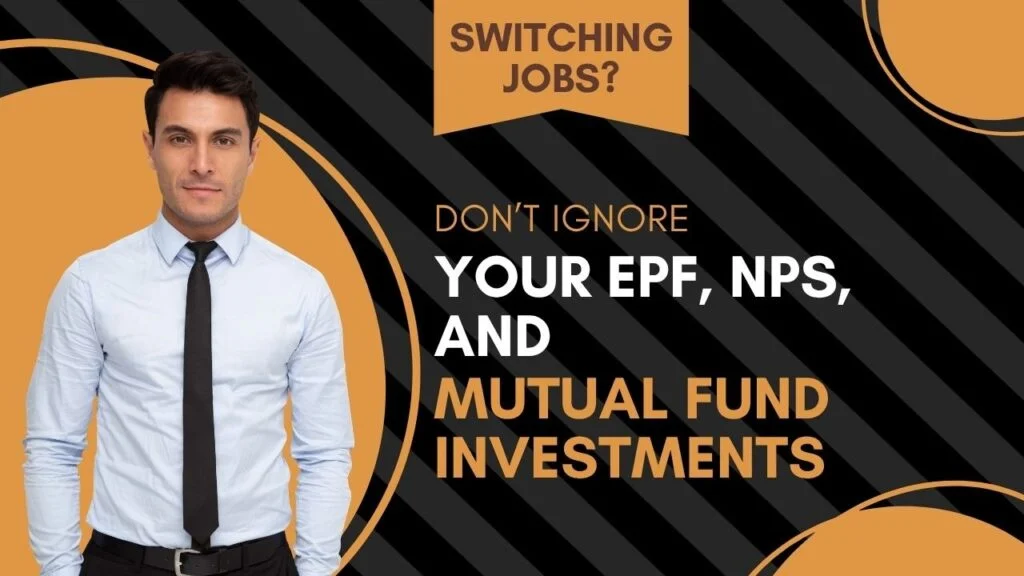
Moving to a new job is a fun part of your career. It can result in a higher salary, new responsibilities, better benefits, and new chances to develop professionally. But as you are concerned with your new workplace, there is one thing you should not forget: your current investments and retirement savings.
Are you Switching Jobs? Here’s why you should keep a close track of your EPF, NPS and Mutual Fund investments. These investments can contribute significantly to your long-term financial security, and a Job Change is a good occasion to check if everything is in place.
Your investments in the Employee Provident Fund (EPF), National Pension System (NPS) and Mutual Funds function differently but the three can help you build your financial future. A job change is thus not only a career decision, but also an opportunity to review your finances, and make sure your savings are still working towards your goals.
Why Job Switching Can Affect Your Financial Planning
When you quit a company to go work at another, multiple financial things can change simultaneously. Your pay may have gone up, your employer’s retirement contribution may have changed, and you may be receiving one last paycheck from your former employer.
Your insurance coverage, tax deductions, investment contributions, and monthly cash flow may also be affected.
Many employees are more concerned with their new salary and joining formalities than they are with their old financial accounts. This can cause unnecessary problems down the line.
Hence, the change of job is a good time to login to your EPF account, check your NPS contributions, look at your mutual fund portfolio, and revise your financial goals.
Understanding Your EPF During a Job Change
The Employees' Provident Fund (EPF) is a crucial retirement savings instrument for eligible salaried employees. Employees and employers typically contribute as per applicable rules.
When you change jobs, your EPF savings do not just vanish. In most cases, your previous provident fund balance can continue to be linked to your EPF account and you will be able to contribute to your new employment through the relevant system.
One of the most important things employees should focus on is ensuring that their Universal Account Number (UAN) and employment details are correctly linked.
Don't Rush to Withdraw Your EPF
One common mistake employees make after leaving a job is immediately considering EPF withdrawal.
While withdrawal may be permitted in certain circumstances under applicable rules, it is important to understand the long-term consequences before taking money out of your retirement savings.
Your EPF can benefit from long-term compounding. Leaving retirement money invested can help it grow over many years.
If you are joining another eligible employer, transferring or continuing the account structure may be more appropriate than withdrawing the entire balance, depending on your circumstances.
Check Your EPF Details
After switching jobs, review your EPF information and make sure:
- Your UAN details are correct.
- Your new employer has the correct UAN.
- Your previous employment details are properly reflected.
- Contributions are being credited correctly.
- Your personal information is updated where required.
- Your bank and KYC information are accurate.
Keeping these details organized can make future withdrawals, transfers, or retirement-related processes easier.
What About NPS When You Change Jobs?
The National Pension System (NPS) is another important retirement-planning option. Unlike an employer-specific benefit, NPS can continue even when you change organizations.
If you already have an NPS account, changing jobs does not necessarily mean that you need to start over. Your NPS account can continue to serve as part of your long-term retirement strategy.
If your new employer provides NPS-related benefits or contributions, check whether you can continue using your existing account under the applicable employer arrangement.
Review Your NPS Contribution
A salary increase after a job switch provides an opportunity to reconsider your retirement contribution.
For example, if your monthly income increases, you may be able to increase the amount you invest toward retirement without significantly affecting your lifestyle.
However, retirement contributions should be balanced with other financial priorities such as emergency savings, insurance, debt repayment, and short-term goals.
Don't Forget Your NPS Nominee
A job change is also a good opportunity to review your nominee information.
People often update nominees for bank accounts or insurance but forget about their investment and retirement accounts. Keeping nominee details current can help simplify the process for your family in the future.
Review Your Mutual Fund Investments
Mutual funds are different from EPF and NPS because they are investment products rather than employment-linked retirement benefits.
A job change does not normally require you to sell or redeem your mutual funds. Your investments can generally continue regardless of where you work.
However, a job switch can change your income, expenses, and financial goals, making it a good time to review your portfolio.
Don't Sell Investments Just Because You Changed Jobs
One of the biggest mistakes investors make is making unnecessary investment decisions during a career transition.
Suppose you have been investing through monthly Systematic Investment Plans (SIPs). Changing companies does not automatically mean that you should stop those SIPs.
Instead, ask yourself:
- Has my financial goal changed?
- Has my risk tolerance changed?
- Has my investment horizon changed?
- Has my income increased?
- Do I need more emergency savings?
- Is my portfolio properly diversified?
If your financial circumstances remain stable, there may be no reason to make major changes simply because you have changed employers.
Use a Salary Increase Wisely
A job switch often comes with a salary increase. This can be one of the best opportunities to strengthen your financial position.
Instead of allowing the entire increase to disappear into lifestyle expenses, consider dividing the additional income among different financial priorities.
For example, you might allocate part of the increase toward:
- Increasing retirement contributions
- Continuing or increasing SIP investments
- Building an emergency fund
- Paying down expensive debt
- Buying adequate insurance
- Saving for a home or education
- Other long-term financial goals
The exact allocation should depend on your income, expenses, risk profile, and personal goals.
Build or Rebuild Your Emergency Fund
A job switch is also a good reminder that employment income is not guaranteed forever.
Even if your new salary is higher, unexpected expenses can arise. An emergency fund can provide a financial cushion during periods of uncertainty.
If you used your savings during the transition between jobs, consider rebuilding the emergency fund after receiving your new salary.
The appropriate emergency fund varies from person to person. Factors such as monthly expenses, dependents, job stability, debt obligations, and insurance coverage should be considered.
Check Your Insurance After Switching Jobs
Many employers provide health insurance and other benefits as part of their employee package.
When you leave your old employer, some benefits may end or change. Your new employer may provide different coverage.
Therefore, don't assume that your new employer's insurance is automatically sufficient.
Review:
- Health insurance coverage
- Life insurance requirements
- Personal accident coverage
- Existing individual policies
- Coverage for dependents
Employer-provided insurance can be useful, but relying exclusively on employment-linked coverage may leave you vulnerable if you change jobs again or take a career break.
Review Your Tax Planning
A job change can also affect your tax situation, particularly if your salary structure changes or you receive additional compensation.
If you work for more than one employer during the same financial year, make sure your income and applicable deductions are properly considered when planning your taxes.
Keep important documents from your previous employer, including salary records, tax-related statements, and details of retirement contributions.
Don't wait until the end of the financial year to discover that information is missing.
Keep All Financial Records Organized
A job switch can create a lot of paperwork. Keeping financial documents organized can save time later.
Maintain records related to:
- Previous employer
- Current employer
- EPF
- NPS
- Mutual funds
- Bank accounts
- Insurance
- Tax documents
- Loans and liabilities
- Nomination details
Digital records can be stored securely, while important physical documents should also be preserved where necessary.
Avoid Emotional Investment Decisions
Career changes can be stressful. Avoid making major investment decisions based on short-term emotions.
For example, you may feel financially comfortable after receiving a large salary increase and decide to invest aggressively. Alternatively, you may become worried about expenses and sell long-term investments unnecessarily.
Investment decisions should ideally be based on your financial plan rather than temporary emotions.
If you are uncertain about your portfolio or tax situation, consider seeking advice from a qualified financial professional.
A Simple Financial Checklist After Changing Jobs
Once you start your new job, take some time to complete a financial review.
Step 1: Check EPFConfirm that your UAN and employment information are correctly linked and that contributions are being credited.
Step 2: Review NPSCheck your existing account, contribution level, nominee details, and retirement objectives.
Step 3: Review Mutual FundsExamine your SIPs, asset allocation, investment horizon, and financial goals.
Step 4: Recalculate Your BudgetCreate a new monthly budget based on your revised salary and expenses.
Step 5: Strengthen Emergency SavingsMake sure you have sufficient accessible savings for unexpected expenses.
Step 6: Review InsuranceCheck whether your new employer's coverage is sufficient for you and your dependents.
Step 7: Review TaxesKeep documents from both employers and plan your taxes according to your overall income and eligible deductions.
Step 8: Update NomineesCheck nominee information across your important financial accounts.
Why Starting Early Matters
Retirement planning is most effective when it is viewed as a long-term endeavor and not something that should be handled when retirement is right around the corner.
Even small increases in monthly contributions can become meaningful over a long period because investments have more time to potentially compound.
That's why a change of jobs can be a good financial checkup. Instead of looking solely at the short-term raise in income, consider what the new salary will do for your financial future.
Your EPF can be used for retirement savings, NPS can be a component of your retirement approach and mutual funds can be used for a variety of long-term and medium-term financial goals, depending upon the particular funds chosen and your risk tolerance.
Common Mistakes to Avoid After a Job Switch
Several mistakes can reduce the effectiveness of your financial planning.
Ignoring your old EPF account: Don't forget about retirement savings simply because you have moved to another employer.
Unnecessarily withdrawing retirement savings: Consider the long-term impact before withdrawing money.
Stopping SIPs without a reason: A job change alone does not necessarily require you to stop your investments.
Ignoring nominees: Keep nominee details updated.
Increasing lifestyle expenses too quickly: A higher salary does not automatically mean that expenses should increase at the same rate.
Forgetting insurance: Check what happens to your old employer-provided benefits and what your new employer offers.
Neglecting taxes: Multiple employers in one financial year can require additional attention to income and tax records.
Conclusion
Switching Jobs? Don’t Neglect Your EPF, NPS, & Mutual Fund Investments as a career transition is an opportunity too, for financial planning. Your new employment might mean a higher salary and new perks, but you still need to tend to your existing savings and investments.
Take a moment to check your EPF details, pursue your NPS strategy, review your mutual fund holdings, replenish your emergency fund, review insurance cover and gather your tax papers. And whatever you do, don’t make any investment moves you wouldn’t have made before your employer switched.
Changing jobs does not mean you have to start your finances from scratch. Rather, it is an occasion to align your current investments with your new income, revised goals and long-term financial plans. By maintaining your EPF, NPS and mutual funds in order and in line with your goals, you can ease the transition and still work towards a better financial future.