Sign up with Google
 Sign in with Zoho

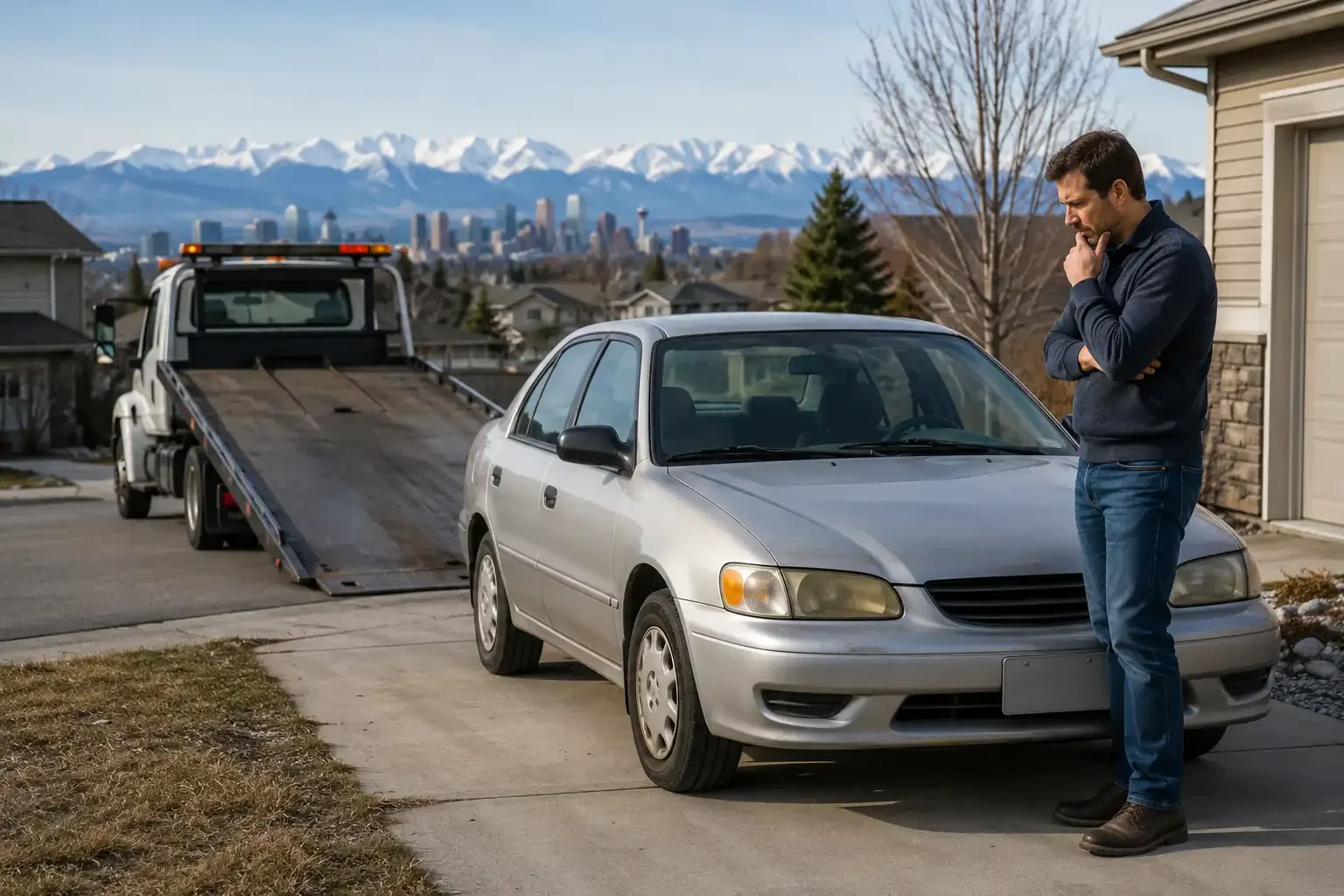
An old car can sit in a driveway for months before its owner finally decides what to do with it. Sometimes the engine has stopped working. In other cases, the repair bill is simply too high to justify keeping the vehicle. There are also cars that still run but have become unreliable, expensive to maintain, or unnecessary after a family buys a replacement.
If you have a vehicle in this situation, selling it does not have to be complicated. The important thing is to understand your options, know what information to prepare, and avoid accepting an offer before you understand the terms.
For Calgary drivers, the decision can be especially relevant when winter conditions, mechanical problems, and limited parking space make an unwanted vehicle more trouble than it is worth.
1. Decide Whether Repairing the Car Makes Financial Sense
The first question is not always how much you can sell the car for. It is whether spending more money on it makes sense in the first place.
Imagine an older sedan that needs a transmission replacement. The car might still have some value, but the repair could cost more than the vehicle is likely to be worth afterward. The same problem can occur with an aging SUV that needs significant engine work, has extensive rust, or has failed an important mechanical inspection.
Before making a decision, consider three things:
- Repair costs: Ask a mechanic for an estimate rather than relying on a guess.
- Future reliability: One major repair does not necessarily mean the car is finished, but repeated breakdowns deserve attention.
- Replacement costs: Compare the expense of repairing the existing vehicle with the cost of finding another dependable option.
There is no universal rule that says an old car should always be sold. A well-maintained older vehicle can still be useful. However, when the costs keep adding up, selling it may be the more practical choice.
2. Understand the Different Ways to Sell an Unwanted Vehicle
Not every selling method suits every car. A vehicle in good condition will attract a different group of buyers than one with a seized engine or extensive collision damage.
Selling privately
A private sale may make sense if the vehicle is roadworthy, reasonably presentable, and likely to attract individual buyers. You can advertise it online, arrange viewings, answer questions, and negotiate directly.
The downside is the time involved. You may need to clean the car, take photographs, respond to messages, arrange test drives, and deal with buyers who change their minds. You should also be prepared to answer honestly about the vehicle's condition and history.
Trading it in
If you are buying another vehicle from a dealership, asking about a trade-in can save time. The dealership may handle much of the paperwork as part of the transaction.
However, compare the trade-in offer with other realistic options. A convenient transaction is not automatically the most financially attractive one.
Selling to a vehicle buyer
Some businesses purchase older, damaged, unwanted, or non-running vehicles. Depending on the buyer, this can be a practical alternative when repairing or privately advertising a car is not worthwhile.
Before accepting an offer, ask how the price is determined, whether collection is included, when payment will be made, and whether any deductions or additional charges apply.
Selling a vehicle for scrap
A car that is no longer economical to repair may still have value in its recoverable parts and recyclable materials. Its value will depend on factors such as its weight, condition, components, and current market conditions.
Do not assume that every scrap vehicle has the same value. Two cars of similar age can receive different offers because their mechanical condition and usable parts differ.
3. What Determines the Value of an Old Car?
One of the most common mistakes sellers make is expecting a fixed price based only on the make, model, and year.
In reality, several factors can influence an offer.
Make, model, and year: Some vehicles have stronger demand for used parts than others. Popular models may be attractive even when they are no longer suitable for everyday driving.
Mechanical condition: A working engine and transmission can make a difference, although a non-running vehicle may still be worth selling.
Body damage and rust: Collision damage, corrosion, missing panels, and other visible problems can affect the value.
Mileage: Lower mileage can be attractive, but it does not tell the entire story. A poorly maintained low-mileage car may be less desirable than a higher-mileage vehicle with a better service history.
Completeness: Missing catalytic converters, wheels, batteries, or other important components may affect an offer.
Market demand: Parts demand and scrap-metal prices can change, so an estimate from several months ago may no longer be accurate.
When requesting a quote, provide honest details about the vehicle. Clear information helps the buyer make a more realistic assessment and reduces the chance of disagreements during collection.
4. Prepare Before Asking for a Quote
You do not need to spend money repairing a vehicle simply to request an offer. In most cases, a few basic details are enough to begin a conversation with a potential buyer.
Prepare the following information:
- The vehicle's make, model, and year.
- Approximate mileage.
- Whether it starts, runs, and drives.
- Any major mechanical problems or collision damage.
- Your general location in Calgary or the surrounding area.
- A few recent photographs, if available.
It is also worth mentioning whether the vehicle is missing any major parts or has been sitting unused for a long time.
You can then contact several buyers and compare their offers. Ask each one to explain whether the quoted amount is conditional on inspecting the vehicle and whether towing or pickup will cost extra.
A little preparation can save time on both sides.
5. Ask the Right Questions About Towing and Payment
A high initial quote may sound attractive, but the final amount matters more than the number mentioned during the first phone call.
Before agreeing to sell, ask whether the buyer charges for towing, whether the quoted price can change after arrival, and how payment will be handled.
Get clarity on the final agreed amount before the vehicle is loaded. If the buyer discovers a problem that was not disclosed, discuss any proposed adjustment before proceeding. You should not feel pressured to accept a new price without understanding the reason.
Also confirm the pickup arrangements. A vehicle that cannot move under its own power may require a flatbed truck or other suitable recovery equipment. Tell the buyer if the car is parked in a tight garage, has locked wheels, or is difficult to access.
These details are particularly important when the vehicle has been sitting unused for a long period.
6. Do Not Overlook the Paperwork
Selling a vehicle involves more than handing over the keys.
In Alberta, sellers should make sure the ownership and transfer requirements are handled correctly. Check the applicable provincial requirements before completing the transaction, and do not rely on an informal promise that the paperwork will be sorted out later.
Have the relevant registration or ownership documents available and confirm what identification is required. If you are selling on behalf of someone else, additional authorization may be necessary.
Remove personal belongings from the vehicle and check the glove compartment, trunk, door pockets, and storage areas. Remove your licence plates as required and ask about any remaining administrative steps that apply to your situation.
Keep a record of the sale, including the buyer's details, the agreed price, payment, and any required transfer documents. Proper documentation helps protect both parties if questions arise later.
7. Choosing a Local Car-Buying Service
If you prefer not to manage a private sale, a local vehicle-buying service may be worth considering.
For example, Calgary vehicle owners can explore Go Cash For Cars to learn about the business and its vehicle-buying services. As with any provider, it is sensible to confirm the service area, explain the car's condition, and ask about pricing, collection, and payment before making a commitment.
Do not choose a buyer on the basis of advertising alone. Look for clear communication, straightforward terms, and answers to your questions. If something about the offer is unclear, ask for clarification before agreeing to the sale.
Comparing more than one option is often worthwhile, especially when the vehicle has significant damage or has been off the road for a long time.
8. Is It Worth Selling a Car That No Longer Runs?
Yes, it can be. A vehicle does not have to be in driving condition to have potential value.
A non-running car may contain reusable components, while some vehicles are suitable primarily for recycling. The amount offered will depend on the individual vehicle, its condition, and the buyer's assessment.
Be realistic about what the car is worth, but do not assume that a serious mechanical problem makes it worthless. Obtain a quote and compare it with the cost of keeping, repairing, or removing the vehicle.
If the car is parked on private property, also consider how long you can reasonably leave it there. An unused vehicle takes up space, and a deteriorating car may create additional problems over time.
Final Thoughts
Deciding what to do with an old car is easier when you separate the emotional side of the decision from the practical costs. A vehicle may have served you well for years, but that does not mean keeping it is still the best option.
Start by assessing its condition, compare realistic selling methods, ask about towing and payment, and make sure the paperwork is handled properly. If the vehicle is no longer worth repairing, selling it to an appropriate buyer may save you time and free up valuable space.
The goal is not simply to get rid of an unwanted car as quickly as possible. It is to make an informed decision, understand the terms of the sale, and choose an option that works for your circumstances.









.webp)