Sign up with Google
 Sign in with Zoho
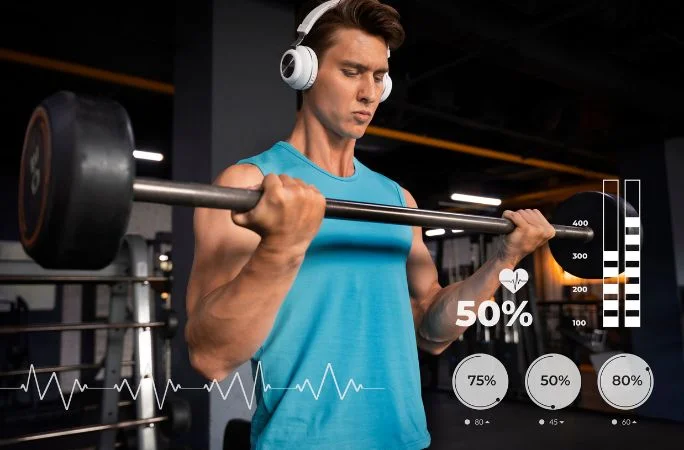
Being strong is valuable for an athlete—but strength alone does not automatically make someone faster, more explosive, or better at their sport. The real objective is learning how to apply strength quickly and efficiently during athletic movement.
That is where athletic performance training becomes important. A well-designed program combines strength, power, speed, mobility, movement quality, and sport-specific conditioning to help athletes convert physical strength into usable performance.
According to the American College of Sports Medicine (ACSM), its 2026 resistance-training review analyzed 137 systematic reviews involving more than 30,000 participants, examining outcomes including strength, power, endurance, contraction velocity, and physical performance.
What Is Athletic Performance Training?
Athletic performance training is a structured approach to improving the physical qualities an athlete needs to perform better.
Instead of focusing only on building muscle, training is designed around performance outcomes such as:
- Greater strength
- Faster acceleration
- Improved explosiveness
- Better change-of-direction ability
- Increased power
- Stronger movement mechanics
- Sport-specific conditioning
The goal is simple: build physical capacity that transfers to competition.
For example, a basketball player may need to translate lower-body strength into faster acceleration, higher jumps, quicker defensive movements, and stronger finishes at the rim.
1. Strength Is the Foundation of Athletic Performance
Strength training for athletes provides the foundation for producing force. Exercises such as squats, deadlift variations, lunges, presses, pulls, and single-leg movements can develop the strength needed for more demanding athletic actions.
But athletes should not automatically train like bodybuilders.
The ACSM's 2026 resistance-training guidance emphasizes that training variables should be matched to the desired outcome. Its review found benefits across strength, hypertrophy, power, endurance, and physical function, while emphasizing consistency and appropriate training prescription.
Performance takeaway: Build strength first, then teach the athlete to express that strength rapidly.
2. Turn Strength Into Power
Power is essentially about producing force rapidly. An athlete may be strong in the weight room but still need specific training to express that strength explosively.
Power-focused movements can include:
- Jump variations
- Medicine-ball throws
- Olympic-lift derivatives
- Loaded jumps
- Explosive push movements
- Short acceleration drills
ACSM's 2026 review specifically identifies power and contraction velocity among the physical-performance outcomes influenced by resistance training.
This distinction matters because sport rarely happens at a slow, controlled gym tempo. Athletes must produce force while sprinting, jumping, cutting, throwing, or reacting.
3. Add Speed and Movement Training
Strength becomes more useful when athletes can apply it during fast movement.
Speed training may involve:
- Acceleration drills
- Sprint mechanics
- Resisted sprinting
- Short-distance sprints
- Deceleration training
- Change-of-direction drills
The National Strength and Conditioning Association explains that athletic power can involve different combinations of force and movement velocity, highlighting why simply "training fast" is not enough without understanding the underlying physical qualities.
A complete program therefore connects strength development with movement-specific training.
4. Strength Training for Basketball Requires Specificity
Basketball provides a good example of why general strength training is only one part of performance development.
Players repeatedly accelerate, decelerate, jump, land, shuffle laterally, change direction, and compete for position.
Therefore, strength training for basketball should support qualities such as:
- Lower-body strength
- Single-leg stability
- Explosive jumping
- Acceleration
- Lateral movement
- Deceleration
- Core strength
- Repeated-effort conditioning
For example, a basketball-focused session might combine a strength movement with a jump or acceleration drill. The objective is not simply to lift more weight—it is to develop qualities that have practical relevance on the court.
5. Conditioning Supports Repeat Performance
An athlete does not need to perform only one excellent sprint or jump. They often need to repeat high-quality efforts throughout a practice or competition.
Conditioning helps athletes maintain performance as fatigue increases.
The World Health Organization recommends adults complete 150–300 minutes of moderate-intensity aerobic activity or 75–150 minutes of vigorous activity per week, along with muscle-strengthening activities on at least two days per week.
Athletic conditioning, however, should be appropriately structured around the athlete's sport, training age, schedule, and performance goals.
6. Consistency Beats Random Workouts
One of the biggest differences between ordinary exercise and performance training is structure.
A successful program should progressively develop qualities rather than randomly changing exercises every session.
A simple progression might look like:
Foundation → Strength → Power → Speed → Sport-Specific Performance
The exact sequence and training volume should be individualized. Athletes also need adequate recovery because performance adaptations occur when training stress is balanced with recovery.
How to Build a Better Athletic Performance Program
A practical athletic performance program should consider five key questions:
- What sport does the athlete play?
- What physical qualities does the sport demand?
- What are the athlete's current strengths and limitations?
- How should training volume and intensity progress?
- How can improvements transfer to actual sport performance?
This approach makes training more purposeful and measurable.
Athletes looking for structured coaching can explore GG Perform's Live Training program to learn more about performance-focused training options.
Final Takeaway
Athletic performance training is not simply about becoming stronger. It is about turning strength into usable athletic qualities—speed, power, explosiveness, movement efficiency, and sport-specific performance.
For athletes, the strongest results come from combining resistance training with speed, power, conditioning, movement quality, and progressive programming.
Whether the goal is improving sprint performance, jumping ability, or basketball movement, the principle remains the same: