Sign up with Google
 Sign in with Zoho
Kickstarting a new project is exciting, which is exactly why engineering procurement services in Nigeria usually get completely ignored the moment a project gets the green light. The early days of an industrial build are entirely about design blueprints, capital budgets, and engineering frameworks, leaving supply chain details in the background. Procurement only becomes a headline topic when something goes wrong, such as a critical subsea sensor arriving late, a major specification mismatch, or a key manufacturer missing a hard deadline. These reactive bottlenecks explain why managers are shifting away from general vendors and placing a greater focus on specialized engineering procurement services in Nigeria to protect their project timelines.Avoiding Project Delays: A Guide to Engineering Procurement Services in Nigeria
The New Reality of Industrial Supply Chains
Buying equipment used to be relatively straightforward. Today, project teams face a tough combination of global supply chain disruptions, specialized technical equipment requirements, evolving regulations, and demanding delivery schedules.
Placing an order is often the easiest part of the process. The bigger challenge is ensuring that critical equipment arrives when expected, meets engineering specifications, complies with regulatory requirements, and performs reliably under demanding operating conditions. As projects become larger and more technically complex, a single procurement decision can have consequences that extend far beyond the purchasing department.
How Tiny Oversights Break Budgets
Catastrophic project delays rarely begin with catastrophic engineering failures. More often, the root cause is something much smaller.
A missing calibration certificate, an incomplete cargo manifest, or a component manufactured to the wrong specification can halt a multi-million-dollar operation. On paper, these look like minor administrative issues. On the ground, they delay commissioning activities, leave costly installation vessels waiting offshore, and force contractors to remain idle while problems are resolved.
Many experienced project managers have encountered situations where teams were fully prepared to move forward, only to be delayed by a low-cost valve, a missing seal, or an uncertified sensor. The purchase price of the item is rarely the issue. The cost of the resulting delay usually is.
Why Technical Knowledge Matters During Procurement
Sourcing heavy machinery or specialized instrumentation requires more than commercial negotiation. It also requires an understanding of how equipment will perform in real operating conditions.
You can't just order subsea survey arrays, custody meters, or calibration gear off a shelf. Sourcing this kind of hardware means weighing real-world operational stress, harsh environments, and how the gear holds up over time. When procurement teams operate separately from engineering teams, specification errors become more likely.
When procurement decisions are supported by engineering expertise, organizations can completely bypass equipment compatibility issues during installation, costly on-site modifications, and disruptions during testing. At the end of the day, the smoothest projects succeed because the purchasing team and the engineers are actually talking to each other.
Navigating the Practical Realities in Nigeria
Nigeria continues to attract significant investment across infrastructure, oil and gas, marine logistics, and power generation. However, delivering projects successfully requires navigating logistical and regulatory realities that directly affect schedules.
It is common for imported equipment to arrive in-country on time but remain unavailable for deployment because documentation, transportation arrangements, customs requirements, or local content obligations were not addressed early enough. Teams that understand how these processes work typically spend less time resolving avoidable delays and more time advancing project milestones. Local operating knowledge can be just as valuable as access to international suppliers.
Stop Chasing the Lowest Price
Focusing exclusively on the lowest upfront cost can create challenges later in a project's lifecycle. High-performing teams look beyond the initial quote and ask practical questions:
- Will the supplier deliver within the required timeframe?
- Has the equipment undergone appropriate testing?
- Are replacement parts readily available?
- Is technical support accessible after installation?
Questions like these reveal risks that are not immediately visible during procurement. Over the lifespan of an industrial asset, supplier reliability and equipment performance have a greater impact on project outcomes than modest savings achieved during purchasing.
Bridging the Gap: The GeoAlliance Approach
Many organizations are now aligning procurement more closely with engineering activities to reduce risk and improve project delivery.
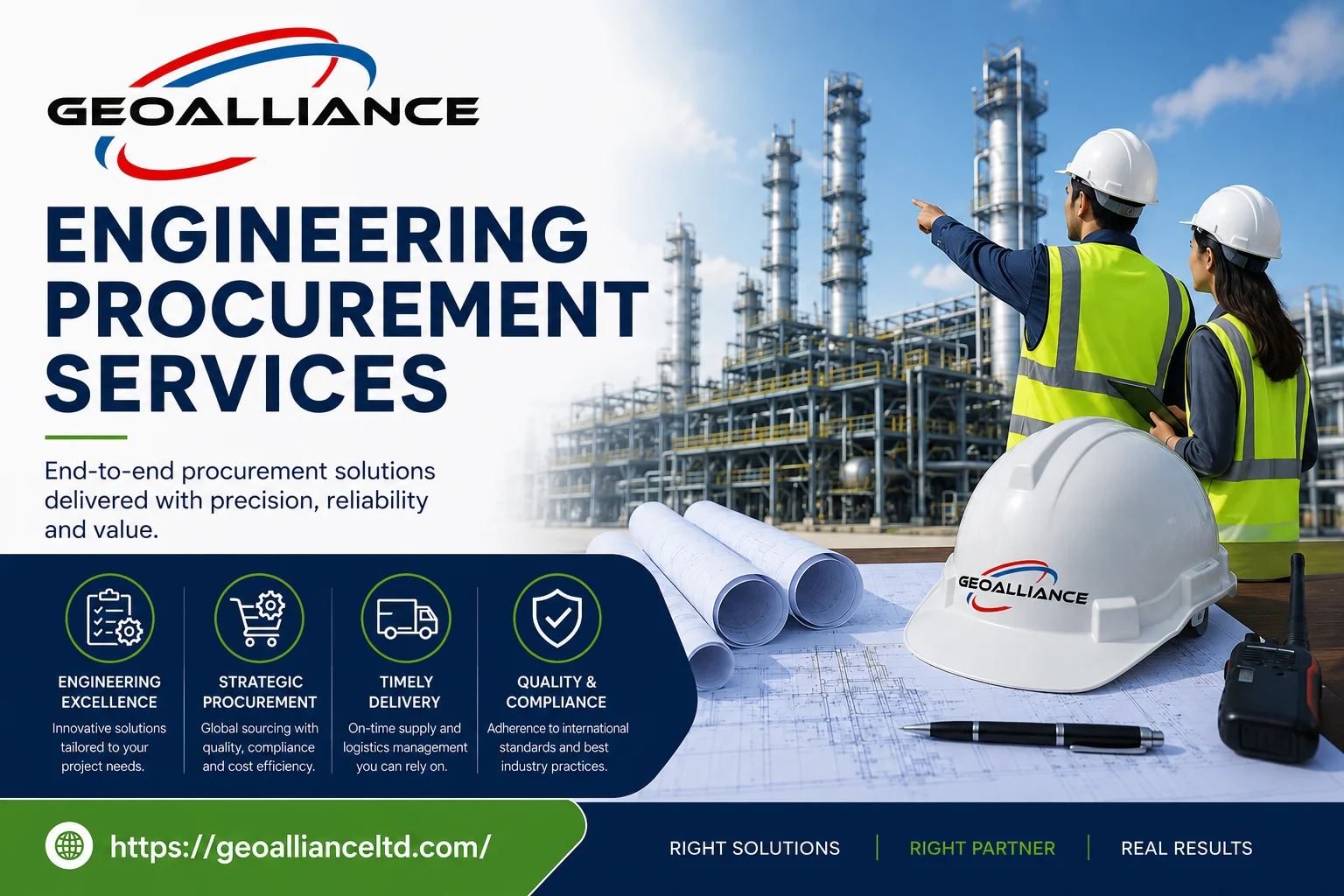
GeoAlliance Ltd. operates as an independent engineering, procurement, instrumentation, calibration, geoscience, and environmental consultancy. Its experience across onshore, coastal, and offshore environments provides practical insight into the challenges that arise between equipment specification, procurement, and field deployment. By combining technical expertise with procurement support, GeoAlliance helps clients navigate complex supply chain requirements while maintaining compliance with both international standards and local regulations.
Conclusion
Project delays become visible during construction, but their causes frequently originate much earlier in the project lifecycle. Procurement decisions influence schedules, budgets, equipment performance, and operational readiness long before installation begins.
As industrial assets become more technically demanding, Engineering Procurement Services in Nigeria continue to play an important role in helping organizations reduce avoidable delays, navigate regulatory requirements, and improve project outcomes. The projects that finish on time are rarely the ones that avoid every challenge. More often, they are the ones that identify potential issues early enough to prevent them from affecting field operations.
Engineering procurement involves sourcing, verifying, and delivering technical equipment and materials while managing quality requirements, logistics, documentation, and compliance considerations throughout the process.
Q. Why do procurement delays happen so often?
Common causes include specification errors, supplier issues, documentation gaps, customs delays, transportation challenges, and long manufacturing lead times.
Q. Why is technical knowledge important during procurement?
Equipment that appears suitable on paper may not always perform effectively in real operating conditions. Technical review helps reduce the risk of costly procurement mistakes.
Q. How can a company reduce procurement risks?
Early planning, supplier evaluation, technical verification, logistics coordination, and ongoing communication all help reduce procurement-related disruptions.
Q. What matters most when choosing a procurement partner?
Look past the cheap upfront price tag. High-performing teams choose partners based on their technical track record, direct relationships with global factories, and their boots-on-the-ground knowledge of moving freight through local ports right to the project site.