Sign up with Google
 Sign in with Zoho

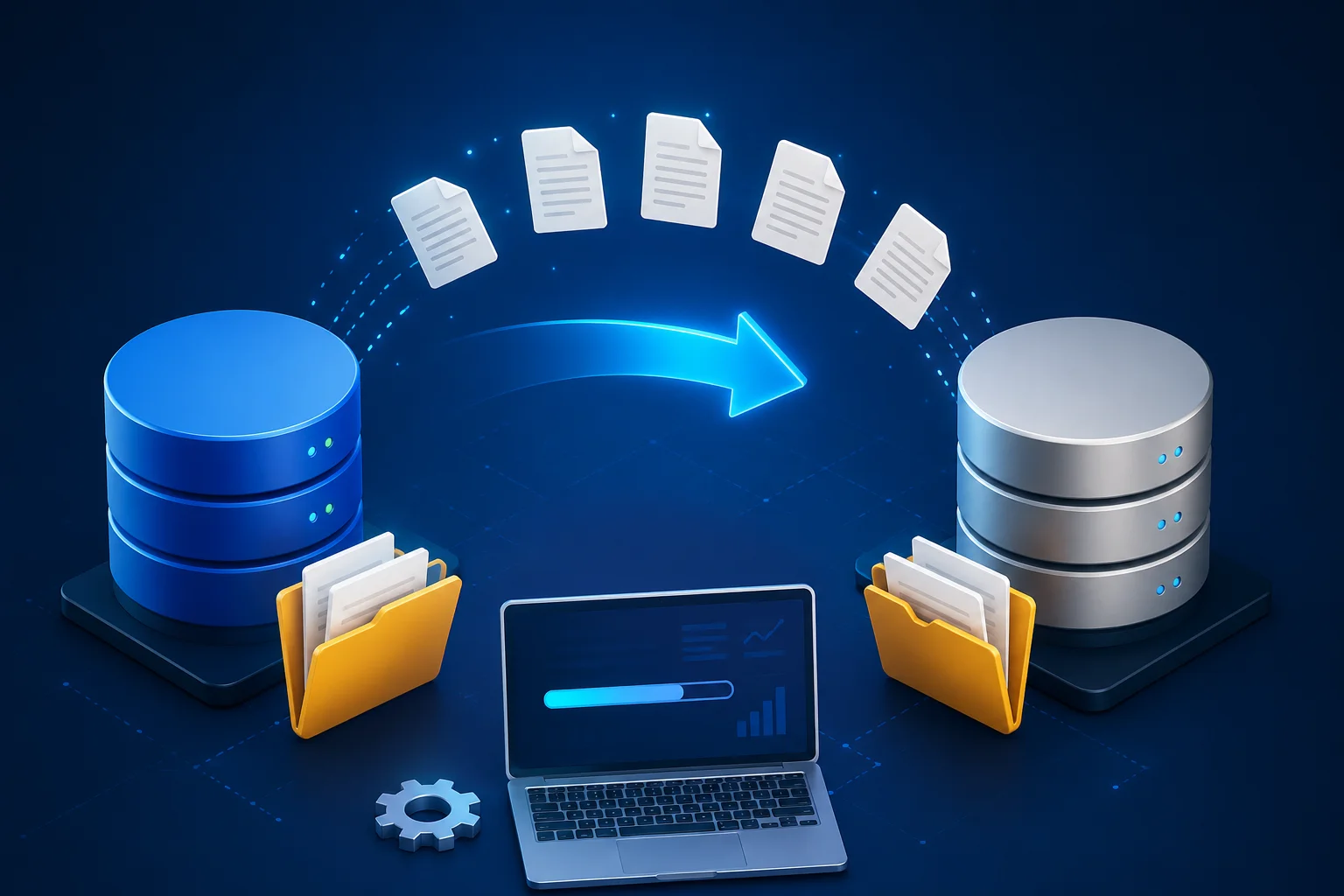
Every business collects data customer records, financial transactions, inventory details, employee information, and more. Over time, this data grows fast. And when companies decide to upgrade their systems, move to the cloud, or switch to a new ERP platform, they face one big challenge: how do you move all that data safely without losing anything or breaking operations?
That's where a professional data migration service comes in.
This blog explains why managing data migration on your own can be risky, what a professional service actually does, and how businesses of all sizes can benefit from expert help.
What Is Data Migration and Why Does It Matter?
Data migration is the process of moving data from one system, storage location, or format to another. It sounds simple, but in practice, it involves extracting data, cleaning it up, transforming it into the right format, and loading it into the new system all without disrupting your day-to-day business.
Common scenarios where data migration is needed include:
- Moving from legacy on-premise software to a cloud-based platform
- Upgrading or switching ERP systems (like moving to SAP or Oracle)
- Merging two company databases after an acquisition
- Consolidating fragmented data from multiple systems into one unified platform
Each of these scenarios carries real risk. Data can get corrupted, duplicated, or lost entirely if the migration isn't handled properly.
The Problem With DIY Data Migration
Many businesses make the mistake of treating data migration as an internal IT task. They assign it to their in-house team, expecting it to be done quickly and cheaply. But this approach often leads to serious problems:
- Data loss or corruption — Without proper validation steps, records can get dropped or overwritten during the transfer process.
- Extended downtime — If the migration takes longer than expected, business operations come to a standstill. Every hour of downtime has a cost.
- Data quality issues — Old systems often contain duplicate records, inconsistent formats, or outdated information. Moving "dirty" data into a new system just creates problems in the new environment.
- Compliance risks — Industries like healthcare, finance, and manufacturing have strict data regulations. A poorly managed migration can result in compliance violations and penalties.
- High hidden costs — What starts as a cost-saving move can turn into a costly fix when problems arise post-migration.
The truth is, data migration is a highly technical process that requires specialized skills, tools, and experience. It's not something that should be improvised.
What a Professional Data Migration Service Actually Does
A professional data migration service doesn't just "move files from A to B." It follows a structured, proven process designed to protect your data and minimize risk at every step.
Here's what that typically looks like:
1. Data Assessment and Planning
Before anything moves, experts analyze your existing data its structure, quality, volume, and relationships. They identify gaps, duplicates, and inconsistencies that need to be fixed before migration begins. A clear migration plan is then created with timelines, responsibilities, and rollback options.
2. Data Cleansing
Professional services don't just migrate your data they improve it. Outdated records are removed. Duplicates are merged. Formats are standardized. This ensures that the data entering your new system is accurate and reliable.
3. Extraction, Transformation, and Loading (ETL)
This is the technical core of the process. Data is extracted from the source system, transformed into the format required by the destination system, and then loaded accurately. Modern tools, including AI-powered platforms, can automate large portions of this process reducing timelines by up to 60% compared to manual methods.
4. Validation and Testing
After migration, every data set is tested and validated. Reports are run to confirm that all records were transferred correctly and that the new system is functioning as expected.
5. Post-Migration Support
A good service doesn't disappear after the migration is complete. They monitor the new environment, address any issues that arise, and help your team adapt to the new system.
Key Benefits of Hiring a Professional Data Migration Service
Faster Completion, Fewer Disruptions
AI-driven migration tools used by professionals can complete the process up to three times faster than traditional manual methods. Faster migration means less downtime, which means less impact on your business and your customers.
Better Data Quality
Clean, accurate, and well-structured data is the foundation of good decision-making. Professional migration services ensure your data arrives in the new system in the best possible shape ready for analytics, reporting, and AI-powered applications.
Reduced Risk
Experienced teams have handled hundreds of migrations across different industries and system types. They know where the risks lie and how to avoid them. This experience is something an in-house team simply cannot replicate overnight.
Cost Efficiency
While hiring a professional service has an upfront cost, it typically saves money in the long run. Avoiding data loss, downtime, compliance fines, and rework adds up quickly. Some modern AI-driven platforms offer enterprise-grade migration at nearly half the cost of traditional approaches.
Scalability
Whether you're migrating a few thousand records or petabytes of enterprise data, professional services have the infrastructure and tools to scale. Cloud-native platforms can handle distributed data processing at enterprise levels without compromising speed or reliability.
Who Needs a Professional Data Migration Service?
The short answer: most businesses going through any kind of digital transformation.
This includes companies upgrading their ERP systems, organizations moving infrastructure to the cloud, businesses merging after acquisitions, and enterprises trying to break down data silos between departments.
In fact, the more complex your data environment, the more critical it becomes to work with experts. Disconnected systems, varied data formats, and high data volumes are exactly the conditions where professional guidance makes the biggest difference.
Final Thoughts
Data is one of your most valuable business assets. When it's time to move it, the stakes are too high to leave to chance. A professional data migration service brings the expertise, tools, and structured approach needed to move your data safely, accurately, and efficiently so your business can keep moving forward without missing a beat.
Whether you're upgrading systems, embracing cloud technology, or consolidating your data infrastructure, investing in professional migration support is not just a smart decision it's a necessary one.