Sign up with Google
 Sign in with Zoho

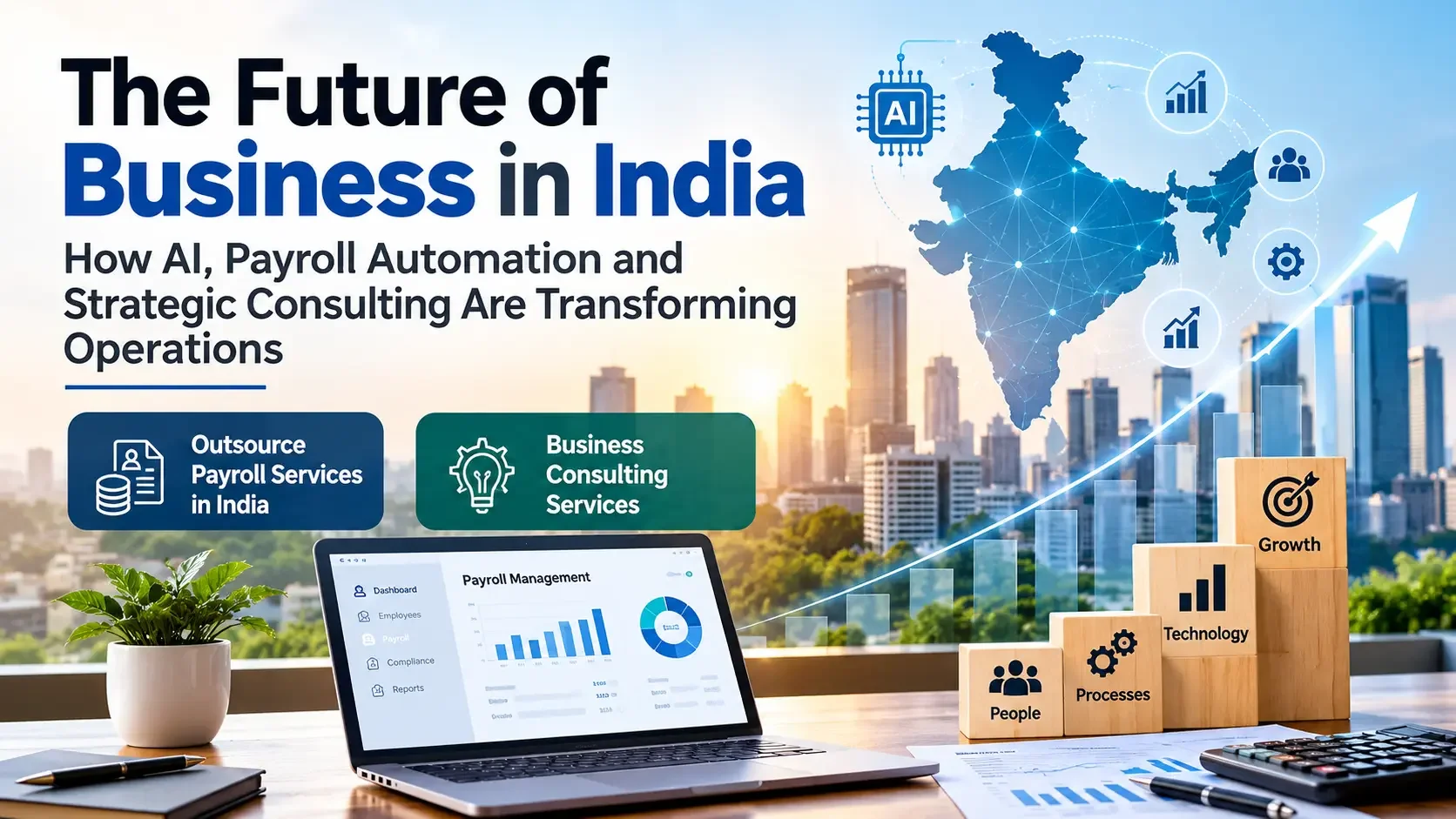
Businesses in India are entering a new phase of digital transformation. Artificial intelligence (AI), workflow automation, data-driven decision-making and specialized business services are changing how organizations manage employees, control costs and plan for growth.
For startups, small and medium-sized enterprises (SMEs), and established companies, the challenge is no longer simply adopting new technology. It is building efficient, compliant and scalable business operations without increasing administrative complexity.
Two areas are becoming increasingly important in this transformation: payroll outsourcing and strategic business consulting.
Why Business Operations Are Changing in 2026
Organizations are under pressure to improve productivity, manage workforce expenses and respond to changing customer expectations. At the same time, business leaders must balance technology investments with operational efficiency and regulatory responsibilities.
Payroll is increasingly being viewed as more than an administrative function; it can support workforce planning, cost visibility and business decisions. This reflects a broader trend: businesses are looking for integrated solutions that connect financial planning, employee management, technology and compliance.
Instead of managing every operational activity internally, companies are evaluating which functions require in-house expertise and which can be handled more efficiently by specialized service providers.
1. AI and Automation Are Reshaping Business Workflows
AI-powered tools are helping businesses streamline repetitive tasks, organize information and improve reporting processes. In departments such as finance, human resources and operations, automation can reduce manual work and help teams focus on higher-value activities.
· Automating routine data entry and document processing.
· Improving financial reporting and operational visibility.
· Streamlining employee onboarding and HR administration.
· Identifying inconsistencies in business records.
· Supporting workforce planning through data analysis.
However, automation alone does not guarantee better business outcomes. Organizations still need accurate data, appropriate access controls, human oversight and clearly defined workflows.
Businesses should begin by identifying processes that consume significant time, involve repetitive tasks or frequently produce errors. They can then evaluate technology and service models based on measurable improvements in accuracy, cost and productivity.
2. Why More Businesses Are Considering Payroll Outsourcing
Payroll management involves more than calculating salaries and transferring payments. Depending on the organization’s workforce and applicable regulations, it may include attendance reconciliation, salary calculations, deductions, reimbursements, payslip generation, payroll reporting and statutory compliance support.
These responsibilities can become more complex as a company expands into new locations, increases its workforce or introduces different employment arrangements.
For such organizations, choosing to Outsource Payroll Services in India can provide access to specialized expertise, standardized processes and technology-supported payroll administration.
Key Benefits of Payroll Outsourcing
· Reduced administrative workload: External payroll specialists can manage routine processing activities, allowing internal HR and finance teams to focus on workforce planning and business priorities.
· More consistent processes: Standardized payroll workflows can improve documentation, reconciliation and the identification of discrepancies.
· Compliance support: Experienced service providers can help businesses track applicable statutory requirements and maintain relevant records. Employers should still verify their legal responsibilities and the scope of services covered by the outsourcing agreement.
· Scalability: An outsourced model can support growing employee numbers and multi-location operations without requiring the same level of internal payroll infrastructure.
· Better reporting: Structured payroll reports can help management understand workforce costs, overtime, salary expenses and other relevant financial indicators.
Payroll outsourcing is particularly worth evaluating when internal teams spend excessive time correcting payroll errors, handling repetitive administrative work or coordinating payroll activities across multiple locations.
3. Business Consulting Helps Turn Technology into Results
Technology investments are most effective when they solve clearly defined business problems. Without a practical implementation strategy, companies may adopt multiple tools without improving their underlying processes.
This is where business consulting can help organizations assess their current operations, identify inefficiencies and develop an actionable improvement plan. Depending on the provider’s expertise, consulting engagements may cover operational planning, process optimization, financial management, organizational structure, technology adoption and growth strategy.
What Should Businesses Evaluate Before Investing?
1. Which operational problems are affecting productivity or profitability?
2. Which processes should be automated, redesigned or outsourced?
3. What resources and expertise are required to implement the changes?
4. How will the organization measure the results?
5. What risks, dependencies and compliance requirements must be addressed?
For example, a growing company may discover that its HR team spends too much time reconciling attendance records and preparing payroll inputs. A process review could identify opportunities to integrate attendance systems, standardize approvals and outsource selected payroll activities.
The result is not simply a technology upgrade. It is a more coherent operating model in which people, processes and systems work together.
4. Integrating Payroll, Finance and HR for Better Decisions
One of the most valuable opportunities for growing businesses is improving coordination between HR, payroll and finance. When these functions operate independently, organizations may experience inconsistent employee records, delayed reporting, duplicate data entry and limited visibility into workforce expenses.
An integrated operating model can improve information flow and support more informed decisions. For example:
· HR maintains employee records and approved changes.
· Attendance systems provide validated working-hour data.
· Payroll processes approved salary inputs and applicable deductions.
· Finance reconciles payroll expenses and prepares accounting entries.
· Management reviews workforce costs and relevant operational indicators.
Clear responsibilities, appropriate system access and regular reconciliation remain essential, even when activities are automated or outsourced. Businesses should also establish clear procedures for protecting sensitive employee information, managing vendor access and reviewing payroll outputs before final approval.
5. How SMEs Can Build a More Scalable Operating Model
Small and medium-sized businesses often operate with limited administrative resources. As they grow, informal processes can become difficult to manage, particularly when employee numbers, locations and reporting requirements increase.
6. Audit existing workflows. Document how payroll, HR administration, accounting and reporting activities are currently performed.
7. Identify operational bottlenecks. Look for repetitive work, manual errors, delayed approvals and activities that depend heavily on individual employees.
8. Prioritize improvements. Compare potential solutions based on business impact, implementation cost, operational risk and expected time savings.
9. Evaluate specialist partners. Assess relevant experience, service scope, data security, reporting capabilities, escalation procedures and contractual responsibilities.
10. Establish measurable KPIs. Track payroll accuracy, processing timelines, reconciliation exceptions, administrative effort and reporting reliability.
11. Review performance regularly. Use operational data and employee feedback to identify further improvements.
This phased approach helps businesses modernize operations while maintaining control over costs and service quality.
6. Choosing the Right Partner for Long-Term Growth
Selecting a payroll or consulting partner requires more than comparing service prices. Businesses should understand exactly what the provider will deliver, how responsibilities will be divided and how performance will be measured.
· Relevant industry and workforce experience.
· Clarity of the service-level agreement.
· Data protection and access-control practices.
· Reporting frequency and issue-resolution procedures.
· Knowledge of applicable regulatory requirements.
· Ability to support future business expansion.
· Transparent pricing and clearly defined exclusions.
For payroll services, companies should also clarify responsibility for employee data, payroll approvals, statutory calculations, filings and record maintenance. For consulting engagements, define the project scope, deliverables, implementation milestones and success criteria before work begins.
A suitable partner should complement internal capabilities rather than create unnecessary complexity or reduce management visibility.
Conclusion: Build Efficiency Before Scaling Complexity
The future of business operations in India will be shaped by the combination of intelligent automation, specialized expertise and disciplined management.
AI can improve workflows, payroll outsourcing can reduce administrative pressure, and business consulting can help organizations identify and implement operational improvements. The greatest value comes when these elements support a clear business strategy rather than being adopted independently.
Companies planning to scale should begin with a practical assessment of their existing processes, identify the activities that require specialist support and establish measurable performance goals. By improving operational foundations today, businesses can build more reliable, adaptable and sustainable models for future growth.