Sign up with Google
 Sign in with Zoho

Millimeter wave testing demands precision at every step. Even a slight connector mismatch can affect measurement accuracy, lead to unreliable results, and cost valuable testing time. This makes choosing the right adapter just as important as selecting the right test equipment. Two common options are 1.0mm and 1.85mm adapters. While they may look similar, each serves different frequency ranges and testing needs. So, how do you know which one is right for your setup?
In this article, Flexi RF Inc explains when to use a 1.0mm adapter, how it compares with a 1.85mm adapter, and what to consider before you choose. Let’s look at the key differences to help you make the right decision for your next test.
What Is a 1.0mm Adapter?
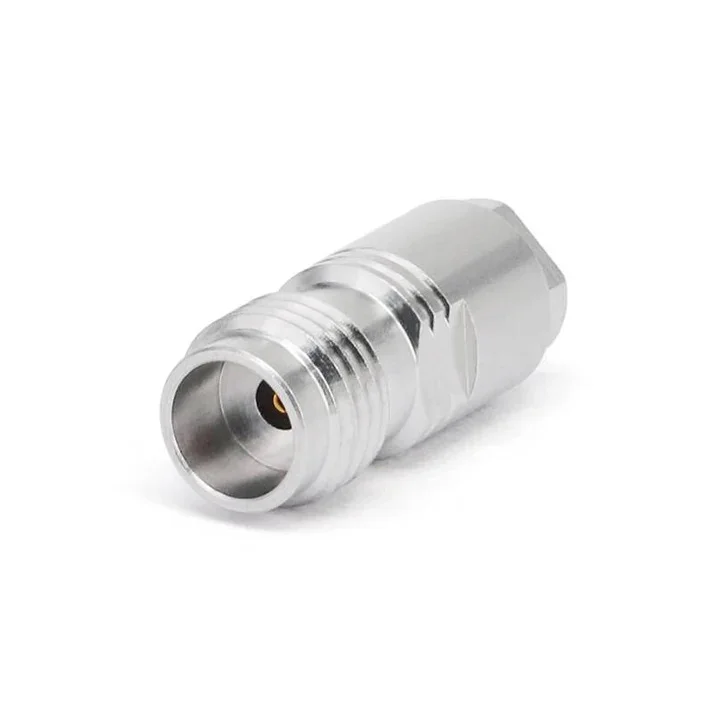
A 1.0mm adapter joins two test ports or cables that use the 1.0mm connector standard. This connector works up to 110 GHz, making it one of the highest-frequency coaxial options available.
The connector is tiny, so it is also delicate. Handle it gently and tighten it with a proper torque wrench.
When a 1.0mm Adapter Is the Right Choice
Testing Above 67 GHz
If your device runs past 67 GHz, a 1.85mm connector can’t go far enough. A 1.0mm adapter lets you test up to 110 GHz without switching to waveguide.
Working With W-Band Systems
Many radar and research setups sit in the 75–110 GHz range. In that range, a 1.0mm adapter keeps your signal path clean and your readings steady.
Connecting to High-End Equipment
Some network analyzers and probe stations have 1.0mm ports. You may need an adapter to link them to your cables or fixtures. In that case, the connector type is not a choice. The equipment decides it for you.
What Is a 1.85mm Adapter?
A 1.85mm adapter works from DC to 67 GHz. People also call this connector type “V.” It is stronger than the 1.0mm type and costs much less.
Flexi RF Inc offers precision adapters in this range, including male-to-male, female-to-female and 2.92mm-to-1.85mm versions. They are built for repeat use on a busy test bench.
When a 1.85mm Adapter Is the Better Pick
For many labs, a 1.85mm adapter does everything they need. It is a good fit when:
● Your tests stay at or below 67 GHz
● You connect and disconnect parts many times a day
● You want to keep costs down
● You need to move between 2.92mm and 1.85mm ports in the same setup
Most work in the Ka band and V band falls under 67 GHz. For this kind of testing, a 1.85mm adapter is often the safer and cheaper choice.
Quick Comparison
Here is a simple side-by-side look:
● Top frequency: 1.0mm reaches 110 GHz. 1.85mm reaches 67 GHz.
● Strength: 1.85mm is tougher. 1.0mm is more fragile.
● Cost: 1.85mm usually costs less.
● Best use: 1.0mm suits W-band and above. 1.85mm suits most other millimeter wave work.
Keep in mind that these two connector types do not mate directly. If you need to link them, use a proper between-series adapter made for that job.
How to Choose Between the Two
Follow these steps before you order:
- Check your top frequency. If it goes above 67 GHz, a 1.0mm adapter is the likely answer.
- Look at your equipment ports. Match the adapter to the connectors you already have.
- Think about how often you will plug and unplug. Heavy use favors a 1.85mm adapter, because it handles wear better.
- Set a budget. Precision adapters add up fast, so only buy the frequency range you need.
- Ask an expert. If you are unsure, talk to an RF engineer first.
Care Tips for Both Types
Good habits protect your results and your wallet. Try these:
● Clean the connector faces before each use
● Use a torque wrench every time
● Never force a connection that feels tight or off
● Store adapters with their caps on
● Check for dents or wear before you test
A damaged 1.0mm adapter or 1.85mm adapter can throw off your readings without any warning, so a quick look at each part saves a lot of trouble.
Final Thoughts
Choosing between these two connectors comes down to frequency. If you stay under 67 GHz, a 1.85mm part will likely serve you well. If you push toward 110 GHz, a 1.0mm adapter becomes the right tool.
Flexi RF Inc supports engineers with a wide range of precision adapters, same-day shipping on in-stock items and RF experts who are ready to help. If you have questions about your setup, they can guide you to the right part.