Sign up with Google
 Sign in with Zoho

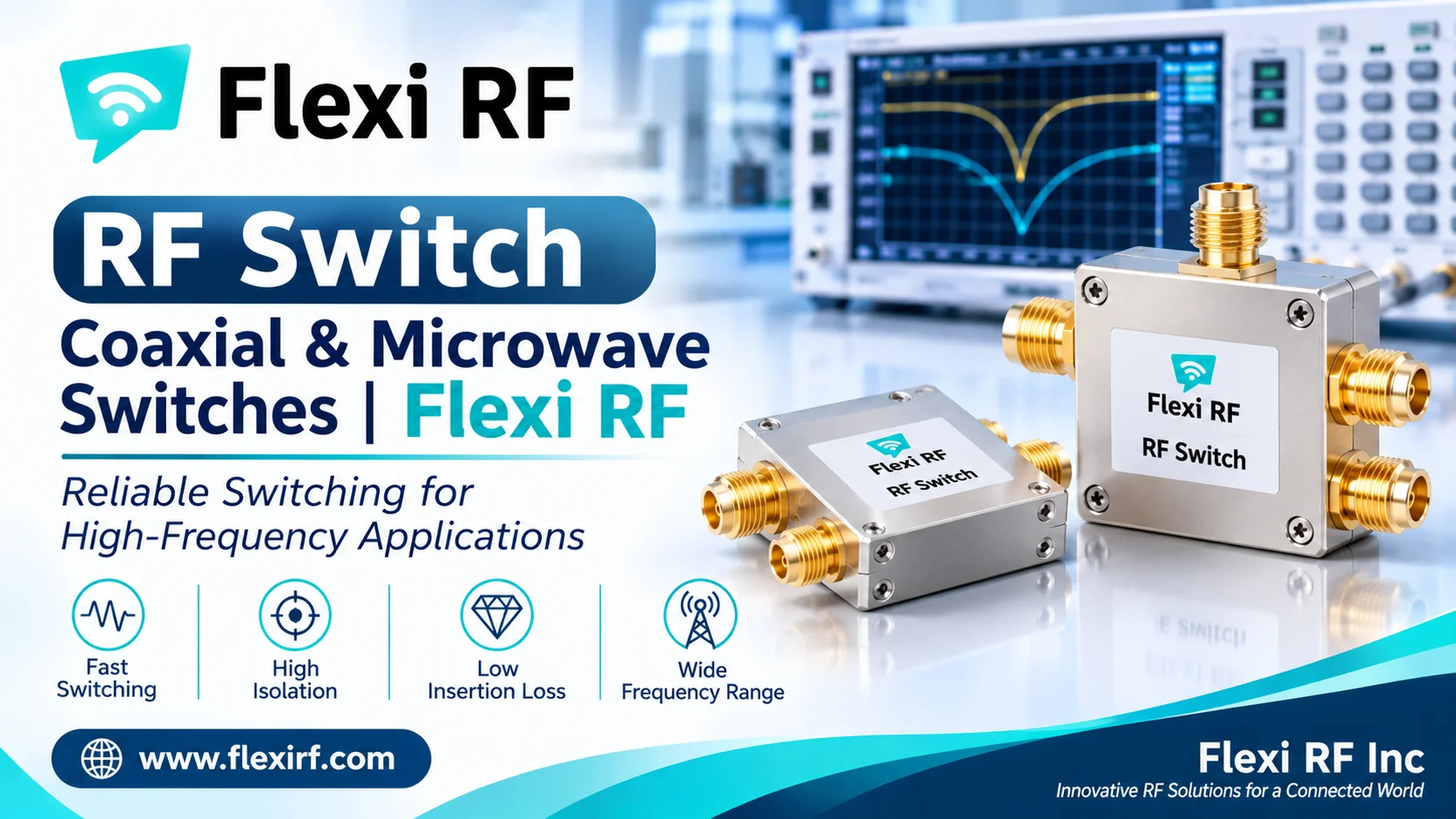
Reliable signal routing is critical in testing, communications systems, and other RF applications. The right switching component directs signals between paths while minimizing signal loss. An RF switch serves this purpose, letting engineers control signal flow in electronic systems.
Flexi RF Inc offers electromechanical relay switches for microwave applications that need reliable operation and steady performance. These products support frequencies from DC to 18 GHz and suit automated test equipment, telecommunications, radar systems, and signal distribution setups. With different voltage and control options, customers can select a switch that fits their system requirements.
What Is an RF Switch?
An RF switch is an electronic component that connects or disconnects radio frequency signals between different paths. It lets a system select the signal route needed for a task without manually changing cables or connections.
For example, a testing system may need to switch between two devices or compare the performance of different components. An RF switch makes this process easier by changing the signal path through a controlled mechanism.
Common applications include:
● Automated test equipment used in laboratories
● Wireless communication systems
● Radar and microwave equipment
● RF measurement and testing setups
● Signal distribution networks
Switching frequency, insertion loss, isolation, switching requirements, and control voltage all determine the right switch.
Key Features of Flexi RF Inc Switches
Flexi RF Inc offers Single-Pole, Double-Throw (SPDT) electromechanical relay switches for reliable signal transmission. These switches offer features to support routine testing and demanding RF applications.
Wide Frequency Range
The available switches range from DC to 18 GHz. They suit a wide range of RF and microwave systems, including laboratory tests and communication equipment. Users should verify that the frequency range of the model is suitable for their application before selecting a model.
Low Insertion Loss
Insertion loss is the loss of signal power when it goes through a component. Low insertion loss is crucial to maintain the signal strength when accurate measurements and consistent system performance are critical.
High Isolation
Isolation minimizes unwanted signal leakage between different paths. When a system is connected to several devices or test channels, good isolation is helpful. This keeps signals separate and reduces the risk of interference between routes.
Failsafe Operation
Failsafe operation helps systems reset to a known state when control power is turned off. Depending on the system design and chosen model, this behavior can support reliable operation.
Compact Construction
The switches are machined with SMA female connectors. They are small enough to fit in RF setups where space, secure connections, and mechanical strength matter.
Selecting the appropriate switch for your application.
The first step in choosing the right RF switch is understanding the component's application. A few checks can help you narrow the options.
- Frequency range: Make sure the switch can handle your system's full frequency range.
- Control voltage: Choose a 12V or 24V model based on the available power supply.
- Control method: Determine if standard operation or TTL logic control is required.
- Signal isolation: Ensure isolation requirements are met between sensitive signal paths.
- Insertion loss: Check the specifications to see if the signal loss is acceptable.
- Connector type: Ensure that the connectors are compatible with the cables and equipment used in your system.
You can check these factors before ordering to prevent connection problems and ensure system reliability.
How SMA PCB Connectors play a vital role in RF Systems.
An SMA PCB connector connects a coaxial cable to a printed circuit board (PCB). SMA connectors are popular in RF equipment because they offer a compact connection and can handle high-frequency signals when chosen and installed correctly.
These connectors are used in test instruments, communication devices, antennas, and microwave circuits. Their performance depends on the connector design, frequency rating, PCB layout, and installation quality.
Here are some factors to keep in mind when choosing an SMA PCB connector:
● Frequency rating: Ensure that the connector operates at the desired frequency.
● Mounting style: Select the mounting style for the PCB.
● Mechanical fit: Check the board layout, connector size, and available space.
● Signal performance: Check the appropriate electrical specifications for the application.
A proper connector is used to make a good connection between the PCB and the rest of the RF system. Using compatible cables and following recommended assembly procedures is also important.
Using Switches and Connectors Together
While an RF switch and an SMA PCB connector serve different functions, both can be critical to an RF signal chain. The switch directs a signal, and the connector provides a physical link between components.
For instance, in an automated testing configuration, a switch can route a signal to one of a number of devices being tested. The cables, circuit boards, and test equipment used in the process can be connected to SMA connectors.
Good signal quality is achieved by careful selection of components. Engineers should verify frequency ratings, impedance, insertion loss, and isolation across the entire signal path, not just one component.
Why Choose Flexi RF Inc?
Flexi RF Inc manufactures radio frequency and microwave components for various applications. It offers a range of products, including switches, adapters, connectors, cable assemblies, attenuators, amplifiers, power dividers, and other RF components.
The company emphasizes quality, usability, competitiveness, and delivery. When customers need technical assistance to understand product specifications or choose appropriate components, they can also get support from experienced RF engineers.
If you are creating a test system, a communication project, or microwave equipment, review the specifications of available products so you can select components that meet your technical requirements.
Conclusion
Selecting a suitable RF switch is important for signal routing in testing, communication, and microwave systems. Key considerations include frequency range, isolation, insertion loss, voltage, and control options.
Another key role of the SMA PCB connector is providing a secure connection between the coaxial cable and the printed circuit board. This compatibility testing helps engineers create RF systems that deliver consistent, reliable performance across the entire signal path. Flexi RF Inc. provides a variety of RF and microwave components that meet these needs.