Sign up with Google
 Sign in with Zoho
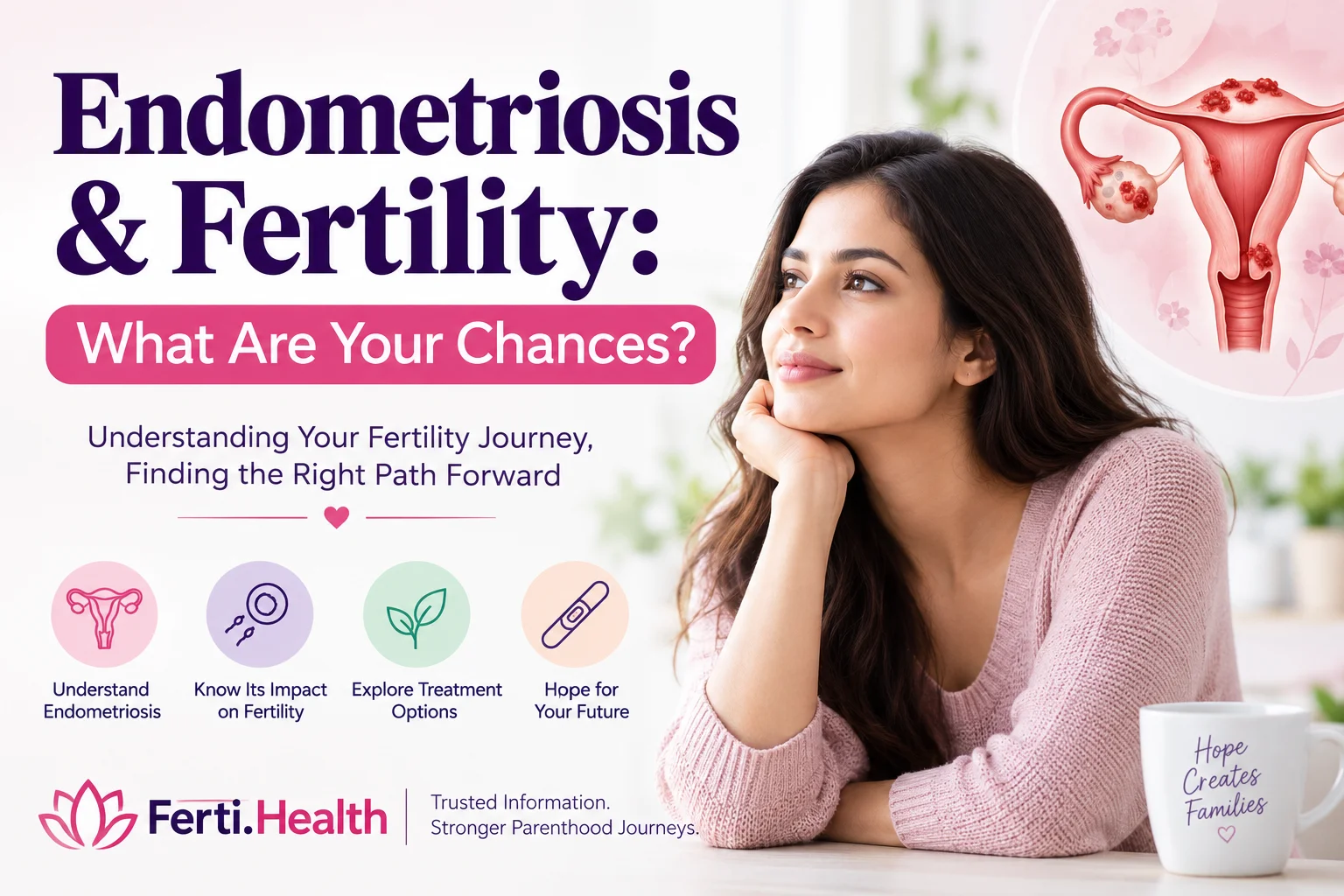
Endometriosis is a common ailment, affecting millions of women around the globe, making it one of the leading causes of infertility that women experience during their fertile period. Although it may make it harder to get pregnant, it rarely makes it impossible. There is no doubt that the condition can have a major effect on your quality of life, but many women, even with advanced stages of the disease, are able to get pregnant naturally or with medical help.
This article explains how endometriosis affects fertility, what your odds of conceiving naturally are, what treatment options are available to you, and when you should consult a fertility specialist.
What Is Endometriosis?
Endometriosis is a condition characterized by the growth of tissue similar to the lining of the uterus outside of the uterus. This tissue can be found on the ovaries, fallopian tubes, the outer surface of the uterus, and on other pelvic organs.
Much like the lining of the uterus, this tissue responds to hormonal fluctuations by thickening and shedding, but since it has nowhere to exit the body, it can cause internal inflammations, adhesions, and other complications.
Common Symptoms of Endometriosis
Endometriosis can manifest differently in each woman, but the most common symptoms are as follows:
· Painful periods
· Pelvic pain
· Discomfort during or after sexual intercourse
· Painful bowel movements or urination during menstruation
· Heavy bleeding
· Extreme fatigue
· Difficulty getting pregnant
Although some women experience severe pain and discomfort, others may be largely asymptomatic.
How Endometriosis Affects Fertility
Perhaps the most frightening part of being diagnosed with endometriosis is the risk of infertility, which could significantly impact your chances of conceiving. Endometriosis rarely makes conception impossible, but can affect fertility in a number of ways:
Inflammation
Inflammation within the pelvis can make conception difficult by inhibiting the ability of the fallopian tubes to pick up the egg and prevent an embryo from implanting successfully.
Adhesions
Scar tissue can cause organs to fuse together, which can affect the functionality of the reproductive system.
Ovarian Reserve
Having endometriosis can reduce the number of healthy eggs in the ovaries in some women.
Blocked Fallopian Tubes
Scar tissue can also block the fallopian tubes, preventing the egg from meeting the sperm.
Egg Quality
Although many women with endometriosis can have healthy eggs, severe cases can affect the quality of the eggs.
Women with endometriosis can still get pregnant, even with severe stages of the disease, although it may be challenging. The severity of the condition can affect individual cases, as well as other possible factors.
Can You Get Pregnant Naturally with Endometriosis?
It is a reasonable concern for many women with endometriosis to wonder whether they can get pregnant naturally. Fortunately, women with endometriosis can conceive naturally, especially if the condition is mild or moderate. Women with severe endometriosis may have a harder time getting pregnant, but some are nonetheless successful at doing so.
Naturally getting pregnant with endometriosis depends on various factors, including:
· Age
· The severity of your condition
· Whether you have trouble ovulating
· Your partner’s fertility
· Your ovarian reserve
· Your overall health
Even women with severe endometriosis can get pregnant naturally in some cases. If you have never had difficulty getting pregnant, your odds are good.
When Should You See a Fertility Specialist?
Most women with endometriosis can conceive naturally, but some may struggle and have to seek outside help. You may benefit from seeing a fertility specialist if:
You have been struggling to get pregnant
Many women with endometriosis can conceive on their own, but if you have been trying for a while with no success, you may want to consider an infertility evaluation.
You were diagnosed with moderate or severe endometriosis
If you have severe endometriosis, your chances of conceiving naturally may be significantly lower, and you may need to explore other options. The sooner you can get treatment, the better.
You have very painful periods
Painful periods can be a sign of other conditions, such as adhesions or blocked fallopian tubes, which can inhibit fertility. If you frequently have debilitating periods, you should see a doctor.
You have irregular menstrual cycles
Irregular menstrual cycles can be caused by a variety of conditions and can make conception difficult. If you have irregular periods or other concerns, you should consult a specialist.
You are over a certain age and want to have children
The chances of conceiving naturally decrease as you age, and at a certain point, it can become unhealthy to attempt to do so. If you want to have children but are over a certain age, it is a good idea to talk to a specialist.
How Endometriosis Is Diagnosed
Endometriosis can be diagnosed through a few different methods, including a medical exam, ultrasound, MRI, or laparoscopy. A specialist will go over your medical history and decide which method would be most appropriate for your case.
Treatment Options for Women Planning on Getting Pregnant
There are several ways to treat endometriosis, but since your main concern is likely getting pregnant, it is best to discuss all available options with a fertility specialist. Depending on your particular case, the doctor can give you recommendations for managing the condition. Lifestyle adjustments along with medical procedures can drastically improve your chances of conceiving.
Lifestyle Support
Maintaining a healthy lifestyle can do wonders for managing endometriosis. It is essential to eat healthy, get exercise, rest, and take care of yourself during stressful times.
Pain Management
Doctors may prescribe certain medications to help you manage pain and other uncomfortable symptoms. Keep in mind that some medications may not be advised if you are trying to conceive.
Surgical Procedures
In some cases, a doctor may recommend surgery to remove certain tissue. It is vital to discuss the risks, benefits, and alternatives with your doctor before deciding on a course of action.
Fertility Treatments
If you are unable to conceive naturally, there are several other fertility treatments available, depending on your particular case.
IVF
In Vitro Fertilization (IVF) is often recommended for people with endometriosis in some cases, particularly those with blocked tubes or diminished ovarian reserves. If you are considering IVF, it is a good idea to discuss the options and the likely success rates with your fertility specialist.
Can IVF Help People with Endometriosis?
In some cases, IVF can be the best option for people with endometriosis. There are certain instances in which IVF can be particularly beneficial, including:
Both tubes are blocked
Your ovarian reserve is low
You have explored other options without success
You have other fertility issues
IVF is generally effective, but success rates depend on many factors, including age, ovarian reserve, embryo quality, and other personal circumstances. A fertility specialist will be able to review these factors and their potential effects on IVF success.
Lifestyle Habits That May Help with Endometriosis and Infertility
Although you cannot just eliminate endometriosis with a healthier diet or increased exercise, you may be able to improve your fertility and manage some of your symptoms with the right lifestyle. Although some lifestyle adjustments may seem obvious, they can have a major impact on your overall health and egg quality. For best results, discuss your particular situation and potential options with a trusted medical professional. Some beneficial lifestyle habits include:
Maintaining a healthy weight
Eating a healthy and balanced diet
Getting enough exercise
Managing stress
Avoiding harmful substances
Limiting alcohol consumption
Getting enough sleep
Myths About Endometriosis and Infertility
Unfortunately, there are many myths and misconceptions surrounding endometriosis and its effects on fertility. Many of these myths can have a very negative effect on your mental wellbeing and potentially your fertility as well. Some of the most common myths are as follows:
Myth: Women with endometriosis cannot get pregnant.
Fact: Many women with endometriosis are able to conceive naturally or with medical help.
Myth: Severe endometriosis always means severe infertility.
Fact: The severity of the disease is not necessarily linked to the severity of infertility.
Myth: IVF is the only possible treatment.
Fact: Many women are able to conceive naturally or with relatively straightforward treatment before they consider IVF.
Tips for Improving Your Odds of Conceiving
See a fertility specialist early.
If you are experiencing any symptoms, it is a good idea to see a specialist as soon as possible. The sooner you get treatment, the better your odds of conceiving naturally are.
Track your menstrual cycle.
It is essential to monitor your menstrual cycle and keep track of your ovulation.
Take care of yourself.
It is important to maintain a healthy diet, get regular exercise, and take care of yourself in general.
Make sure to follow your specialist’s recommendations.
It is crucial to work with a specialist and follow their recommendations.
Consider preserving your fertility.
If you are planning on delaying pregnancy for an extended period of time, it is a good idea to discuss fertility preservation with your specialist.
Don’t wait to see a specialist if you have endometriosis and want to get pregnant soon.
Final Thoughts
Although endometriosis can pose a threat to your fertility, it rarely makes conception impossible. Many women are able to get pregnant naturally with endometriosis, and those who find that challenging can explore other fertility treatments with the help of a qualified specialist.
Education and support from specialists are essential for making informed decisions and exploring the most suitable options. At Ferti.Health, we are committed to providing comprehensive resources and valuable support to help you and your partner on your journey to parenthood.