Sign up with Google
 Sign in with Zoho

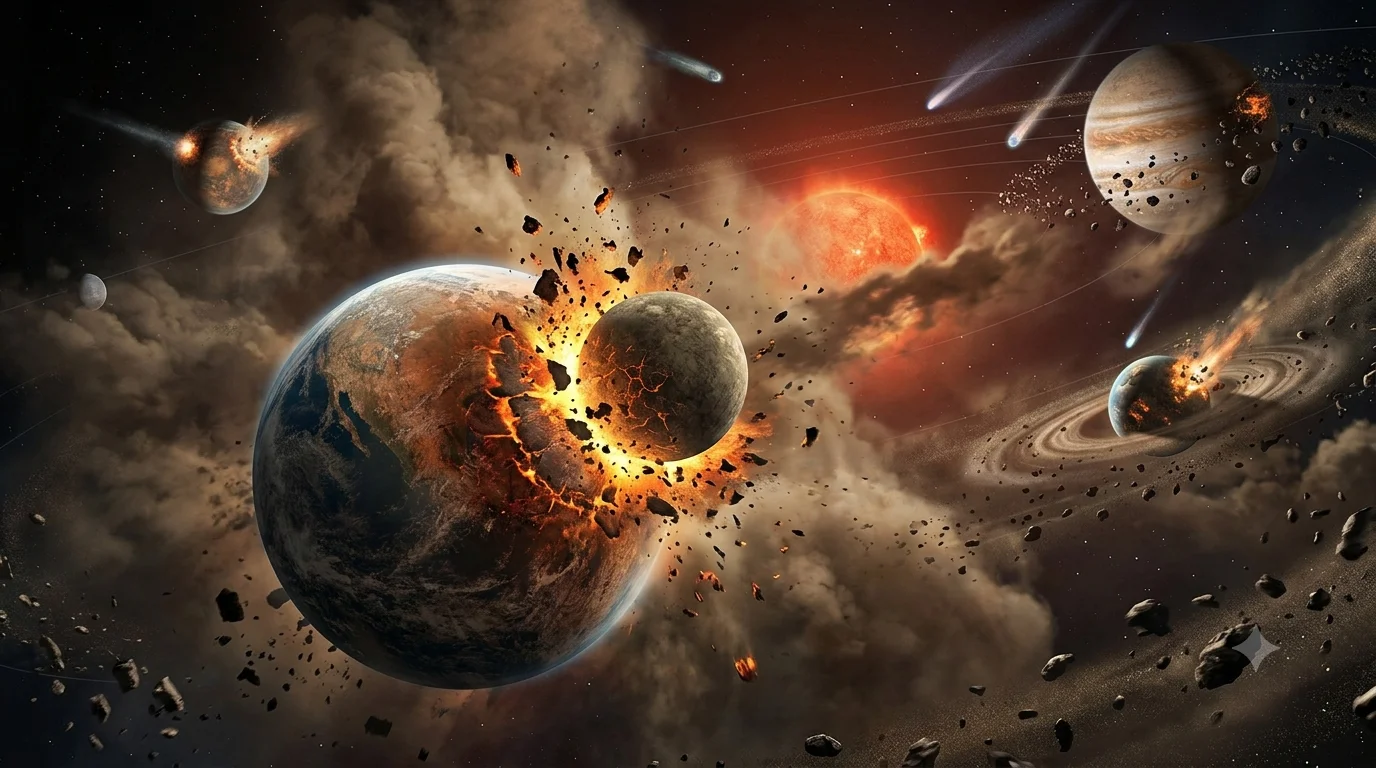
It is easy to look at the ground outside and think the Earth has always been this way. But if you go back far enough in time, our planet was completely different. At first it was just floating dust and rock in space. Then it cooled and made oceans and created solid land.
Scientists learn this by looking at rock layers, measuring heat under the ground and watching for ground movement. Having a look at Earth evolution theory helps us see how a large cloud of space dust slowly became the solid planet we live on today.
In a Nutshell
● From Dust to Land: How rocks smashed together to build Earth's core, middle layer, and outer crust?
● Heat Underground: How does hot rock underground keep moving giant pieces of the Earth's surface?
● Air, Water, and Life: How can rain, volcanoes, and tiny living things change the planet over time?
How Does Earth Evolution Theory Trace Planetary Growth?
The Birth of Space Rocks
Earth was once a ring of spinning dust and gas out in space. Then gravity started to pull that dust together into bigger rocks and they kept smashing into each other.
The impacts were massive enough to generate enough heat to turn the young planet into a ball of molten rock. All the heavy stuff, like iron, sank to the middle and made the core. The lighter rocks floated to the top and cooled into the crust.
By giving off steam and gases, the early volcanoes were creating the very first air around the planet. Looking at this early stage through Earth evolution theory helps explain how gravity sorted the Earth into different layers.
How Moving Plates Reshape the Surface
After the outside crust hardened into solid rock, the planet did not stop changing. Deep inside, heat was shoving things about from underneath:
● Underground Heat: Hot rock deep underground slowly moves up, cools down, and then sinks back down.
● Crustal movement: This slow movement drags large pieces of Earth’s crust below the surface, pushing them together or pulling them apart.
● Making of mountains: These huge chunks of rock slammed into each other and were pushed up into mountains or pulled apart to create deep ocean floors.
Theories like Earth evolution theory help scientists map out how oceans opened up and how land moved around over millions of years.
How Air and Water and Life Combined
The planet did not just come into being from rocks and heat, but the air, water, and early living things were also a big part of it. The air outside cooled off, and the steam turned to rain. It rained for a very long time until the deep spots on the surface filled up and became the first oceans.
Then tiny little living things appeared, and they used sunlight to make food, and they put oxygen in the air, and that changed the atmosphere. And rain and wind turned hard rock to soil and changed the look of rivers and shores. When we look back at Earth’s history, we see how air, water, and life have all worked with forces below the surface to shape the planet.
Conclusion
Tracking heat, gravity, and shifting land over time is the key to understanding how Earth went from a cloud of space dust to a living world. Learning about underground heat and how it moves huge amounts of land and about the origin of the seas helps us learn how our planet was made.
Furthermore, for anyone who wants to learn more about how landmasses first took shape and moved apart, reading about the scientific theory of continent formation can be a great place to start.