Sign up with Google
 Sign in with Zoho


Attending court without a solicitor can feel overwhelming, especially if you have never been involved in legal proceedings before. Many people representing themselves look for practical support to help them understand the court process and feel more confident during hearings. One option available in England and Wales is using a Mckenzie Friend For Court Hearing UK.
A McKenzie Friend is not a lawyer but may provide practical assistance to individuals who are representing themselves. Understanding what a McKenzie Friend can and cannot do helps litigants make informed decisions before attending court.
Whether your case involves family law, civil disputes, or other proceedings where self-representation is permitted, this guide explains the role, benefits, limitations, and best practices for working with a McKenzie Friend.

What Is a McKenzie Friend?
A McKenzie Friend is someone who provides support to a person representing themselves in court, often referred to as a litigant in person. The concept originated from the landmark 1970 legal case McKenzie v McKenzie, which established that individuals should generally be allowed reasonable assistance during hearings.
A McKenzie Friend may:
- Take notes during hearings
- Help organize documents
- Offer moral support
- Suggest questions or points during proceedings
- Assist with case preparation before court
However, they do not automatically have the right to address the court, examine witnesses, or act as your legal representative.
Why People Choose a Mckenzie Friend For Court Hearing UK
Many individuals choose a Mckenzie Friend For Court Hearing UK because court procedures can be confusing without legal experience. While legal representation is ideal in many situations, some litigants prefer or need to represent themselves due to financial or personal reasons.
Common reasons include:
- Limited legal knowledge
- Budget constraints
- Confidence building during hearings
- Help understanding court documents
- Better organization before court dates
Having someone present who understands court procedures can make the experience less intimidating.
Types of Cases Where a McKenzie Friend May Help
Although commonly associated with family courts, McKenzie Friends may assist in several types of proceedings.
Family Court Cases
Examples include:
- Child arrangement disputes
- Divorce proceedings
- Financial remedy hearings
- Domestic matters
Family courts frequently see litigants representing themselves, making McKenzie Friends particularly common.
Civil Court Cases
They may also assist with:
- Contract disputes
- Debt recovery
- Small claims
- Property disagreements
Employment-Related Proceedings
In some situations, similar support may also be useful during tribunal preparation, although tribunal rules differ from court procedures.
What Can a McKenzie Friend Do?
Understanding their role is essential.
Practical Assistance
A McKenzie Friend may:
- Organize paperwork
- Help prepare witness statements
- Arrange evidence logically
- Create hearing checklists
- Explain basic court procedures
Emotional Support
Court hearings can be stressful. Simply having someone present can help reduce anxiety and improve confidence.
Administrative Help
Many litigants benefit from assistance with:
- Chronologies
- Document bundles
- Court correspondence
- Hearing preparation
What Cannot a McKenzie Friend Do?
One of the biggest misconceptions is that a McKenzie Friend functions like a solicitor.
Generally, they cannot:
- Represent you as your lawyer
- Conduct litigation
- Sign court documents on your behalf
- Speak during hearings without the judge's permission
- Cross-examine witnesses unless specifically allowed
Permission to speak in court is exceptional rather than automatic.
McKenzie Friend vs Solicitor
The following comparison highlights the main differences.
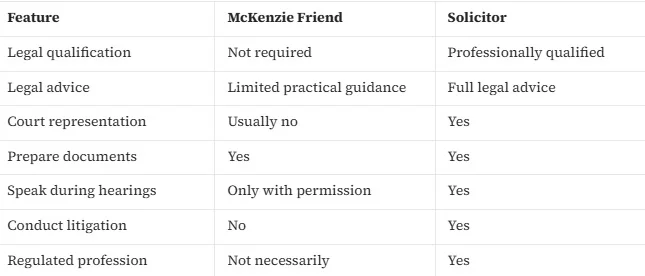
Understanding these distinctions helps litigants choose the level of assistance appropriate for their circumstances.
Benefits of Using a McKenzie Friend

Many self-represented litigants appreciate the practical advantages.
Better Preparation
Organized documents often lead to smoother hearings.
Improved Confidence
Court can feel intimidating, particularly for first-time litigants.
Practical Guidance
Simple reminders about procedure can reduce unnecessary mistakes.
Cost Awareness
Some individuals choose this option because it may cost less than full legal representation, although fees vary depending on the individual providing support.
Situations Where a Solicitor May Be More Appropriate
A McKenzie Friend is not suitable for every legal matter.
Professional legal representation may be preferable when:
- The case involves complex legal arguments
- Significant financial assets are involved
- Criminal proceedings require specialist advocacy
- Appeals involve detailed legal submissions
- Legal strategy is critical
Choosing the right type of assistance depends on the complexity of the case.
How to Prepare Before Your Court Hearing
Preparation often has a greater impact than people realize.
Organize Your Documents
Arrange documents in chronological order and create copies where required.
Prepare a Timeline
A clear timeline helps both you and the court understand events quickly.
Know Your Main Arguments
Focus on facts supported by evidence rather than emotions.
Practice Speaking Clearly
You may wish to rehearse explaining your case aloud.
Understand Court Procedures
Read guidance provided by the court before your hearing date.
Tips for Working Effectively With a McKenzie Friend
To get the most from the experience:
Communicate Clearly
Explain your objectives before the hearing.
Share Documents Early
Allow enough time for preparation.
Stay Organized
Use folders, labels, and document indexes.
Respect Court Rules
Remember that court etiquette applies throughout the hearing.
Focus on Facts
Evidence is generally more persuasive than emotional arguments.
Common Misunderstandings
Several myths surround McKenzie Friends.
Myth 1: They Are Lawyers
They are generally not qualified solicitors or barristers.
Myth 2: They Can Speak Whenever They Want
Only the judge can grant permission.
Myth 3: They Can Sign Court Papers
They cannot conduct litigation unless separately authorized.
Myth 4: Every Court Must Allow Them
Courts generally permit reasonable assistance but retain discretion in individual cases.
Best Practices for Litigants in Person
If you are attending court without legal representation:
- Read official court guidance carefully.
- Keep copies of every document.
- Arrive early.
- Dress appropriately.
- Address the judge respectfully.
- Listen carefully before responding.
- Stay calm during questioning.
- Avoid interrupting others.
- Bring a notebook.
- Keep important dates organized.
These practical habits can improve your overall court experience.
Featured Snippet: What Is a McKenzie Friend?
A McKenzie Friend is someone who provides practical support to a person representing themselves in court. They may help organize documents, take notes, offer moral support, and assist with preparation but generally cannot speak in court or provide legal representation without judicial permission.
People Also Ask
Can a McKenzie Friend speak in court?
Usually no. They may only address the court if the judge grants permission in exceptional circumstances.
Is a McKenzie Friend legally qualified?
Not necessarily. Many are experienced in court procedures, but they are generally not qualified solicitors or barristers.
Can a McKenzie Friend prepare court documents?
Yes. They may help organize paperwork, prepare bundles, and assist with drafting documents, although responsibility remains with the litigant.
Do all courts allow McKenzie Friends?
Courts generally permit reasonable assistance, but judges retain discretion regarding individual circumstances.
Is using a McKenzie Friend the same as hiring a solicitor?
No. A solicitor provides regulated legal advice and representation, whereas a McKenzie Friend primarily offers practical and procedural support.
Frequently Asked Questions
Do I need permission to bring a McKenzie Friend?
In most cases, you should inform the court, and judges generally allow a McKenzie Friend unless there is a specific reason not to.
Can they give legal advice?
They may offer practical guidance, but they are not a substitute for regulated legal advice.
Can they attend private meetings with the judge?
Court procedures vary, and permission depends on the circumstances and judicial discretion.
Can a McKenzie Friend represent me throughout my case?
Generally, no. Their role is supportive rather than representative.
Should I still prepare for my hearing?
Absolutely. Even with assistance, you remain responsible for presenting your own case unless you have legal representation.
Using a Mckenzie Friend For Court Hearing UK can provide valuable practical support for individuals representing themselves in court. They can assist with preparation, organization, note-taking, and confidence while helping litigants better understand the hearing process. However, they are not a replacement for qualified legal representation, and their role has important limitations that every litigant should understand.
By preparing thoroughly, understanding court procedures, and knowing what assistance a McKenzie Friend can provide, individuals can approach hearings with greater confidence and clarity.
eLegal online