Sign up with Google
 Sign in with Zoho

Growing a Non-Emergency Medical Transportation business is an exciting milestone, but growth also creates new operational challenges. A provider that once managed a small number of daily trips may eventually need to coordinate hundreds of rides, multiple drivers, different vehicle types, healthcare facilities, brokers, recurring appointments, and billing requirements.
Processes that worked well for a smaller operation can quickly become difficult to maintain at scale.
For NEMT providers, sustainable growth depends on building organized systems for managing trips, drivers, schedules, communication, and administrative work.
Trip Management Gets More Complex With Growth
A small transportation company may initially manage rides using spreadsheets, phone calls, calendars, and text messages.
As trip volume increases, however, dispatchers must track more information, including:
- Pickup and drop-off locations
- Appointment times
- Rider mobility requirements
- Driver assignments
- Vehicle requirements
- Recurring trips
- Facility information
- Broker details
- Trip status
- Billing documentation
When this information is spread across different tools, employees may spend too much time searching for details or entering the same information repeatedly.
Centralizing trip information creates a stronger foundation for growth.
Make Scheduling Easier to Manage
Scheduling is one of the first areas to become more complicated as an NEMT company expands.
Dispatchers may need to coordinate dialysis appointments, physical therapy visits, wheelchair transportation, long-distance rides, facility requests, and same-day trips.
A structured scheduling workflow makes it easier to identify conflicts before they create delays.
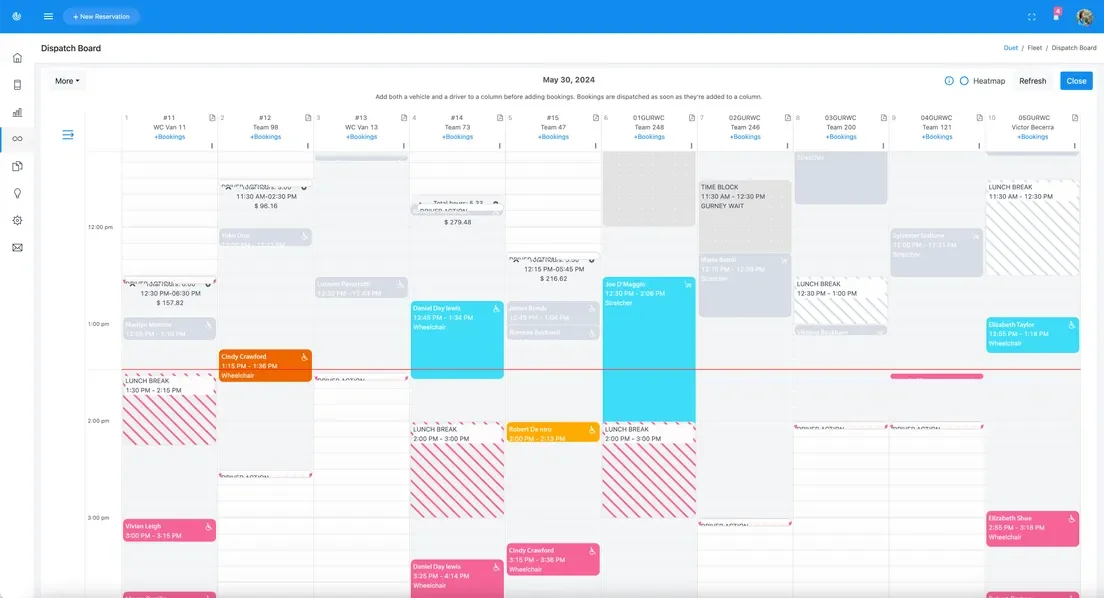
Modern Duet NEMT software can help transportation providers organize scheduling, dispatching, trip management, driver operations, billing, integrations, and other important workflows from a centralized platform.
Better visibility allows teams to manage increasing transportation demand without continually adding more manual processes.
Improve Dispatch Visibility
Growth creates additional pressure on dispatch teams.
A driver may be delayed, a passenger may cancel, a vehicle may become unavailable, or a healthcare appointment may run longer than expected.
Dispatchers need enough visibility to understand how these changes affect the rest of the schedule.
When trip and driver information is centralized, teams can respond faster and make better assignment decisions.
This can help prevent one unexpected change from disrupting several other trips.
Strengthen Driver Coordination
Drivers are directly responsible for delivering reliable transportation, so they need accurate and timely trip information.
As a company grows, repeatedly communicating every address, pickup time, passenger requirement, and schedule change by phone becomes inefficient.
Digital driver workflows can reduce repetitive communication while ensuring drivers receive the information needed to complete their assignments.
Dispatchers also benefit because they can maintain better visibility into driver activity and trip progress throughout the day.
Create Better Processes for Recurring Trips
Recurring transportation represents a significant portion of many NEMT operations.
Patients may require regular transportation for dialysis, rehabilitation, behavioral health services, physical therapy, or other ongoing medical appointments.
Manually rebuilding these trips each week can consume valuable staff time.
A well-organized recurring-trip process allows transportation providers to prepare schedules in advance while still making individual adjustments when necessary.
This becomes increasingly valuable as the number of riders grows.
Connect Operations With Billing
Growth does not only increase transportation activity. It also creates more administrative work.
Every completed trip may generate information required for:
- Billing
- Claims
- Broker reconciliation
- Documentation
- Payment tracking
- Reporting
If operational and billing information are stored separately, staff may need to re-enter or verify the same details multiple times.
Connecting trip management with billing workflows can help reduce duplicate work and improve record accuracy.
Use Data to Support Better Decisions
As an NEMT provider grows, operational data becomes increasingly valuable.
Managers can use transportation information to identify patterns such as:
- High-volume service periods
- Common sources of delays
- Driver utilization
- Recurring transportation demand
- Geographic service trends
- Scheduling bottlenecks
- Fleet capacity requirements
Instead of relying entirely on assumptions, teams can use real operational information to decide where additional drivers, vehicles, or workflow improvements may be needed.
Build Processes That New Employees Can Follow
Growing companies often need to hire additional dispatchers, drivers, billing staff, and operations employees.
If every process depends on knowledge held by one experienced employee, onboarding becomes difficult.
Standardized workflows make it easier to train new team members.
Everyone should understand how trips are created, how drivers are assigned, how schedule changes are handled, how transportation is documented, and how completed rides move into billing processes.
Consistent processes help an organization grow without sacrificing operational quality.
Technology Should Support the Business, Not Complicate It
Transportation companies do not need technology simply for the sake of adding more tools.
The objective should be to reduce unnecessary administrative work, improve visibility, and help employees manage transportation more efficiently.
An effective system should support important areas such as scheduling, dispatching, driver coordination, rider management, broker integrations, billing, fleet operations, and reporting.
Duet provides an all-in-one NEMT platform designed to help transportation providers centralize these workflows while supporting continued business growth.
Final Thoughts
Scaling an NEMT operation requires more than adding drivers and vehicles.
Providers also need stronger systems for scheduling trips, managing dispatch activity, coordinating drivers, organizing recurring transportation, processing billing information, and analyzing operational performance.
Companies that establish these processes early are better positioned to handle increasing transportation demand.
With centralized information, repeatable workflows, and the right technology, NEMT providers can build more efficient operations while continuing to deliver dependable transportation to the riders and healthcare organizations they serve.