Sign up with Google
 Sign in with Zoho
What Patients Should Know Before Treatment
Dental surgery can sound intimidating, especially if you've never had an Oral Surgical Care in Inver Grove Heights words such as extraction, bone grafting, or wisdom tooth removal may immediately bring questions to mind: Will it hurt? How long will recovery take? What should I do before the procedure? And perhaps most importantly, do I really need surgery?
These are reasonable questions. Good dental care starts with understanding what is happening and why.
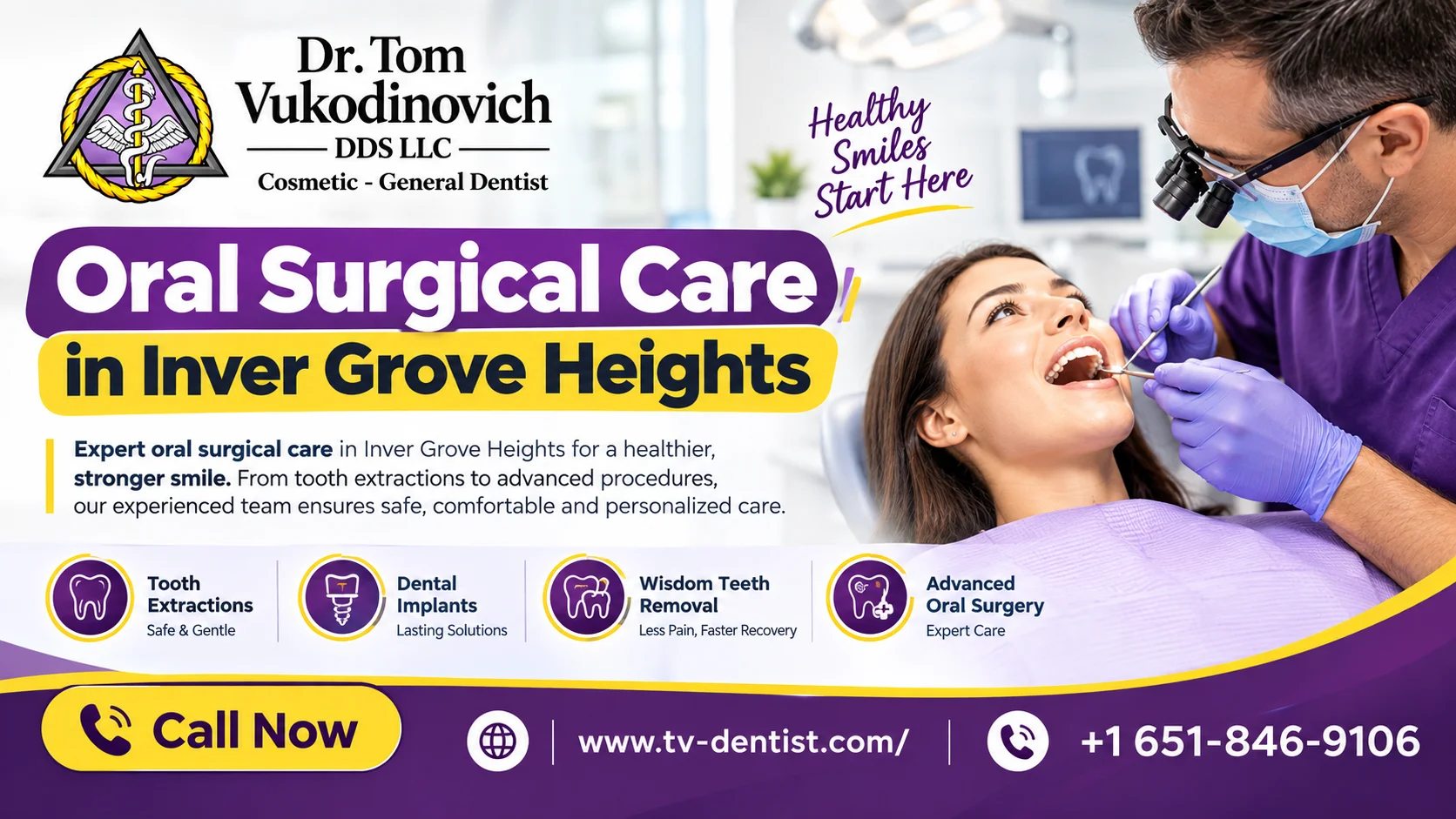
For people searching for oral surgical care in Inver Grove Heights, the first step is usually a thorough dental evaluation. The appropriate treatment depends on the condition of the tooth, gums, jawbone, and surrounding tissues. A procedure that works well for one patient may not be necessary for another.
Dr. Tom's approach is centered on making oral surgery as comfortable and stress-free as possible. Using proven surgical techniques and careful treatment planning, the goal is to restore oral function, relieve pain, and support long-term dental health.
Why Oral Surgery May Be Recommended
Not every dental problem requires surgery. In many cases, routine restorative or preventive treatment can address an issue. However, some conditions cannot be effectively managed without a surgical procedure.
Common reasons a patient may need oral surgery include:
- A severely damaged or decayed tooth
- Impacted wisdom teeth
- Dental infections
- Teeth that cannot be restored
- Bone loss affecting future treatment
- Preparation for a dental implant
- Certain gum or jaw conditions
- Complications involving previously treated teeth
A tooth extraction dentist in Inver Grove Heights may recommend removing a tooth when keeping it would create greater problems for the patient's oral health.
The recommendation should always be based on an examination rather than symptoms alone. Dental imaging may also be necessary to understand the position of the tooth and the condition of the surrounding bone and tissues.
Understanding Wisdom Tooth Removal
Wisdom teeth are the last molars to develop and commonly appear during the late teenage years or early adulthood. While some people have enough room for these teeth to develop normally, others don't.
When there isn't sufficient space, a wisdom tooth can become impacted. Instead of growing normally into the mouth, it may remain partially or completely beneath the gum or become positioned against another tooth.
This can contribute to:
- Pain or tenderness
- Gum inflammation
- Repeated infections
- Difficulty cleaning the area
- Damage to neighboring teeth
- Cysts or other complications in certain cases
For patients researching wisdom tooth removal in Inver Grove Heights, an evaluation can determine whether removal is necessary and what type of procedure may be appropriate.
Does Every Wisdom Tooth Need to Be Removed?
No. A wisdom tooth doesn't automatically need to be removed simply because it is present.
The decision depends on factors such as its position, development, symptoms, ability to be cleaned, and potential impact on nearby structures. Regular monitoring may sometimes be appropriate, while removal may be recommended when the tooth presents an ongoing or foreseeable problem.
Simple Extraction vs. Surgical Extraction
Tooth extraction isn't always the same procedure.
A tooth that is fully visible and easily accessible may be removed through a relatively straightforward extraction. However, a tooth that has fractured below the gumline, is severely damaged, or is impacted may require a surgical approach.
When people search for surgical tooth extraction near Inver Grove Heights, they're often looking for information about what makes an extraction "surgical."
A surgical extraction generally involves creating better access to the tooth and surrounding area. The exact technique depends on the tooth's position and the patient's individual anatomy.
The important point is that the treatment plan should be determined after an appropriate examination.
Bone Grafting and Why It May Be Needed
Bone grafting is another procedure that can be part of oral surgical care.
When a tooth is removed, the surrounding bone may gradually change. Patients who are considering a dental implant may sometimes require additional bone support before implant placement can be considered.
Dental bone grafting in Inver Grove Heights may therefore be recommended when there isn't enough healthy bone in the area to support the planned treatment.
Discussing Your Treatment Options
Once the condition has been evaluated, the recommended treatment can be explained in straightforward language.
For example, a patient with a painful tooth may assume extraction is the only option. In some cases, however, the tooth may be treatable through another dental procedure. In other situations, extraction may be the more predictable choice.
The purpose of the consultation is to identify the appropriate path rather than automatically choosing the most extensive procedure.
Preparing for an Oral Surgical Procedure
Preparation can vary depending on the type of surgery.
Before treatment, patients should follow the specific instructions provided by their dental team. These instructions may relate to eating, drinking, medications, transportation, or other considerations.
It's also helpful to discuss any questions before the procedure rather than waiting until the day of surgery.
Patients searching how to prepare for oral surgery often find general advice online, but individual instructions from the treating dental professional should take priority because every procedure is different.
Recovery After Oral Surgery
Recovery is an important part of treatment.
Your mouth needs time to heal after surgery, and the recovery period can vary depending on the procedure performed. A straightforward extraction may have a different recovery process than wisdom tooth surgery or bone grafting.
After treatment, patients may receive instructions concerning:
- Eating and drinking
- Oral hygiene
- Physical activity
- Medication
- Care of the surgical area
- Follow-up appointments
When Should You Seek an Evaluation?
You may want to schedule a dental evaluation if you're experiencing:
- Persistent tooth pain
- Swelling around a tooth or gum
- A broken or severely damaged tooth
- Repeated infection
- Problems associated with a wisdom tooth
- Difficulty chewing
- A tooth that your dentist has recommended removing
- A need for bone grafting before future restorative treatment
If you're searching for oral surgery near Inver Grove Heights, don't wait for a dental problem to become more complicated before seeking professional advice.
Choosing the Right Next Step
If you're facing an upcoming extraction, wisdom tooth procedure, bone graft, or another surgical dental treatment, having clear information can make the experience less stressful.
Oral surgical care in Inver Grove Heights should be based on a careful evaluation, personalized treatment planning, proven techniques, and attention to the patient's comfort and recovery.
Dr. Tom's goal is to provide efficient, thoughtful surgical treatment that addresses the immediate dental concern while supporting long-term oral function and health. Whether you need wisdom tooth removal, bone grafting, tooth extraction, or another oral surgical procedure, the process begins with understanding your individual needs.
If you're experiencing dental pain or have been advised that you may need oral surgery, scheduling an evaluation is a practical first step toward understanding your treatment options and moving forward with confidence.