Sign up with Google
 Sign in with Zoho

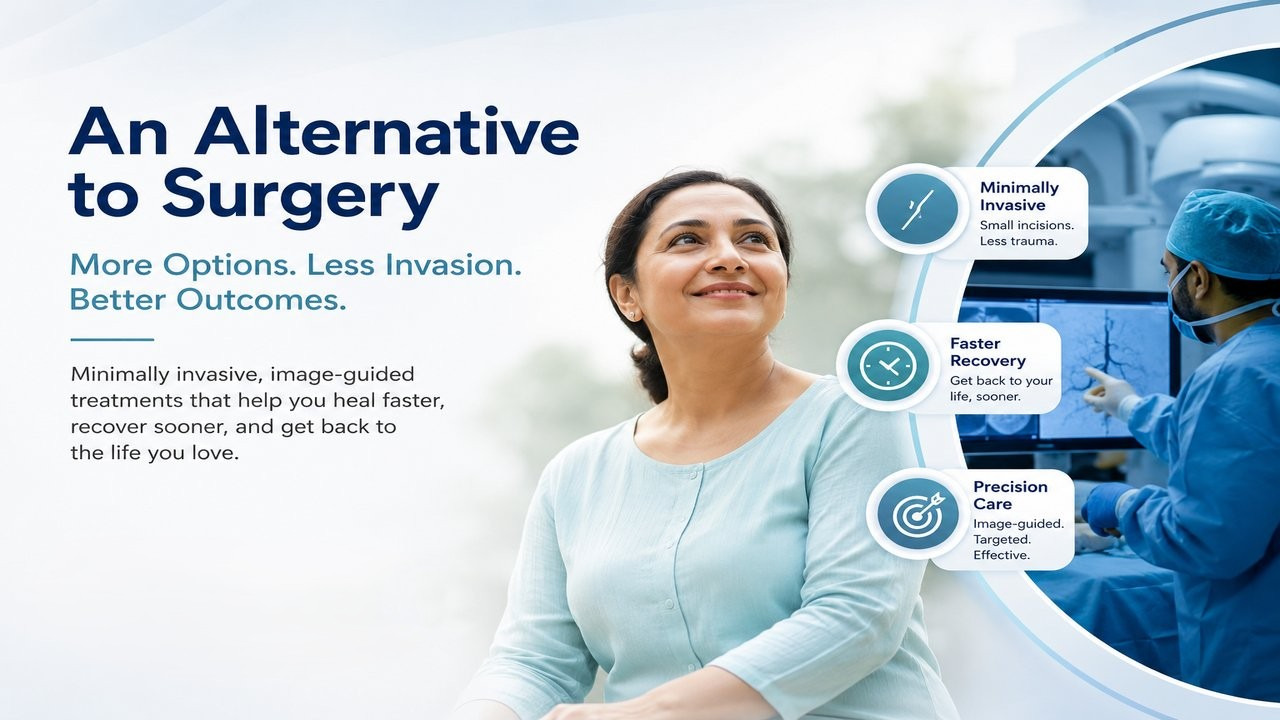
A few months back, a woman in her early forties walked into my clinic carrying a folder thick with reports. Three different surgeons had told her the same thing. her uterine fibroids needed a hysterectomy. She'd already mentally prepared for six weeks off work, a hospital stay, and a recovery that would knock her flat during her daughter's board exam year. She wasn't looking for a miracle. She was just tired, and a friend had told her to "ask the radiology guy before you sign anything."
That conversation is one I have almost every week now. And it's why I wanted to write this piece not as a promotional pitch, but as an honest look at a field that most patients in India have never heard of, despite it quietly reshaping how we treat everything from blocked arteries to liver cancer.
What Interventional Radiology Actually Is
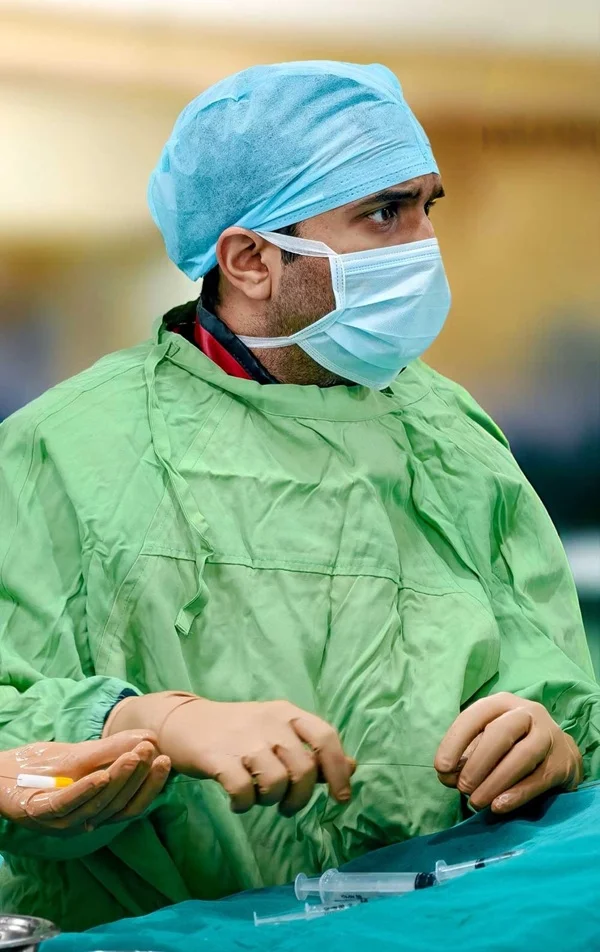
Interventional Radiology is, at its core, medicine guided by sight. Instead of opening the body to see what's wrong, an Interventional Radiologist uses imaging X-ray, ultrasound, CT, or MRI to see inside the body in real time, then treats the problem through a tiny needle or catheter, often inserted through a pinhole no bigger than the tip of a pen.
Think about what that means practically. A tumor that once required cutting through skin, muscle, and tissue to reach can now be approached through a 2mm puncture in the skin, guided entirely by a screen showing exactly where the instrument is, millimeter by millimeter. The surgeon's eyes become a camera. The scalpel becomes a catheter.
This is the foundation of what we call Minimally Invasive Procedures and once you understand the principle, it's easy to see why this approach is spreading across nearly every specialty in medicine.
Why "Minimally Invasive Pinhole Procedures" Matter More Than People Realize
I want to be honest about something. When patients first hear "pinhole procedure," many assume it's a watered-down version of "real" treatment like it's the budget option. That assumption couldn't be further from the truth.
Minimally Invasive Pinhole Procedures aren't a compromise. In many cases, they're the gold standard backed by decades of data, used in top hospitals worldwide, and often producing outcomes equal to or better than open surgery, with a fraction of the risk.
Here's why this matters in practical terms:
- Recovery time drops from weeks to days. Open surgery for fibroids might mean 4-6 weeks of recovery. The pinhole alternative Uterine Fibroid Embolization typically has patients back to normal activity within a week.
- Blood loss is dramatically reduced. Because there's no large incision, there's no large wound to bleed from.
- General anesthesia is often unnecessary. Most of these procedures use local anesthesia with mild sedation. Patients are awake, comfortable, and often go home the same day.
- Scarring is minimal to nonexistent. A puncture site that's smaller than a coin heals without the visible scar that comes from a surgical incision.
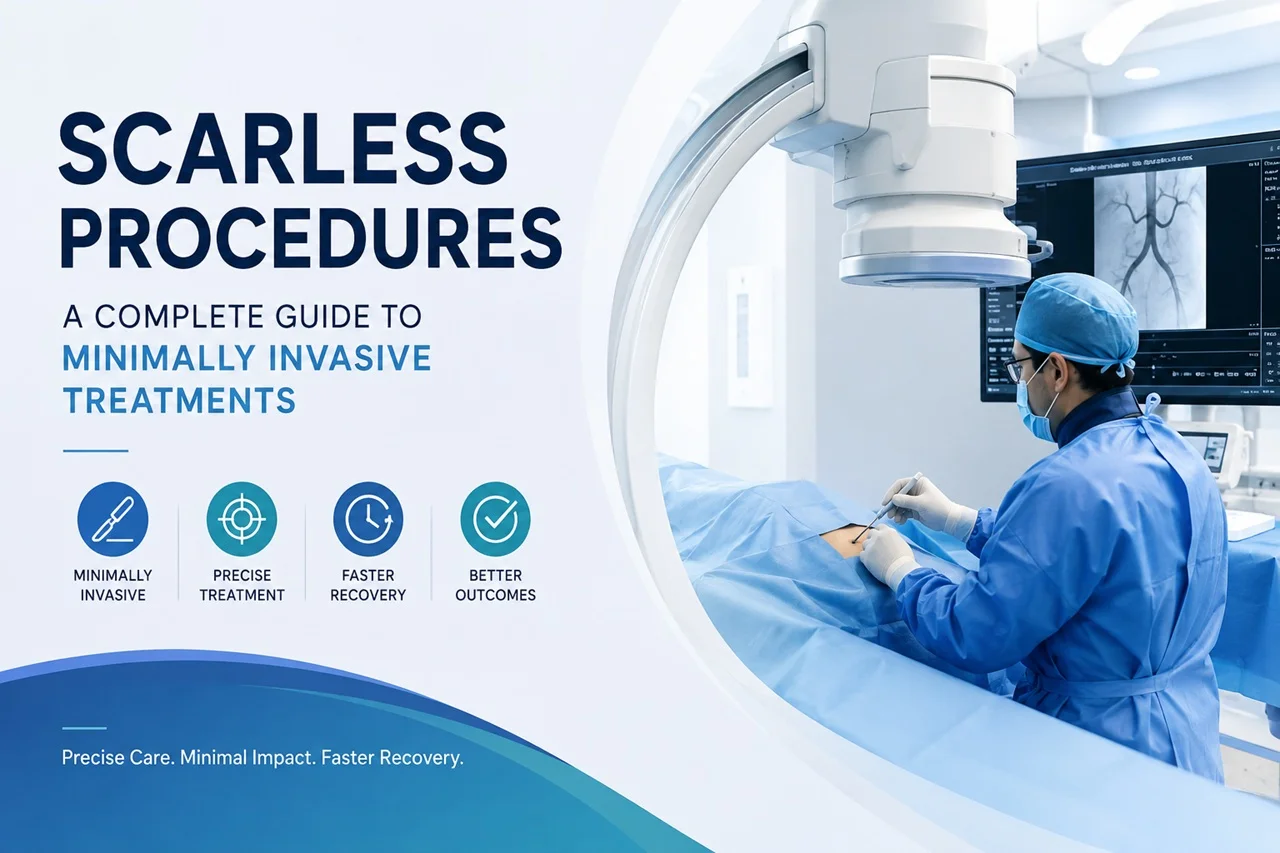
This is the essence of what's now widely called Scarless Procedures and for patients who've spent months dreading the idea of surgery, this single fact often changes everything.
Image Guided Treatments: The Technology Behind the Magic
None of this works without precision. Image Guided Treatments rely on real-time imaging that essentially gives the doctor X-ray vision during the procedure.
During a procedure, I'm watching a live feed fluoroscopy, ultrasound, or CT that shows exactly where my catheter or needle is positioned relative to the target. If I need to navigate around a blood vessel, or thread a catheter through branching arteries to reach a specific tumor, the imaging tells me precisely where I am at every second.
This is what separates interventional radiology from blind procedures. There's no guesswork. The treatment goes exactly where it needs to go and nowhere else.
The Range of What's Possible Today
When people ask me what an Interventional Radiologist actually treats, I usually tell them: almost everything that used to require surgery has, in some form, a minimally invasive alternative now. Let me walk through some of the most common ones I see in practice.
Vascular Conditions The Domain of the Vascular Specialist
As a Vascular Specialist, a large part of my work involves blood vessels arteries and veins that have narrowed, blocked, or malfunctioned.
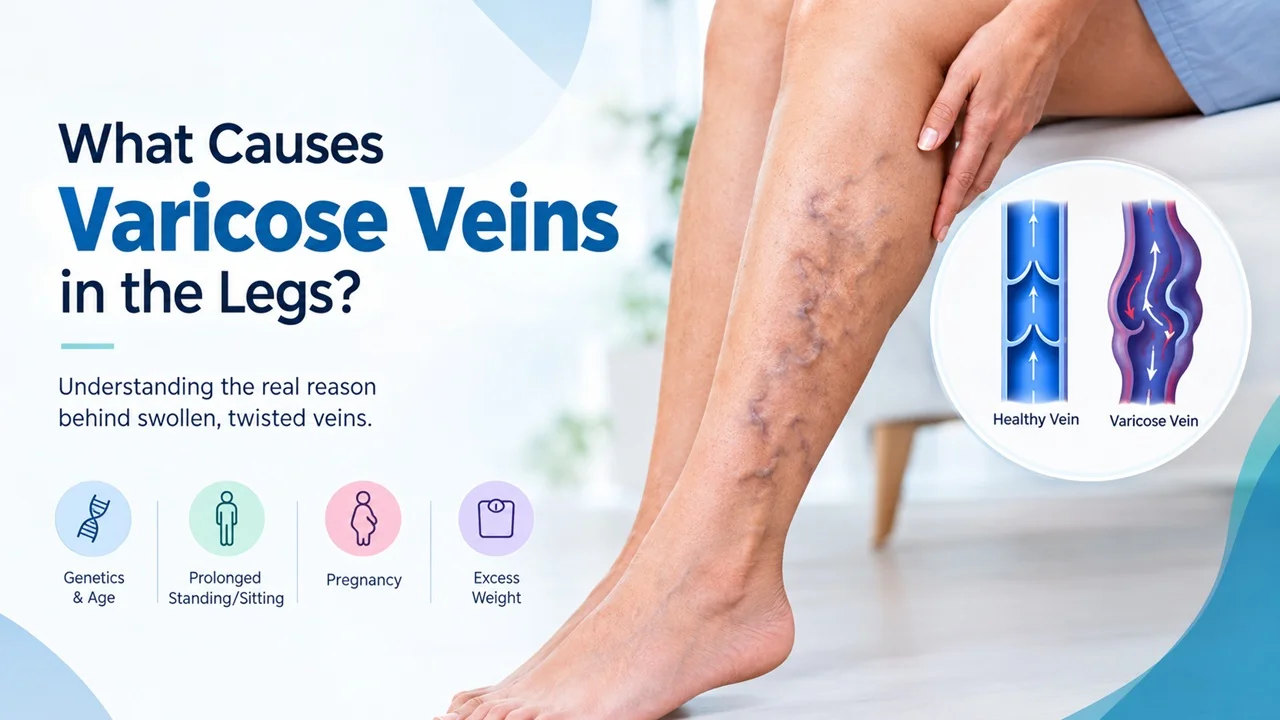
Varicose Vein Treatment is one of the most requested procedures in my clinic, and for good reason. Traditional vein stripping surgery involved general anesthesia, multiple incisions, and weeks of compression bandaging. Today, using laser ablation or radiofrequency ablation through a single pinhole entry point, we close off the problematic vein from the inside. Patients walk out the same day. Many are back to normal walking routines within 48 hours.
Peripheral artery disease where arteries supplying the legs become narrowed is another area where this approach changes lives. Angioplasty and stenting, performed through a small puncture in the groin or wrist, can restore blood flow to a leg that was at risk of amputation. I've seen patients who could barely walk to their car regain the ability to take long walks again, all from a procedure that took under an hour.
Interventional Oncology Fighting Cancer Without the Knife
This is, honestly, the part of my work I find most meaningful. Interventional Oncology is the use of image-guided techniques to treat cancer directly sometimes as the primary treatment, sometimes alongside chemotherapy or radiation.
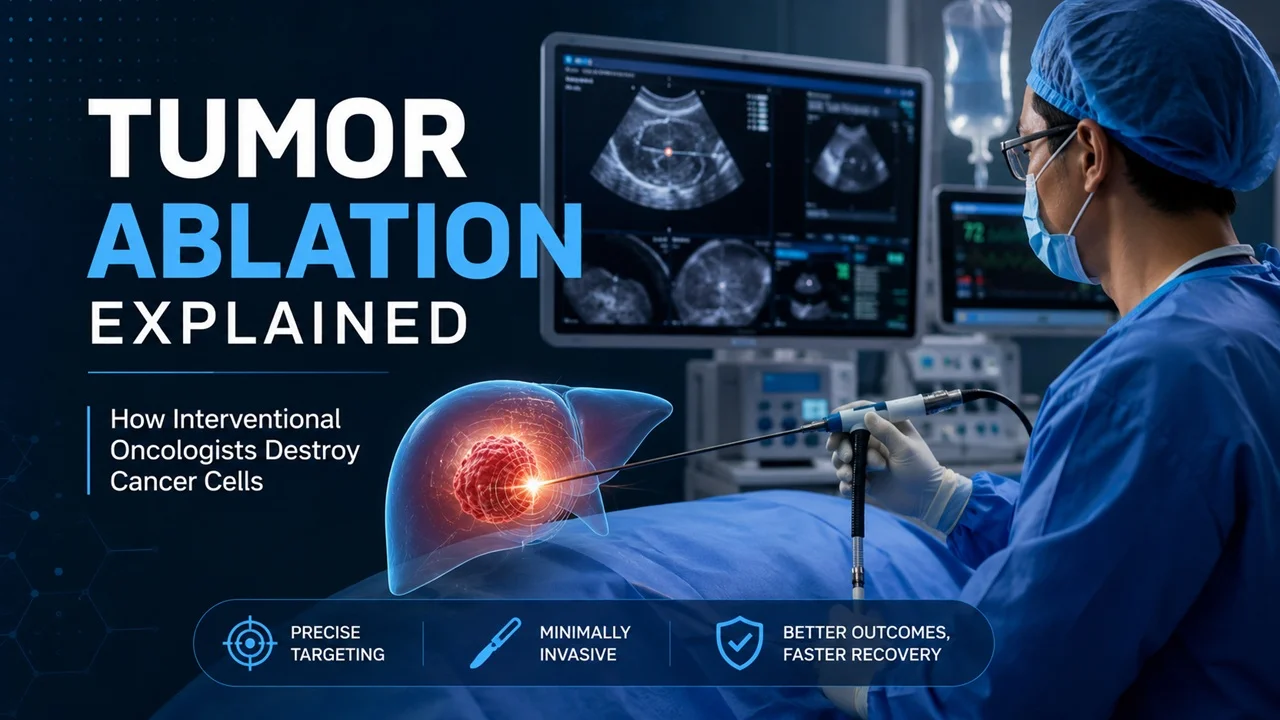
Tumor Ablation is a perfect example. For certain liver, kidney, or lung tumors, we can insert a thin probe directly into the tumor under imaging guidance and destroy it using heat (radiofrequency or microwave energy) or extreme cold (cryoablation). The tumor is essentially cooked or frozen from the inside, while the healthy surrounding tissue is largely spared.
For liver cancers that can't be surgically removed often because the patient's liver function won't tolerate losing healthy tissue we use techniques like TACE (delivering chemotherapy directly into the tumor's blood supply) or TARE (delivering radioactive particles the same way). These treat the cancer where it lives, without subjecting the entire body to the side effects of systemic chemotherapy.
What strikes me every time is how much hope this brings to patients who've been told "there's nothing more we can do." Often, there is it just requires a different toolkit.
Women's and Men's Health Procedures People Rarely Discuss
Uterine Fibroid Embolization deserves more attention than it gets. Fibroids are incredibly common studies suggest a large percentage of women will develop them at some point yet hysterectomy remains the default recommendation in many clinics, even when it isn't necessary.
The embolization procedure works by blocking the blood vessels feeding the fibroid, causing it to shrink over time. The uterus stays intact. Fertility, in many cases, is preserved. And the recovery compared to major surgery is night and day.
Similarly, Prostate Artery Embolization has become a meaningful alternative for men dealing with an enlarged prostate (BPH) who either don't want surgery or aren't good surgical candidates. By reducing blood flow to the prostate, the gland shrinks over time, easing urinary symptoms all through a catheter inserted in the wrist or groin.
I bring up these two procedures specifically because I think they're under-discussed. Many patients simply don't know these options exist before agreeing to surgery.
The Patient Who Started This
Going back to that woman with the folder of reports we talked through her options, and she chose Uterine Fibroid Embolization. The procedure took about 90 minutes. She went home the next morning. Three weeks later, she sent me a message saying she'd attended her daughter's school function without needing to sit down halfway through, something the fibroid-related fatigue had made impossible for months.
That's not a dramatic medical miracle. It's just someone getting her life back, faster and with less suffering than she expected. And that, more than any statistic, is what Advanced Medical Treatments in interventional radiology are really about.
An Alternative to Surgery Not a Replacement for Conversation
I want to end with something important. None of this means surgery is obsolete, or that every condition has a pinhole solution. Some situations genuinely need an operating room, and a good interventional radiologist will tell you that honestly.
What this field offers is an Alternative to Surgery worth exploring a second opinion, a different lens, before committing to a path that might not be the only one available. If you or someone you know has been told surgery is the only option for a vascular issue, a tumor, fibroids, or an enlarged prostate, it's worth asking: has anyone discussed the minimally invasive route?
Sometimes the answer is no, simply because the conversation never came up. And sometimes, that one extra conversation changes everything.
Frequently Asked Questions - Interventional Radiology
1. Is interventional radiology the same as surgery?
Not quite, though people often confuse the two. Surgery means opening the body to access the problem directly. Interventional radiology treats the same problem through a tiny needle or catheter, guided by real-time imaging, usually through a pinhole-sized entry point. The end goal can be similar removing a blockage, shrinking a tumor, treating a fibroid but the path to get there is completely different, and so is the recovery.
2. How painful are minimally invasive pinhole procedures?
Most patients are surprised by how manageable it is. Since we're working through a small puncture rather than an incision, local anesthesia is often enough, sometimes combined with mild sedation. There's usually some discomfort at the access site for a day or two, similar to a bruise, but nothing close to the pain associated with a surgical wound. I always tell patients. if you've had a blood test, you've experienced something close to the worst part.



.webp)


.webp)