Sign up with Google
 Sign in with Zoho

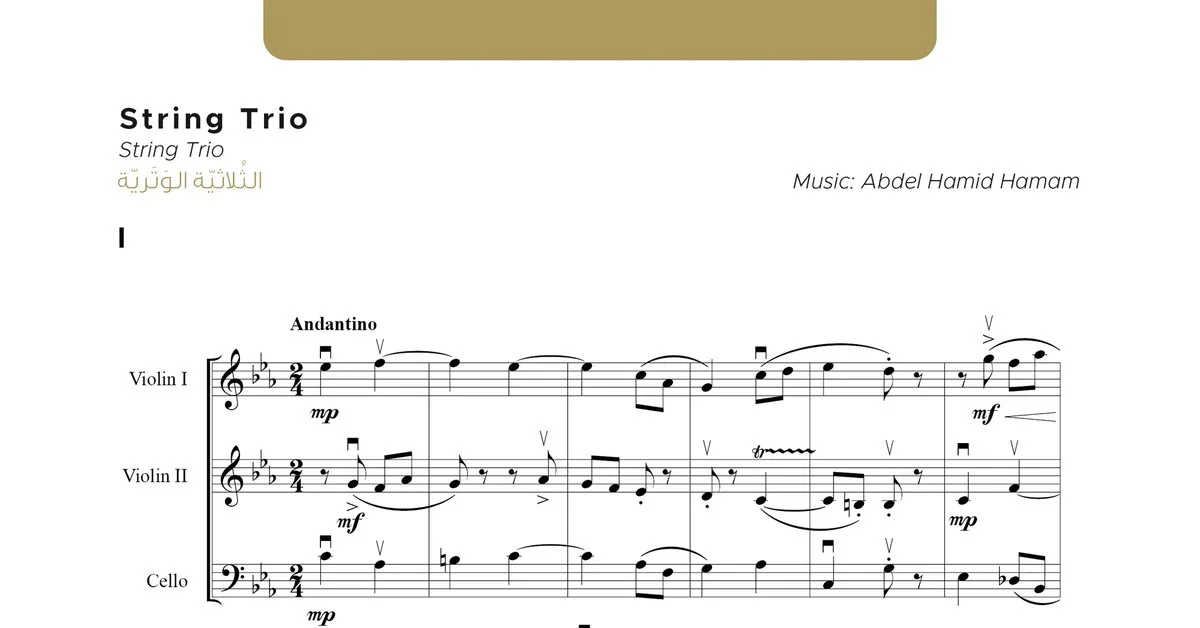
If you play violin, viola, or cello and you want string trio sheet music with a distinctive sound, Arabic and Middle Eastern arrangements provide an excellent option. These pieces bring maqam melodies, quarter tones, and Levantine rhythms into a chamber setting that many string players have yet to try. Dozan World publishes string arrangements built specifically for this type of ensemble.
What Is String Trio Sheet Music?
A string trio usually consists of a violin, viola, and cello playing together, though some groups use two violins or add a second cello depending on the arrangement. The sheet music gives each player a separate part along with a full score for rehearsal. For Arabic music, the notation includes quarter tone accidentals because many maqam scales sit between the notes on a standard Western staff.
Why It Matters
Trios are among the most flexible ensembles a string player can join. There is no conductor to follow, every part carries real musical weight, and the group can rehearse and perform almost anywhere. Adding Arabic repertoire gives a trio the opportunity to study modes and ornamentation that rarely appear in a standard string curriculum. It also opens the door to new audiences because Middle Eastern music has a dedicated following that classical programming often misses.
Key Features of Arabic String Trio Arrangements
- Quarter tone notation for maqam based melodies
- Parts written for violin, viola, and cello, with some pieces adaptable for two violins and cello.
- Melodies drawn from Levantine folk songs, sacred hymns, and original compositions.
- Difficulty levels ranging from teaching pieces to advanced concert repertoire
- Optional accompaniment parts for piano or additional strings in certain arrangements
Examples and Applications
String trios perform this repertoire in recitals, wedding ceremonies, cultural events, and school concerts. Some groups use these pieces to bridge sections in a mixed program, pairing an Arabic arrangement with standard European trio repertoire. Others build an entire set around Levantine and maqam traditions to highlight a specific composer. Teachers also use simpler arrangements to introduce string students to quarter tone playing before they attempt full ensemble works.
How Dozan World Can Help
Dozan World offers instrumental sheet music for small ensembles, including trio and chamber arrangements built around Arabic and Middle Eastern melodies. Our chamber music collection includes pieces for violin, viola, cello, and other instruments, with several arrangements suited to trio settings. If you are new to this repertoire, our guide to Arabic sheet music explains how quarter tone notation works and how string instruments adapt to it. You can browse our full collection page to see how chamber and ensemble works fit alongside our vocal and sacred catalog, or check our FAQ page for details on formats and licensing.
Conclusion
String trio sheet music can easily expand beyond traditional European repertoire. Arabic and Middle Eastern arrangements give violin, viola, and cello players an entirely new set of melodies, rhythms, and techniques to work with, whether for a concert program, a teaching studio, or a cultural event. Dozan World's chamber collection serves as an ideal starting point if you want to bring this repertoire into your next trio project.
FAQs
What instruments make up a string trio?
Most string trios use violin, viola, and cello, though some arrangements are written for two violins and cello instead.
Do I need special training to play Arabic music on a string instrument?
No. Violin, viola, and cello can all reproduce quarter tones through finger placement and bow control, so most trained string players can learn the style with practice.
Where can I find string trio sheet music for Arabic music?
Dozan World's chamber music collection includes trio and small ensemble arrangements of Arabic and Middle Eastern pieces.
Are these arrangements suitable for beginners?
Some are. Dozan World offers pieces across different difficulty levels, and each listing notes the skill level so you can find the right fit.
Can a trio mix Arabic pieces with standard classical repertoire in one concert?
Yes. Many trios pair Arabic arrangements with European chamber works to build a varied, culturally rich program.