
 Sign up with Google
 Sign in with Zoho

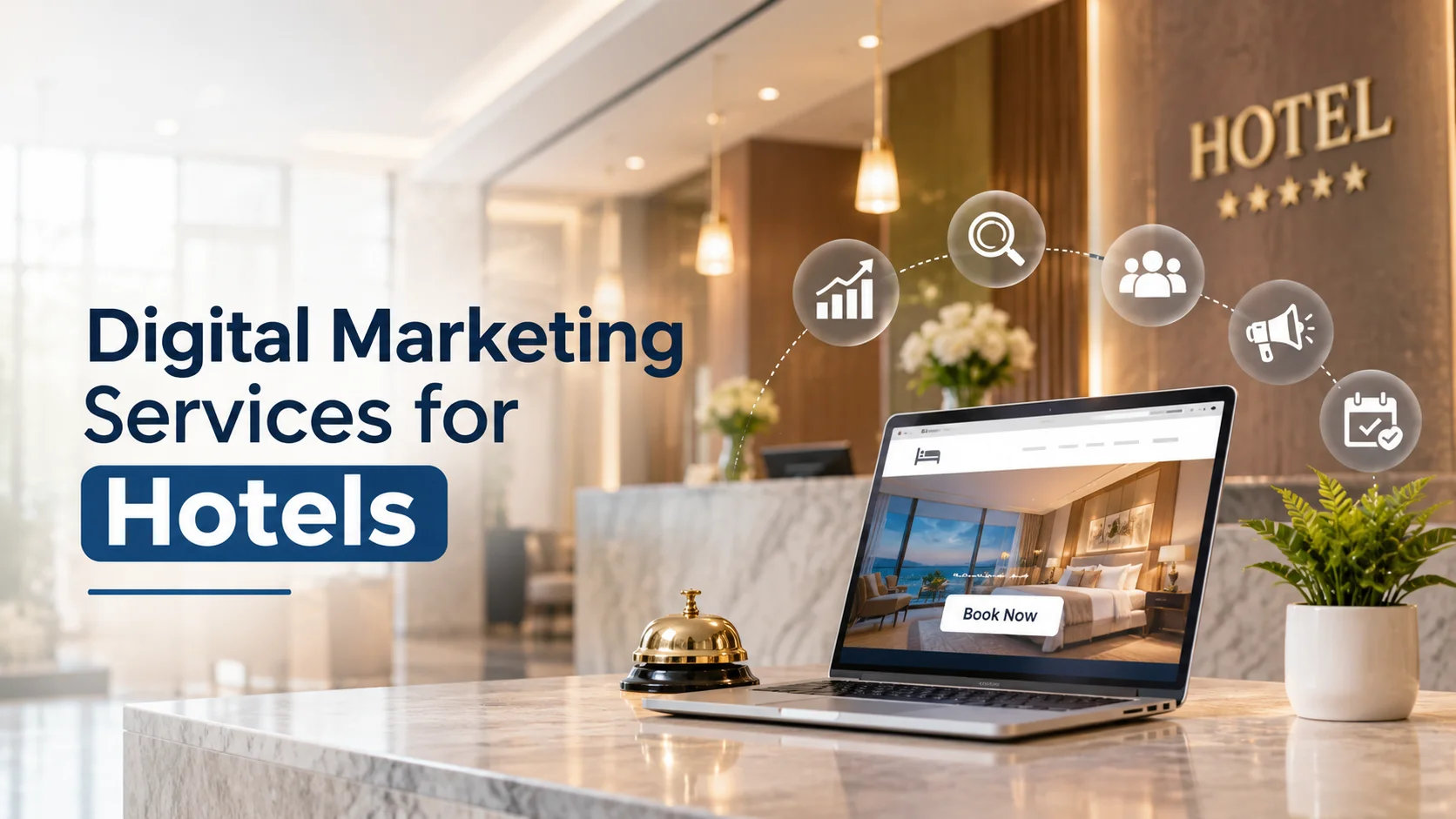
Every independent hotel owner knows the feeling. The rooms fill up, yet the profit does not follow. A growing slice of every reservation goes to online travel agencies in commission, and the guests who book through them are not really yours.
This article takes a different approach from the usual checklist. It walks through a composite case file, built from common patterns in independent properties, to show how the right digital marketing services for hotels can shift revenue toward direct bookings. The hotel below is illustrative, not a named client, and no results are claimed. The point is to show the thinking, step by step, so you can apply it to your own property.
The Presenting Problem
Picture a 60-room independent hotel near a convention center in a mid-sized city. Occupancy is healthy, but most bookings arrive through third-party platforms. Direct bookings are flat. The website looks fine on a desktop, the owner says, yet inquiries for weddings and corporate events trickle in only by referral.
The owner’s question is simple: “Why am I paying commissions on guests who were searching for me anyway?”
The Diagnosis: Five Findings
A careful review of the hotel’s online presence, the kind any capable hotel digital marketing audit should perform, would likely turn up the following.
1. Weak visibility for “near me” searches. Travelers searching “hotels near me” see map results first. This hotel’s Google Business Profile has thin photos, outdated amenities, and no recent posts, so it sits below competitors.
2. A slow, awkward mobile site. Most travel searches happen on phones. Heavy images and a clumsy booking path cause visitors to bounce back to the booking platforms.
3. Content that answers nothing. The site lists rooms and a phone number but says little about the neighborhood, nearby attractions, parking, shuttle options, or event spaces. Travelers have questions, and a competitor’s page answers them.
4. Thin trust signals. Recent reviews are few, several complaints are unanswered, and the property’s ratings on Google and TripAdvisor lag behind rivals.
5. No strategy for group business. Searches such as “conference venue” or “wedding hotel” go to other properties because the hotel has no pages built for them.
None of these is exotic. Together, though, they explain why guests are choosing a booking platform over the hotel’s own website.
The Treatment Plan
A thoughtful hospitality digital marketing plan would address these findings in stages rather than all at once.
Phase One: The First 30 Days (Foundation)
- Competitor analysis. Study the hotels that rank above you for key searches, noting their strengths, weaknesses, and gaps you can fill.
- Google Business Profile overhaul. Add current photos, accurate amenities and hours, correct categories, and regular posts.
- Technical clean-up. Fix slow pages, broken links, and mobile layout issues so search engines and travelers can use the site easily.
- Clear directions. Add accurate maps, driving and transit directions, and parking details, which help first-time visitors and strengthen local signals.
Phase Two: Months Two and Three (Content and Trust)
- Helpful location content. Publish pages about the neighborhood, attractions, dining, and getting around, written from real local knowledge.
- Dedicated pages for groups. Build clear pages for weddings, conferences, and corporate retreats, with capacity details, photos, and inquiry forms.
- A review system. Invite guests to leave reviews on Google and TripAdvisor after their stay, and respond professionally to every review, including critical ones.
- Multilingual content where it fits. If your guests come from abroad, optimized pages in their languages make the site far easier to use.
Phase Three: Months Four to Nine (Authority and Direct Revenue)
- Quality link building. Earn mentions from local tourism boards, event organizers, travel writers, and community sites.
- Social media with purpose. Share real stories, guest experiences, events, and offers on platforms where your guests actually spend time.
- Conversion improvements. Test the booking path, simplify forms, and make sure rates and availability are clear on mobile.
- Ongoing measurement. Track direct bookings, event inquiries, calls, and revenue by source, not just rankings.
What Success Looks Like
Rather than promising numbers, a responsible provider describes the signals to watch. Hospitality sites often see early improvements within about three months, such as better profile engagement, higher rankings for local searches, and more site visits. A meaningful shift in the share of direct bookings typically takes longer, usually around six to nine months, because SEO builds momentum gradually.
Notice what is being measured: not impressions or follower counts, but direct reservations, group inquiries, and the commission you stop paying.
Lessons You Can Apply to Your Own Property
- Treat your website as your best sales channel. Booking platforms are useful for exposure, but your own site is where you keep the relationship and the margin.
- Fix local visibility first. A complete, active Google Business Profile often delivers some of the fastest improvements.
- Write for the questions guests actually ask. Parking, shuttle, nearby attractions, and event capacity all matter.
- Earn reviews on purpose. Guests rarely leave feedback unless asked.
- Plan for groups separately. Weddings and conferences search differently than leisure travelers.
Choosing the Right Partner
When you compare a digital marketing agency hospitality owners trust, look for behavior, not slogans. Ask for an audit before a proposal, plain-language reporting tied to bookings, honest timelines, and clear ownership of your website, listings, and analytics. A reliable provider should also explain how it reduces your dependence on third-party platforms instead of simply promising “more traffic.”
Digital Guider, for example, offers hospitality-focused SEO that covers competitor analysis, local SEO and Google Business Profile work, content, technical health, link building, multilingual optimization, and reputation support. It lists Google Partner and HubSpot credentials, and it notes that hospitality sites often see quick wins around three months and larger direct booking shifts within six to nine months. As with any provider, read independent reviews in full and ask direct questions before you commit.
Your Next Step
Take twenty minutes to run your own mini-audit. Search “hotels near me” from your phone, load your website on mobile, count your recent reviews, and check whether your site has a page for weddings or meetings. Whatever you find becomes your priority list.
If you would like an outside view, a free proposal for digital marketing services for hotels can show where bookings are leaking and what to fix first. You can see how Digital Guider approaches this on its hospitality SEO page, then compare it with other options before you decide.











.webp)