Sign up with Google
 Sign in with Zoho

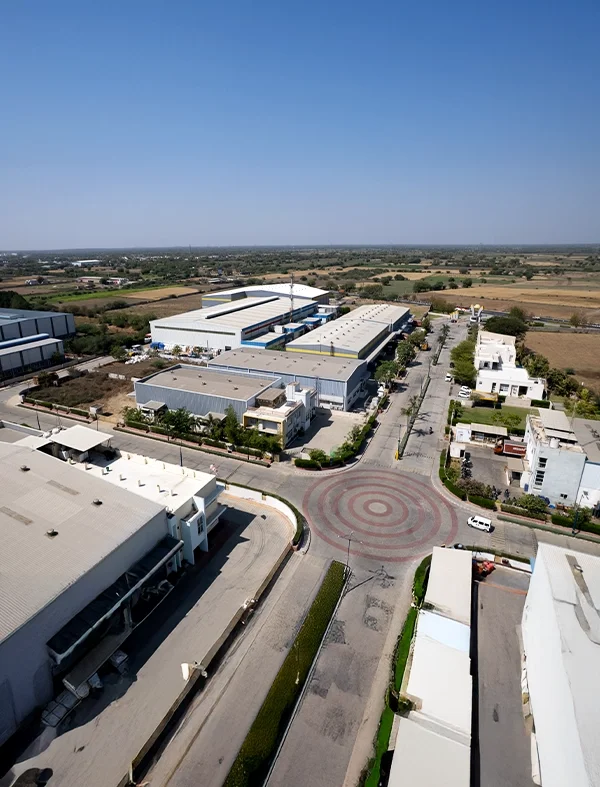
There is a version of industrial land in India that most manufacturers know well: a GIDC plot number, a boundary wall, and a set of utility connections that arrive six months after they were promised. This version is still common. But alongside it, quietly and at scale, something different has been taking shape across Gujarat's industrial corridors — and the businesses that found it early are now the ones operating without the friction that slows everyone else down.
The shift is in infrastructure quality. Not policy, not incentives, not tax zones — those are table stakes. The real differentiator in Gujarat's industrial belt today is whether a location offers genuine plug and play infrastructure — a park where power is connected, roads are load-rated, drainage is commissioned, security is operational, and a business can begin construction on day one rather than spending 18 months arranging utilities before production starts.
This piece maps that shift across the key locations in Gujarat's industrial corridor — from the Ahmedabad periphery through Sanand, Kadi, Kheda, Kalol, and up to Viramgam — and explains what is actually available at each one for manufacturers evaluating where to set up next.
The Ahmedabad Periphery: High Demand, Uneven Supply
Ahmedabad remains the commercial and logistics anchor of Gujarat. The demand for industrial land for sale near Ahmedabad and industrial sheds for sale near Ahmedabad has been consistent for over two decades — driven by the city's talent pool, its banking infrastructure, its road and rail connectivity, and its position as the state's primary commercial centre.
The problem has always been the quality gap between what is available and what serious manufacturing operations require. Raw plots on the city's periphery are abundant. Planned industrial parks with load-bearing internal roads, uninterrupted power, water and sewage treatment, 24/7 security, and a developer who stays accountable after handover are far rarer.
For businesses that have found the latter, the setup experience is fundamentally different. Instead of coordinating with multiple agencies for utility connections, managing independent contractors for road and drainage work, and absorbing 12 to 24 months of pre-production capital burn, they arrive at a functioning industrial environment. The difference in time-to-production and in early-stage cash flow is significant enough to affect whether a project is viable at all during its first two years.
Sanand: The Automotive Cluster Standard
Sanand's transformation into Gujarat's automotive manufacturing hub is one of the best-documented industrial stories in the country. Tata Motors, Voltasbeko, and their supply chains established a cluster density that has sustained itself and grown — and the demand for industrial land in Sanand for sale and industrial sheds for sale near Sanand GIDC reflects a market where being inside the cluster is a supply chain necessity, not a preference.
What makes Sanand different from most industrial locations is that proximity to Sanand GIDC is verifiable in operational terms. Being 4.5 km from a major plant means just-in-time delivery windows are achievable. Being within the same postcode as Tier-1 OEM suppliers means recruitment draws from an existing skilled workforce pipeline rather than starting from scratch. Being adjacent to GIDC infrastructure means the road and utility networks are mature rather than provisional.
The demand for industrial park in Sanand — particularly for planned, serviced plots rather than standalone land — has held consistently because the cluster's OEM base keeps expanding. EV supply chain investment is deepening the existing automotive density rather than replacing it, and businesses that establish positions inside the cluster now are doing so before the next round of OEM capacity announcements adjusts pricing.
Kadi: Light Manufacturing and Logistics on the Northern Highway
Kadi sits approximately 50 km north of Ahmedabad on the highway toward Mehsana, and has developed steadily as a location for light and medium manufacturing, BTS (built-to-suit) factory sheds, and logistics operations that need Ahmedabad access without Ahmedabad land prices.
The demand for industrial plots for sale in Kadi is driven by a straightforward value proposition: a location that is genuinely well-connected to both Ahmedabad and the North Gujarat industrial corridor, at land costs that still reflect a growing location rather than a mature one. The BTS factory shed model has been particularly well-received here — businesses that want a custom-built, specification-matched facility without managing the construction process themselves have found Kadi's planned industrial parks a natural fit.
The highway connecting Kadi northward to Vitthalapur and beyond is the arterial link for an increasingly dense industrial belt — and Kadi's position on it gives businesses there access to the full corridor's supply chain and logistics network.
Kheda: Central Gujarat's Logistics Fulcrum
Kheda's value is geographic. Positioned in central Gujarat at roughly equal distance from Ahmedabad, Vadodara, and Rajkot, a well-placed industrial park in Kheda is a distribution centre at the state's centre of gravity. For businesses with pan-Gujarat distribution requirements — FMCG, pharma, consumer goods, building materials — the logistics cost saving from a centrally positioned facility compounds across thousands of deliveries annually.
An industrial plot for sale in Kheda inside a developed logistics park on the state highway gives a business that central positioning with the infrastructure quality required to run a serious distribution operation. The SH-16 Kheda-Dholka highway corridor connects to all three of Gujarat's major freight destinations, making it one of the state's most logistically rational industrial locations for distribution-heavy businesses.
Kalol and Viramgam: The Next Phase
The conversation around the industrial park in Kalol and industrial city in Viramgam has shifted from speculative to active in the last two years. Both locations are in their infrastructure development phase — which is historically the optimal entry point for businesses that want cluster benefits at pre-maturity pricing.
Kalol, north of Gandhinagar, sits in the orbit of both GIFT City and the Mehsana industrial corridor. As GIFT City's financial and tech ecosystem expands, the ancillary demand for industrial and logistics space in its surrounding districts is growing. Kalol's proximity makes it a natural beneficiary of that expansion, and the industrial park in Kalol that captures this demand will be among the state's better-positioned mid-tier industrial addresses within five years.
Viramgam is a more direct infrastructure story. Its position on NH-947 — the highway connecting Ahmedabad to Rajkot — gives it multi-directional freight access that few North Gujarat locations can match. Industrial land in Viramgam for sale at this highway junction offers logistics economics that will look significantly different once the infrastructure investment currently underway is reflected in market pricing. The industrial city in Viramgam development represents one of the more tangible commitments to turning that potential into a functioning industrial destination.
What Industrial Infrastructure in Gujarat Actually Requires
For a manufacturer evaluating any of these locations, the checklist is consistent regardless of geography. Internal roads of 18 to 30 metres — wide enough for two container trucks to pass without slowing. Multiple entry and exit points that separate freight, worker, and executive traffic. Uninterrupted power supply managed at the park level. Common water and sewage treatment that removes the need for individual environmental clearances. 24/7 CCTV surveillance and controlled access. Weigh bridge infrastructure for freight-heavy operations.
The workforce layer is increasingly part of the same checklist. Parks that include dormitory facilities, canteen services, and medical centres within or adjacent to the industrial zone give businesses a meaningfully stronger retention position than those that leave workers to find their own accommodation in surrounding areas. The walk-to-work model — workers housed within the same planned ecosystem where they work — is becoming a differentiating feature rather than an amenity.
The sustainability layer is now a due diligence item for multinational tenants. Solar street lighting, EV charging infrastructure, green drainage systems, and energy-efficient common areas are what businesses with ESG reporting requirements check before committing to a site. Industrial infrastructure in Gujarat at the leading parks is built to this standard. Not all parks are at this level — and the gap between those that are and those that are not is widening.
The Developer Factor
One variable that is consistently underweighted in industrial site selection is the developer's track record after handover. Infrastructure promises in a brochure are common. Infrastructure delivered, maintained, and upgraded over five and ten years of operations is rarer — and the businesses that learn the difference between the two after committing to a location absorb the lesson at significant cost.
The industrial park developers in India who have built credibility with multinational clients — companies from Japan, Germany, the UK, the US, and Taiwan that conduct rigorous site evaluation before committing — have done so through delivered projects with documented outcomes, not through marketing. For any business evaluating industrial park in Gujarat, verifying the developer's completed portfolio alongside the project under consideration is the most useful due diligence step available.
Frequently Asked Questions
What does plug-and-play industrial infrastructure mean in practice? It means all utilities — power, water, drainage, internal roads, security systems, telecom connectivity — are fully commissioned before a business takes possession of its plot or shed. The business connects its operations to existing infrastructure rather than arranging utility connections independently. This compresses setup timelines from 18–24 months to 6–9 months and eliminates a significant pre-production capital expenditure.
Why is industrial land near Ahmedabad in high demand? Ahmedabad's ecosystem — talent, banking, logistics networks, supply chain depth, and its status as Gujarat's commercial centre — makes the surrounding industrial belt attractive to businesses across manufacturing, logistics, pharma, FMCG, and automotive sectors. The demand is consistent because the ecosystem advantages are real and measurable in daily operational terms.
What makes Sanand GIDC a preferred industrial location for automotive businesses? The presence of major automotive OEMs and their Tier-1 and Tier-2 supplier networks creates a cluster density where being inside the ecosystem is a supply chain requirement. Just-in-time delivery, shared workforce pipelines, and proximity to OEM procurement teams are operational advantages that are only available inside the cluster — not from a location two hours away.
How do Kalol and Viramgam compare to established locations like Sanand and Kadi? Sanand and Kadi are mature locations with established infrastructure and premium pricing that reflects that maturity. Kalol and Viramgam are in active development phases — infrastructure investment is underway, connectivity fundamentals are strong, and current pricing still reflects growth potential rather than achieved maturity. For businesses with a 5–10 year horizon, these locations offer asymmetric upside that established clusters cannot.
What is the industrial estate landscape in Gujarat compared to other Indian states? Gujarat's combination of port connectivity (Kandla, Mundra, Dahej), planned industrial corridor infrastructure, the Delhi-Mumbai Industrial Corridor alignment, state policy consistency, and a mature developer ecosystem makes it consistently the top-ranked Indian state for industrial investment. The industrial estate in Gujarat market at the planned park level has developed to a quality standard that is measurably ahead of most other Indian states' equivalents.