Sign up with Google
 Sign in with Zoho
Two candidates apply for the same job. One has stronger technical knowledge but struggles to explain their thinking clearly. The other communicates brilliantly but has noticeably weaker hands-on skills.
Who gets hired?
Who gets promoted first?
This debate comes up constantly, and the honest answer isn’t as simple as picking a side.
What Technical Skills Actually Are
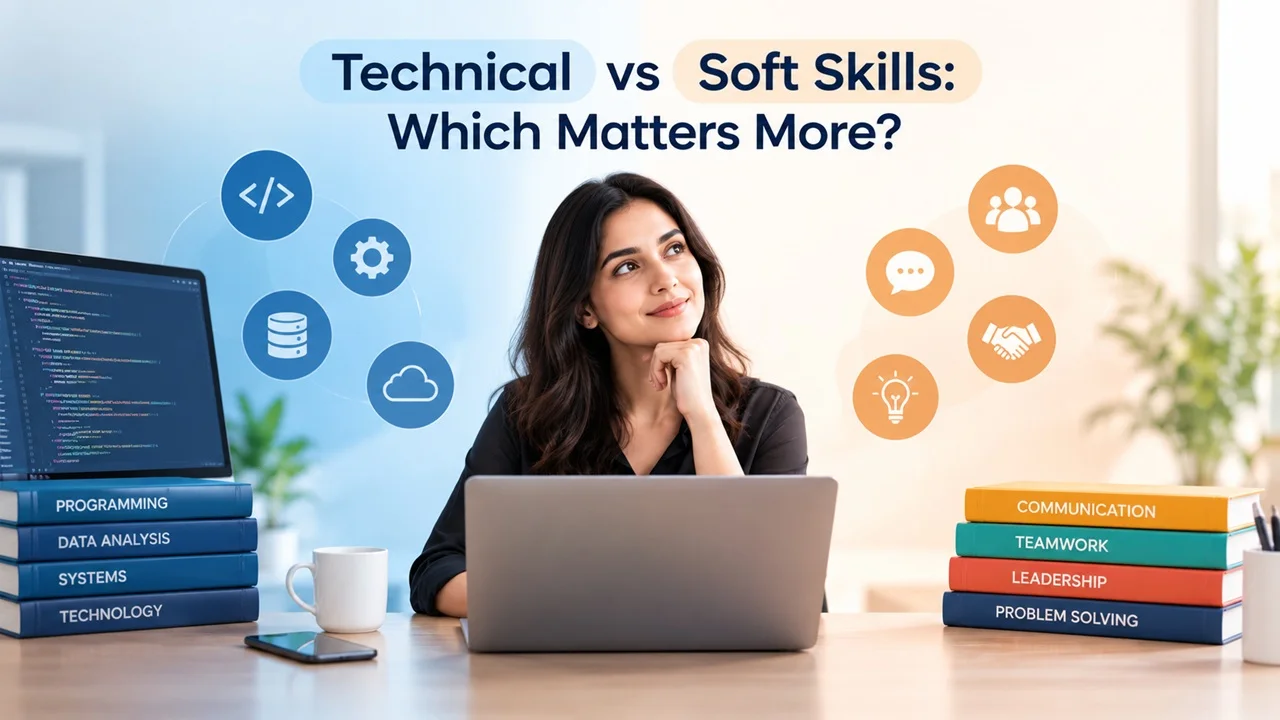
Technical skills, sometimes called hard skills, are specific, teachable abilities tied to a particular job or field writing code, analyzing data, operating equipment, using specialized software, or understanding a technical process specific to an industry. These are usually the skills listed clearly in a job description, and the ones tested most directly in interviews or assessments.
What Soft Skills Actually Are
Soft skills are less about a specific task and more about how you work communication, teamwork, adaptability, problem-solving, and the ability to handle pressure or disagreement well. They’re harder to measure directly, but they show up constantly in how effectively someone actually works with others day to day.
Where Technical Skills Matter Most
Technical skills are usually what get you hired in the first place. Employers need to know you can actually do the core work the role requires, whether that’s writing clean code, analyzing a spreadsheet properly, or operating specific machinery.
They also matter heavily in fields where a mistake has real, measurable consequences engineering, healthcare, finance, and similar fields where precision genuinely matters more than personality.
Where Soft Skills Matter Most
Soft skills tend to determine how far someone grows after being hired. Two people with similar technical ability can have very different career paths based on how well they communicate their work, collaborate with a team, or handle setbacks and feedback.
Leadership roles in particular lean heavily on soft skills, since managing people well has far less to do with technical execution and far more to do with communication, trust, and judgment.
Why This Isn’t Really an Either-Or Question
In practice, the strongest professionals rarely have only one or the other. Someone with excellent technical skills but poor communication often struggles to get their ideas understood or their work properly recognized. Someone with excellent communication but weak technical ability often can’t back up what they’re saying with real, credible work.
The honest answer is that technical skills tend to get your foot in the door, while soft skills tend to determine how far you walk once you’re inside.
How This Plays Out at Different Career Stages
Early career: Technical skills usually carry more weight, since employers are mainly evaluating whether you can actually do the job.
Mid career: Soft skills start mattering more, as your role increasingly involves working with others, managing projects, or explaining your work to non-technical stakeholders.
Senior or leadership roles: Soft skills often become the deciding factor, since these roles typically involve less hands-on technical work and far more communication, decision-making, and people management.
How to Build Both, Practically
For technical skills, focused, hands-on practice and real project experience tend to matter more than certificates alone. For soft skills, deliberately seeking feedback, practicing clear communication, and putting yourself in situations that require collaboration or public speaking tend to build these abilities faster than reading about them.
Neither develops passively. Both improve mainly through consistent, real-world practice.
Frequently Asked Questions
Q1. Are soft skills more important than technical skills?
Neither is more important on its own they serve different purposes. Technical skills usually get you hired for a role, while soft skills often determine how far you grow within that role over time.
Q2. Can strong soft skills make up for weak technical skills?
To some extent, especially in roles that are heavily people-focused. But most jobs still require a baseline level of technical competence that soft skills alone can’t fully replace.
Q3. Which skill type do employers value more?
Most employers look for both, though the balance shifts by role and seniority. Entry-level roles tend to weigh technical skills more heavily, while leadership roles increasingly value soft skills like communication and judgment.
Q4. How can I improve my soft skills while still learning technical skills?
Practicing communication in everyday situations, actively seeking feedback, and taking on tasks that involve teamwork alongside your technical work are practical ways to build both sets of skills at the same time, rather than treating them as separate tracks.
Final Thought
Technical and soft skills aren’t really competing with each other they work together. Technical skills prove you can do the job. Soft skills determine how effectively you do it alongside other people, and how far you’re able to grow from there. Building both, rather than choosing one over the other, is what actually moves a career forward.