Sign up with Google
 Sign in with Zoho

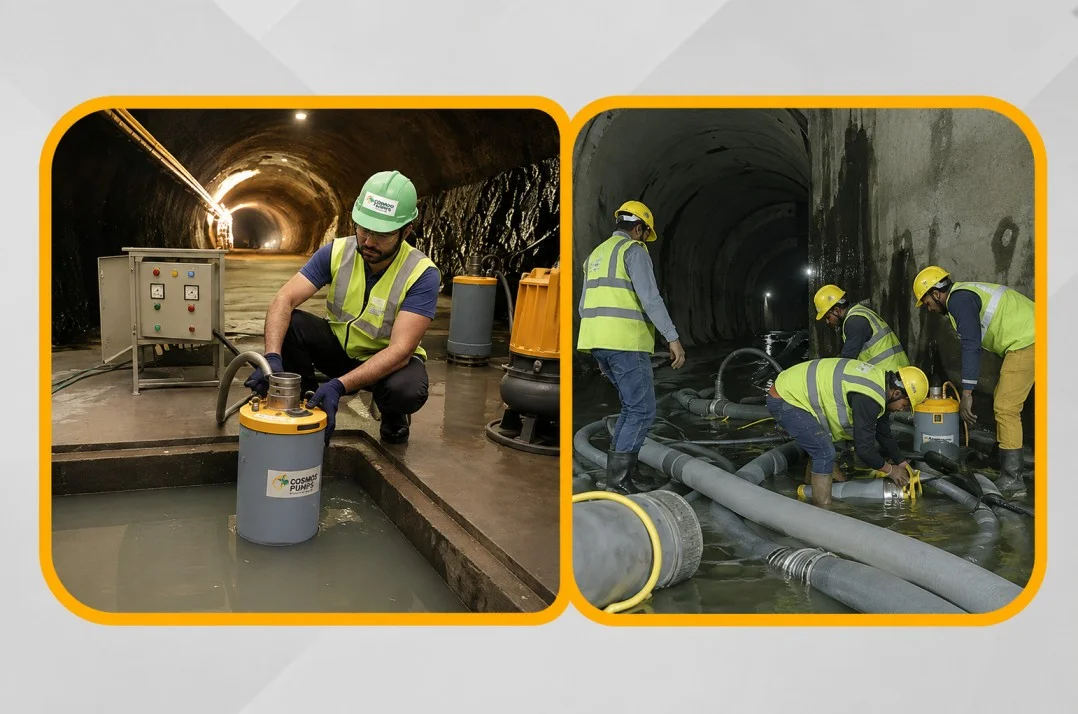
India is digging deeper than ever before: metro corridors, hydropower tunnels, and highway bores are pushing further underground each year. But none of that progress is possible without tunnel dewatering, the process of removing groundwater and seepage that would otherwise flood a worksite. Without it, tunnels simply cannot be built safely. This guide looks at why it matters and how engineers keep water under control deep beneath the surface.
The Underground Water Problem Nobody Talks About
Tunnels don't just cut through rock and soil; they cut through water tables, aquifers, and unpredictable seepage zones. The moment excavation begins, groundwater starts finding its way in, sometimes as a slow trickle, sometimes as a sudden inrush. This is where tunnel dewatering becomes non-negotiable rather than optional.
In India, the geology adds another layer of complexity. Coastal cities like Mumbai and Chennai deal with high water tables and saline intrusion, while Himalayan tunnel projects face fractured rock formations that release water unpredictably. Each site demands its own dewatering strategy, and there's no one-size-fits-all solution when you're working metres below ground level.
What Makes Tunnel Dewatering Different From Surface Projects
Surface construction sites can often rely on gravity drains or open channels to clear water. Underground, that luxury disappears. Tunnel dewatering systems must lift water vertically, often against enormous hydrostatic pressure, while operating in confined, poorly ventilated spaces. Engineers also have to account for continuous seepage rather than one-off rainfall events.
Handling Debris-Laden Water
Groundwater underground rarely arrives clean. It carries silt, rock fragments, and construction debris, all of which can quickly damage standard pumping equipment. This is precisely why a non-clog pump is so widely used on tunnel sites. Its design allows solids to pass through without jamming the impeller, keeping dewatering operations running without constant breakdowns.
Equipment That Keeps Pace With the Pressure
Selecting the right machinery is central to any successful tunnel dewatering plan. Submersible pumps are often preferred underground because they can be positioned directly in sumps or low points, pulling water out before it accumulates. Their sealed motor housings also protect against the damp, corrosive conditions typical of tunnel environments.
A reliable non-clog pump earns its place here too, particularly during the excavation phase when debris levels are highest. As tunnelling progresses and water becomes clearer, operators often switch to standard submersible units for efficiency. This staged approach, matching pump type to water condition, is a hallmark of well-managed tunnel dewatering operations across Indian infrastructure projects.
Power reliability matters just as much as pump selection. A dewatering system that stops even briefly can allow water levels to rise fast, risking equipment damage and worker safety. Backup power arrangements are, therefore, treated as essential rather than optional on most major tunnel sites today.
Planning Tunnel Dewatering Around Real Site Conditions
Good tunnel dewatering starts long before the first pump is switched on. Hydrogeological surveys help engineers estimate expected water inflow rates, allowing them to size pumps correctly from the outset. Underestimating this figure is one of the most common and costly mistakes on underground projects.
Sump placement also plays a bigger role than most people realise. Positioning sumps at natural low points within the tunnel profile means water collects where it can be removed efficiently, rather than spreading across the working face. Combined with routine monitoring of water levels and pump performance, this kind of planning turns dewatering from a reactive scramble into a controlled, predictable process.
Monitoring as an Ongoing Discipline
Water conditions underground can shift within hours, especially near fault lines or during monsoon months. Continuous monitoring allows teams to adjust pumping capacity before a manageable seepage turns into a genuine hazard. It's this discipline, more than any single piece of equipment, that separates well-run tunnel projects from troubled ones.
A Thought Worth Carrying Forward
As India's tunnel network expands, from metro lines to hydro projects, the engineers who master tunnel dewatering will be the ones shaping how fast and how safely this growth happens. Treating water management as a planning priority, not an afterthought, is what turns ambitious underground projects into ones that actually reach completion on schedule.