Sign up with Google
 Sign in with Zoho
.webp)
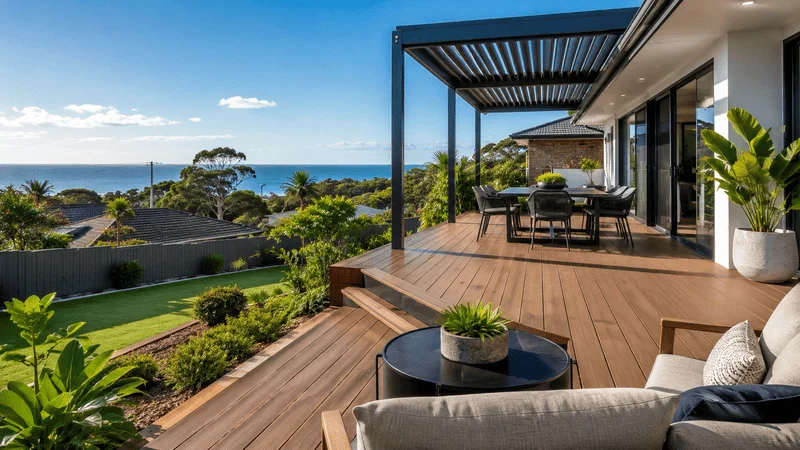
If you have been searching for decking installation Central Coast wide, you are probably weighing up timber versus composite, wondering what a new deck actually costs in 2026, and trying to work out whether you need council approval before the build even starts. This guide answers all three, using current Australian pricing and the same process our carpenters walk clients through on every quote.
At Central Coast Elite Carpentry, we have been building, repairing and rejuvenating decks across the Central Coast for over 30 years of combined trade experience. This article draws on that on-the-ground experience to give you a clear, practical decision-making framework, not just generic advice. Whether you are planning a low-level deck off the kitchen or an elevated entertaining area with a view of the water, you will find what you need below.
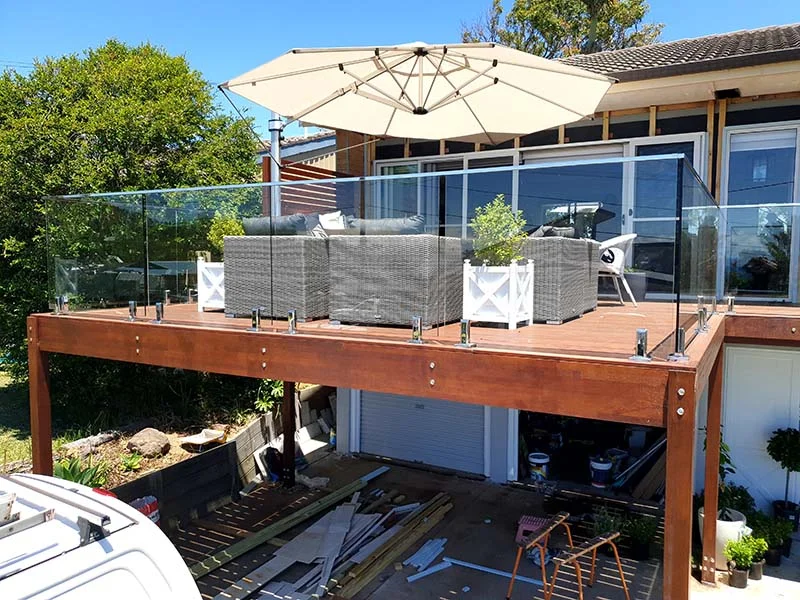
Why Decking Installation Is Booming on the Central Coast
The Central Coast lifestyle revolves around indoor-outdoor living, and a well-built deck is usually the single biggest upgrade to how a family actually uses their home. From Ettalong Beach and Umina Beach through to Terrigal, Avoca Beach and MacMasters Beach, we are seeing a clear trend toward low-maintenance, coastal-tough decking that can handle salt air, humidity and harsh UV without constant upkeep. If you want to see the broader scope of what is involved beyond the deck itself, our Outdoor Living Central Coast page covers patios, boardwalks and shade structures that often get added alongside a new deck.
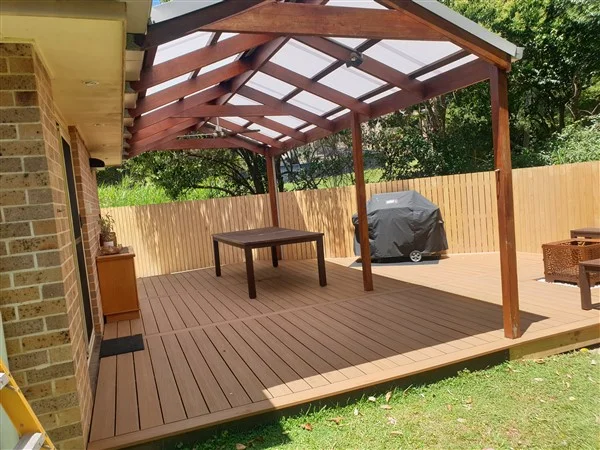
Composite vs Timber Decking: Which Is Right for Your Home?
This is the first decision every homeowner faces, and there is no single right answer. It comes down to budget, maintenance appetite and the look you want to achieve.
Hardwood timber decking
Hardwood species such as Blackbutt and Spotted Gum remain a popular choice for their natural warmth, grain character and genuine timber feel underfoot. Timber decking generally costs less upfront than composite, but it does need periodic oiling or staining to stay protected from the elements.
Composite decking
Composite boards are engineered from recycled wood fibres and polymers, giving you the look of timber with far less ongoing work. There is no sanding, oiling or staining required, and quality capped composite resists fading, staining and moisture, which makes it a strong fit for coastal properties exposed to salt air and humidity.
Expert Tip: If your deck is exposed to direct afternoon sun or sits near the pool, ask your installer specifically about UV-stable, capped composite boards rather than entry-level uncapped products. The cap layer is what prevents fading and keeps the surface cooler underfoot over time.
Decking Installation Cost on the Central Coast in 2026
Pricing varies with material, deck height, subframe choice and site access, but current Australian industry data gives a realistic starting point for budgeting.
Note: these figures reflect general 2026 Australian market ranges for supply and installation, including a basic subframe. Elevated decks, multi-level designs, balustrading, stairs and difficult site access will push costs toward the higher end. For an accurate figure based on your block, request a free decking quote from our team, and we will walk the site with you before pricing anything.
Do You Need Council Approval for a New Deck?
This is one of the most common questions we get, and the answer depends on a few factors:
- Decks attached to the dwelling generally require approval in most NSW council areas
- Decks higher than roughly 1 metre above ground level typically need a building permit
- Low-level, freestanding decks are sometimes exempt, but this varies by council
- Heritage overlays, bushfire zones and flood-prone land can add extra requirements
Always confirm requirements with your local council before work begins. As a licensed Central Coast carpentry team (Licence 315312C), we handle this conversation with clients on every project and can advise what is likely to apply to your specific site.
Our Step-by-Step Decking Installation Process
- Free site visit and quote: we assess ground levels, drainage, sun exposure and access
- Material selection: choosing between timber and composite, plus colour and board profile
- Council and permit check: confirming what approval, if any, is required
- Subframe construction: bearers, joists and footings built to current Australian standards
- Decking board installation: precise spacing, fixing and finishing for a clean result
- Stairs, balustrading and screening: added where needed for safety and style
- Final inspection and handover: walking you through care and maintenance
If your project also involves a covered outdoor area, it is worth planning your deck and pergola together from the start. Integrating both means the footings, drainage and roofline are designed as one cohesive structure rather than two separate add-ons.
Decking and Outdoor Furniture: Designing for How You'll Actually Use It
A deck is only as good as what happens on it, so it pays to think about furniture layout before the final board goes down. Wider boards and a larger flat zone near the entertaining area give you room for a dining table and outdoor lounge setting without furniture legs sitting awkwardly across board gaps. If you are planning built-in seating, a bench seat integrated into the balustrade is a popular Central Coast request, since it saves floor space on smaller decks. For homeowners adding stairs down to a lawn or pool, our Stairs and Balustrading service can match the deck's finish so furniture, balustrade and boards all read as one design rather than three separate decisions.
Expert Tip: Leave at least 900mm of clear walking space around outdoor furniture settings. It keeps the deck feeling open and prevents chairs from overhanging the edge, which is both a safety issue and a common reason decks feel smaller than they are.
Ready to start your decking project? Our licensed Central Coast carpenters have 30 years of combined experience building decks from Ettalong Beach to Terrigal. Get a free, no-obligation quote and we'll visit your site to discuss the right material, design and budget for your home.
Choosing the Right Decking Installer on the Central Coast
Not every quote is comparing the same thing. Before signing off on an installer, check the following:
- Licensing: confirm the builder holds a current NSW carpentry or building licence
- Like-for-like quotes: ensure every quote specifies the same board type, subframe material and inclusions
- Local experience: coastal conditions (salt air, sandy soil, exposure) affect material choice and footing design
- Photo evidence: ask to see completed local projects rather than stock photos
You can browse examples of our completed decks, pergolas and renovations in our Photo Gallery, and read what past clients have said on our Testimonials page.
Maintaining Your New Deck
Frequently Asked Questions
How much does decking installation cost on the Central Coast? In 2026, expect to pay roughly $180 to $550 per square metre installed, depending on whether you choose treated pine, hardwood or composite decking, plus the height and complexity of the design. A free site quote is the only reliable way to get a figure for your specific project.
How long does it take to install a deck? A standard ground-level deck of 20 to 30 square metres typically takes a licensed team between 3 and 7 working days, depending on weather, council requirements and design complexity. Elevated decks with stairs and balustrading take longer.
Is composite decking worth the extra upfront cost? For most Central Coast homeowners, yes. While composite costs more initially than basic timber, it eliminates the annual oiling and sanding that timber requires, and capped composite resists the fading and moisture damage that coastal conditions cause. Many homeowners find the total cost evens out within five to seven years.
Do I need council approval to build a deck on the Central Coast? It depends on the deck's height, whether it is attached to the house, and your specific council area. Decks over approximately one metre high or attached to the dwelling generally require approval. Always check with your local council, or ask your carpentry team to confirm before work starts.
Can you build a deck and pergola together? Yes, and it is often the better approach. Building a deck and a pergola together allows footings, drainage and roofline to be planned as one structure, which usually gives a cleaner result and can reduce overall cost compared to adding a pergola later.
What is the best decking material for a coastal property? Capped composite decking is generally the best fit for properties directly exposed to salt air, since it resists moisture, fading and corrosion-related wear. Hardwood is a strong second choice if you prefer a natural timber look and are comfortable with annual maintenance.
Final Thoughts
Decking installation on the Central Coast is ultimately about matching the right material and design to how your household actually lives outdoors, whether that is quiet morning coffee, family barbecues, or entertaining a crowd with a water view. Getting the budget, council requirements and material choice right from the start saves time, money and rework down the line.
Our team at Central Coast Elite Carpentry has spent over three decades of combined experience building decks that suit the local climate and lifestyle. If you are ready to take the next step, browse our Decking services page for more detail, or get in touch directly for a free, obligation-free quote.
Get your free, no-obligation decking quote today Speak with a licensed Central Coast carpenter about your deck, pergola or outdoor living project. We reply to every enquiry by email and are happy to visit your site to talk through options. → https://www.centralcoastelitecarpentry.com.au/contact-us

![Revolutionizing Analytics: Top [AI Data Science Tools] You Should Know in 2026](/uploads/original/1774945645_2382.png)