Sign up with Google
 Sign in with Zoho

For years, product discovery followed a familiar path. A shopper typed a few words into a search engine, scanned the results, compared options, and clicked through to a product page. That journey still exists, but it is no longer the only way people shop.
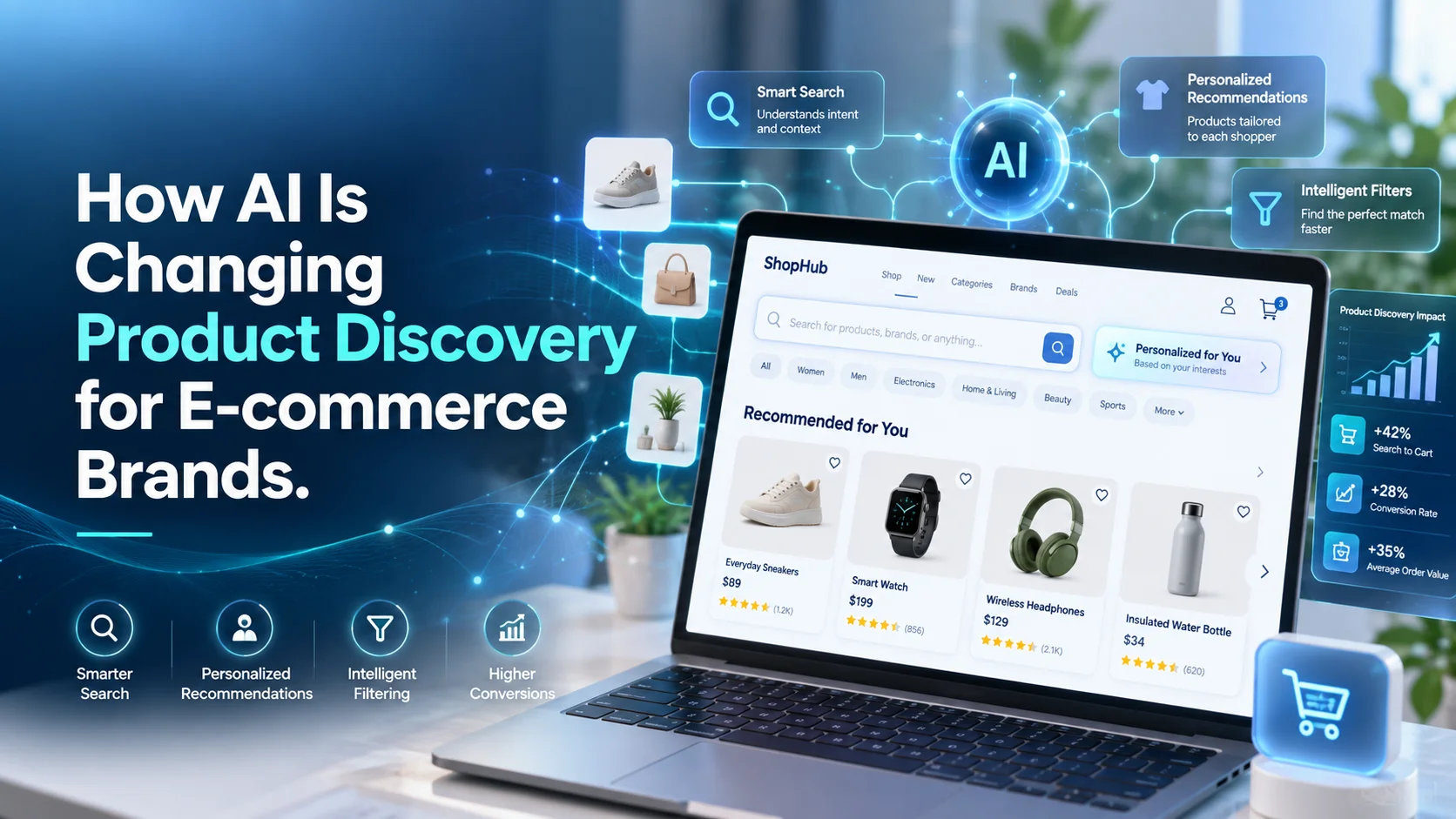
AI is changing discovery by making it more conversational, predictive, and personalized. Shoppers can now ask detailed questions, receive curated recommendations, and encounter products through AI-powered tools before visiting a traditional results page. For e-commerce brands, that means visibility increasingly depends on how clearly products can be understood, matched, and trusted.
Product Discovery Is Moving Beyond Keywords
Traditional search relies heavily on the words a shopper enters. AI-driven discovery looks at more context.
A customer may no longer search only for “running shoes.” They might ask for lightweight running shoes for flat feet, under a certain price, with enough support for daily training. AI systems can interpret several conditions at once and narrow the options accordingly.
This does not make search optimization less important. It expands the job. Product pages, category pages, structured data, and educational content now need to answer more specific questions and make product relationships easier to understand.
Recommendations Are Becoming More Predictive
AI does not always wait for shoppers to say what they want. Many e-commerce platforms use browsing behavior, purchase history, previous searches, cart activity, and similar customer patterns to predict what someone may be interested in next.
That can turn a fixed storefront into a more dynamic shopping experience. Two visitors may see different products or recommendations based on their behavior.
For brands, better personalization can make discovery more relevant. But it also means the quality of customer and product data matters more. If information is incomplete or poorly organized, automated systems have less useful context for matching products with shoppers.
Product Data Is Becoming a Visibility Asset
AI can only work with the information available to it. That makes accurate product data increasingly important.
Product names, categories, specifications, materials, sizes, prices, availability, images, shipping details, and reviews all help describe what an item is and when it may be suitable. Clear data is useful not only on a brand website but also across shopping platforms and third-party channels.
This is especially important in marketplace marketing, where products compete alongside many similar listings. Accurate attributes and complete descriptions give marketplace search and recommendation systems more information when deciding which items to surface.
Conversational Search Changes How Content Should Be Written
AI-assisted shopping encourages longer and more natural questions. That changes what useful e-commerce content looks like.
Instead of building every page around short keyword variations, brands can answer the questions customers actually ask. Which product works best for a certain situation? What is the difference between two materials? Is an item suitable for beginners? How should a buyer choose between two models?
A useful content strategy can address those questions through buying guides, comparisons, FAQs, product education, and problem-solving articles. The goal is to provide clear context that helps customers and discovery systems understand where a product fits.
Trust Signals Influence What Gets Recommended
Being understood is only part of AI-driven discovery. Brands also need to look trustworthy.
Customer reviews, expert coverage, accurate product details, clear policies, and consistent information across channels all contribute to credibility. AI tools may draw on multiple sources when forming recommendations, which makes contradictions more noticeable.
If a product page lists one set of specifications while marketplace listings show something different, that inconsistency can create confusion. The same applies to pricing, availability, and performance claims.
Authentic customer feedback is especially useful because it adds real-world context. Reviews often explain fit, durability, ease of use, or other details that formal product copy may overlook.
AI Discovery Still Depends on a Strong Storefront
Getting recommended is useful only if the shopping experience works once a customer arrives.
A slow mobile page, confusing navigation, weak product imagery, or unclear checkout can waste the opportunity created by AI discovery. Strong website optimization helps visitors move from recommendation to evaluation and purchase without unnecessary friction.
New technology may influence which products are seen, but customers still expect fast pages, clear information, transparent pricing, and a simple buying experience.
Brands Need to Measure More Than Rankings
Search rankings remain useful, but they no longer tell the whole story.
E-commerce teams may also need to watch referral traffic from AI tools, marketplace visibility, assisted conversions, product engagement, and the questions customers use before purchasing.
The objective is to understand how discovery contributes to revenue, not simply rankings. A product may receive fewer traditional clicks but gain more qualified visits through recommendations, comparisons, or AI-generated answers.
How E-commerce Brands Can Adapt
Brands do not need to rebuild their entire strategy around AI overnight. The most practical starting point is improving the information they already control.
Make product descriptions specific and complete. Keep pricing and inventory accurate. Organize categories clearly. Add useful structured data where appropriate. Collect authentic reviews and answer common buying questions in plain language.
It also helps to test how products appear across different discovery environments. Search for the kinds of questions customers might ask, review marketplace results, and compare how competing products are described. These checks can reveal gaps that standard keyword reports may miss.
Final Thoughts
AI is not removing the need for product discovery strategy. It is changing where discovery happens and what information influences it.
E-commerce brands now compete not only for rankings, but also for recommendations, relevance, and trust across AI tools, marketplaces, personalized feeds, and traditional search.
The brands best prepared for this shift will make their products easier to understand, their data more reliable, and their content more useful. When AI has clear information and shoppers find a trustworthy experience behind the recommendation, discovery has a much better chance of turning into a sale.