Sign up with Google
 Sign in with Zoho

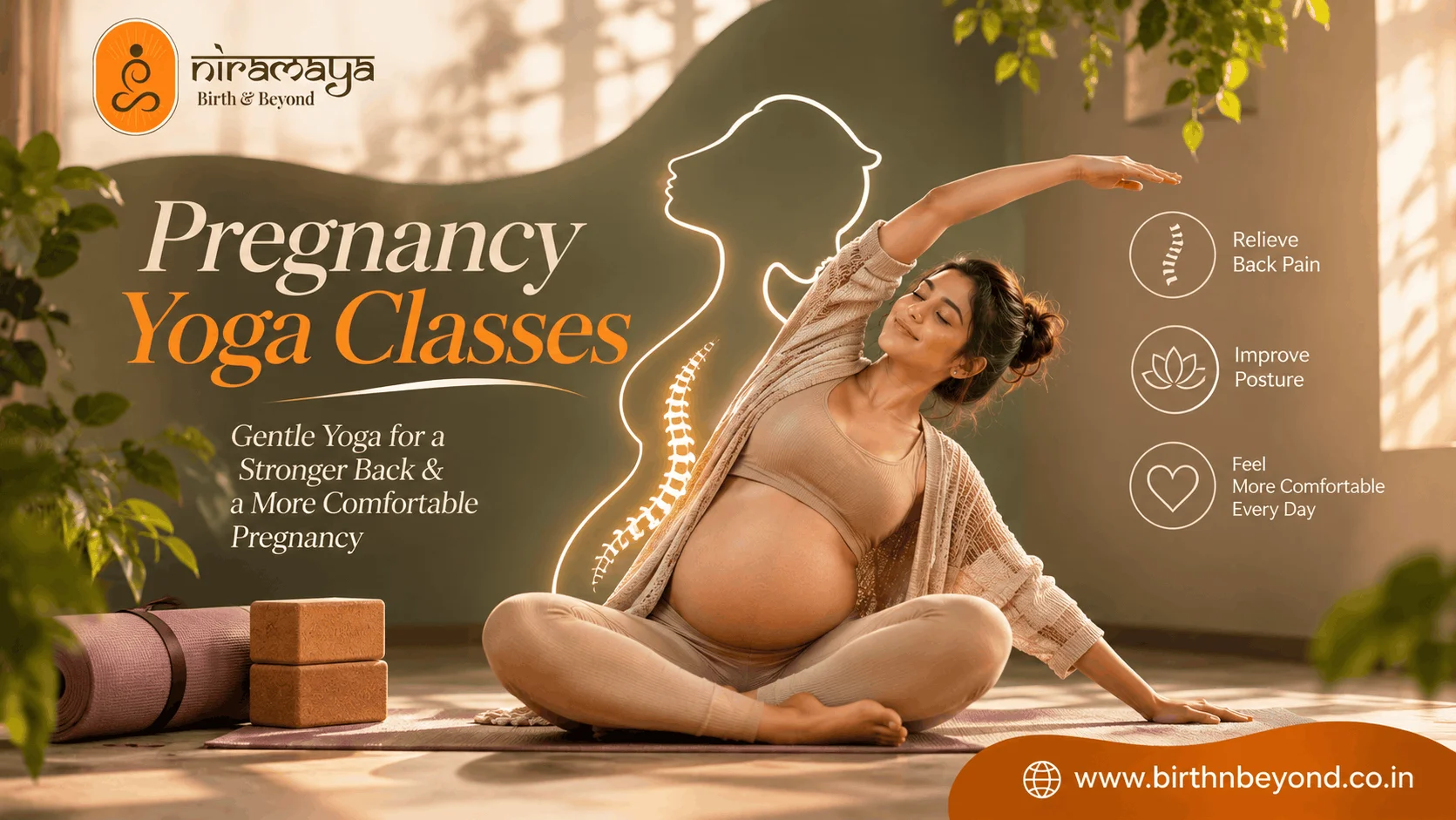
If you're pregnant and your job keeps you at a desk, you probably know this feeling. By mid-afternoon your lower back is aching, your hips feel locked, and all you want is to lie down. You're not alone. Back pain is one of the most common complaints among pregnant women who sit for long stretches, and for many it stops being an occasional nuisance and turns into a daily frustration.
The good news is that you don't have to just put up with it. Pregnancy yoga classes can ease that pain without medication. The movements are gentle and pregnancy-safe, and they help loosen tight muscles, build core strength, and bring your posture back into line. That means less strain on your lower back and a more comfortable day.
Pregnancy yoga classes relieve back pain from long hours of sitting by strengthening the core, loosening tight hip flexors, and improving posture. Gentle poses like Cat-Cow, Pelvic Tilts, and Supported Warrior target the exact areas that sitting strains. Practiced regularly with qualified guidance, they offer safe, drug-free relief.
In this post, we'll look at why sitting is so hard on a pregnant body, how pregnancy yoga classes help, and which poses work best for desk-related discomfort.
Why Does Sitting All Day Hurt So Much During Pregnancy?
Back pain in pregnancy isn't random. A few physical and hormonal changes happen together, and sitting for hours makes each of them worse.
- Your center of gravity shifts. As your baby grows, your weight moves forward and your lower back has to work overtime to keep you upright. Every hour in a chair adds to that strain.
- Your ligaments get looser. Your body produces a hormone called relaxin, which softens ligaments and joints to get you ready for birth. It's a necessary change, but it also makes your spine less stable and your back more prone to aching.
- Your hips tighten and your back muscles weaken. Long hours of sitting shorten the hip flexors and let the muscles that support your spine go slack. That imbalance tugs the pelvis out of position and makes lower back pain worse.
Once you see what's going on, it makes sense why resting alone often isn't enough. Your body needs the right kind of movement.
How Do Pregnancy Yoga Classes Help With Back Pain?
Pregnancy yoga classes go after the reasons your back hurts instead of just covering up the pain. Mothers who attend regularly often notice changes like these:
- A stronger support system for your spine. Targeted poses build core and back strength, so your lower spine carries less of the load.
- Less tightness and more flexibility. Stretching the hip flexors and hamstrings undoes some of the damage from sitting.
- Better breathing and deeper relaxation. Slow, controlled breathing helps bring stress hormones down, and lower stress can make pain feel less intense.
- Better circulation. Gentle movement gets your blood flowing, which helps with the swelling and stiffness that make back discomfort worse.
If you want something that looks after both the physical and mental side of pregnancy, pregnancy yoga classes are a better fit than a quick fix that only deals with one symptom.
Which Gentle Yoga Poses Ease Back Pain From Sitting?
Some poses are especially good at undoing the effects of a long day at a desk. Each one targets a different area that sitting tends to strain.
- Cat-Cow Stretch: Moving between arching and rounding your back wakes up stiff vertebrae and releases the tension that builds when you stay in one position too long.
- Modified Child's Pose: This supported stretch lengthens the spine and eases the lower back without putting any pressure on your belly.
- Pelvic Tilts: A simple way to engage your core without stressing your back. It steadies the pelvis and helps with the swayback posture common in later pregnancy.
- Supported Warrior Pose: It strengthens your legs and stabilizes your pelvis, so your lower back has less work to do.
- Prenatal Pigeon Pose: This hip opener can calm sciatica, which often flares up when tight hip muscles press on the sciatic nerve.
Do these regularly and with proper guidance, and you'll likely feel the difference in how your body handles the day.
How Can You Practice Pregnancy Yoga Safely?
Safety comes first, always. Here's what to keep in mind:
- Talk to your doctor first. Every pregnancy is different, and your healthcare provider can tell you which movements suit you.
- Use props. Pillows and blocks add support and comfort, especially in seated or kneeling poses.
- Skip deep twists, intense backbends, and lying flat on your back. These can restrict blood flow or strain ligaments that are already loosened by pregnancy hormones.
- Aim for two to three sessions a week. Steady practice does more for you than the occasional intense session.
- Listen to your body. Pregnancy yoga should never hurt. If something feels off, ease out of the pose or adjust it with props.
Finding Relief Through Pregnancy Yoga Classes
Back pain from sitting all day doesn't have to follow you through your whole pregnancy. Pregnancy yoga classes give you a natural way to strengthen the muscles that support your spine, open up tight hips, and improve your posture, all without medication.
Birth & Beyond runs pregnancy yoga programs designed for expectant mothers dealing with back pain and other pregnancy discomforts. Their certified instructors shape each session around what you and your body need, so you can practice in a safe and supportive space. Reach out to the Birth & Beyond team to find the right class for you and start building a stronger, more comfortable pregnancy.
Frequently Asked Questions
Is pregnancy yoga safe in all trimesters?
Generally, yes. It's considered safe through all three trimesters, but poses need to change as your pregnancy progresses. Check with your healthcare provider first, and choose an instructor who is experienced in prenatal modifications.
How often should I practice pregnancy yoga?
Most experts suggest two to three times a week. That's enough to build strength and flexibility gradually without wearing yourself out.
Can I start if I've never done yoga before?
Absolutely. Pregnancy yoga classes welcome all experience levels, including complete beginners. Instructors usually begin with gentle, foundational poses and build up at a pace that feels right for you.