Sign up with Google
 Sign in with Zoho

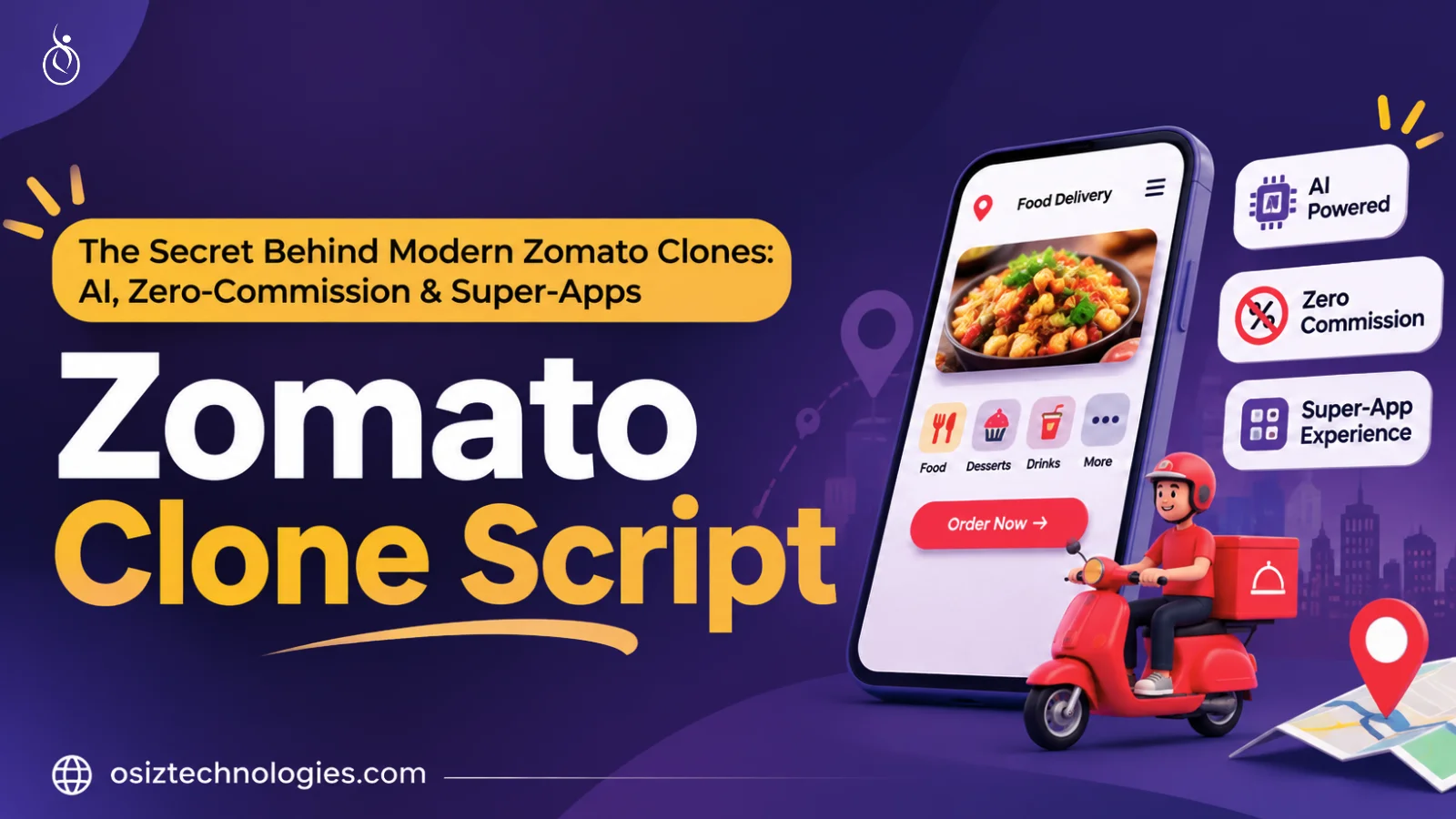
The food delivery industry is moving beyond basic online ordering as businesses explore smarter technologies and flexible revenue models. Customers now expect personalized recommendations, convenient payments, faster deliveries, and access to multiple services through one platform. A modern Zomato Clone Script helps startups explore these opportunities by combining AI-powered features, alternative commission models, and super-app capabilities.
The Evolution of Modern Food Delivery Platforms
Food delivery applications have changed significantly from simple restaurant listing and ordering systems. Today, businesses focus on creating complete digital experiences that connect customers, restaurants, and delivery partners.
Modern platforms support multiple payment options, real-time order tracking, loyalty programs, and personalized offers. Some are also expanding into grocery delivery, quick commerce, and other local services. This evolution allows businesses to serve more customer needs through a single application.
How AI Is Transforming Food Delivery Experiences
Artificial intelligence is becoming an important part of food delivery operations. AI-powered recommendation systems analyze customer preferences and ordering patterns to suggest relevant restaurants, dishes, and offers.
Predictive analytics can help businesses identify peak ordering periods and understand product demand. Smart route optimization can also support delivery partners by suggesting efficient routes and improving delivery coordination.
These capabilities help platforms provide more personalized experiences while making business operations easier to manage.
Zero-Commission Models and Their Business Advantages
Traditional food delivery platforms often depend on restaurant commissions as a major revenue source. However, zero-commission or reduced-commission models are attracting attention because they can help restaurants retain more revenue from their orders.
Instead of relying entirely on commissions, platforms can explore subscription plans, delivery fees, promotional placements, and premium business services. The right approach depends on operating costs, customer demand, and restaurant partnerships.
A balanced revenue strategy can help platforms build stronger relationships with restaurant partners while maintaining financial sustainability.
The Rise of Super-Apps in the Food Delivery Industry
Super-app capabilities allow businesses to bring multiple services together within one digital platform. Customers may be able to order meals, purchase groceries, book local services, and access other convenient options without switching between applications.
For businesses, this creates opportunities to increase customer engagement, encourage repeat usage, and explore additional revenue streams. However, successful expansion requires smooth integration and a consistent user experience.
Building a Future-Ready Food Delivery Business
The future of food delivery will depend on combining useful technology with customer-focused business models. Startups need scalable infrastructure, flexible features, and reliable operational systems to adapt to changing market expectations.
Osiz Technologies, an experienced app development company, helps businesses build customized food delivery solutions with modern features and scalable architecture. With the right strategy, entrepreneurs can create competitive platforms that support long-term growth.