Sign up with Google
 Sign in with Zoho

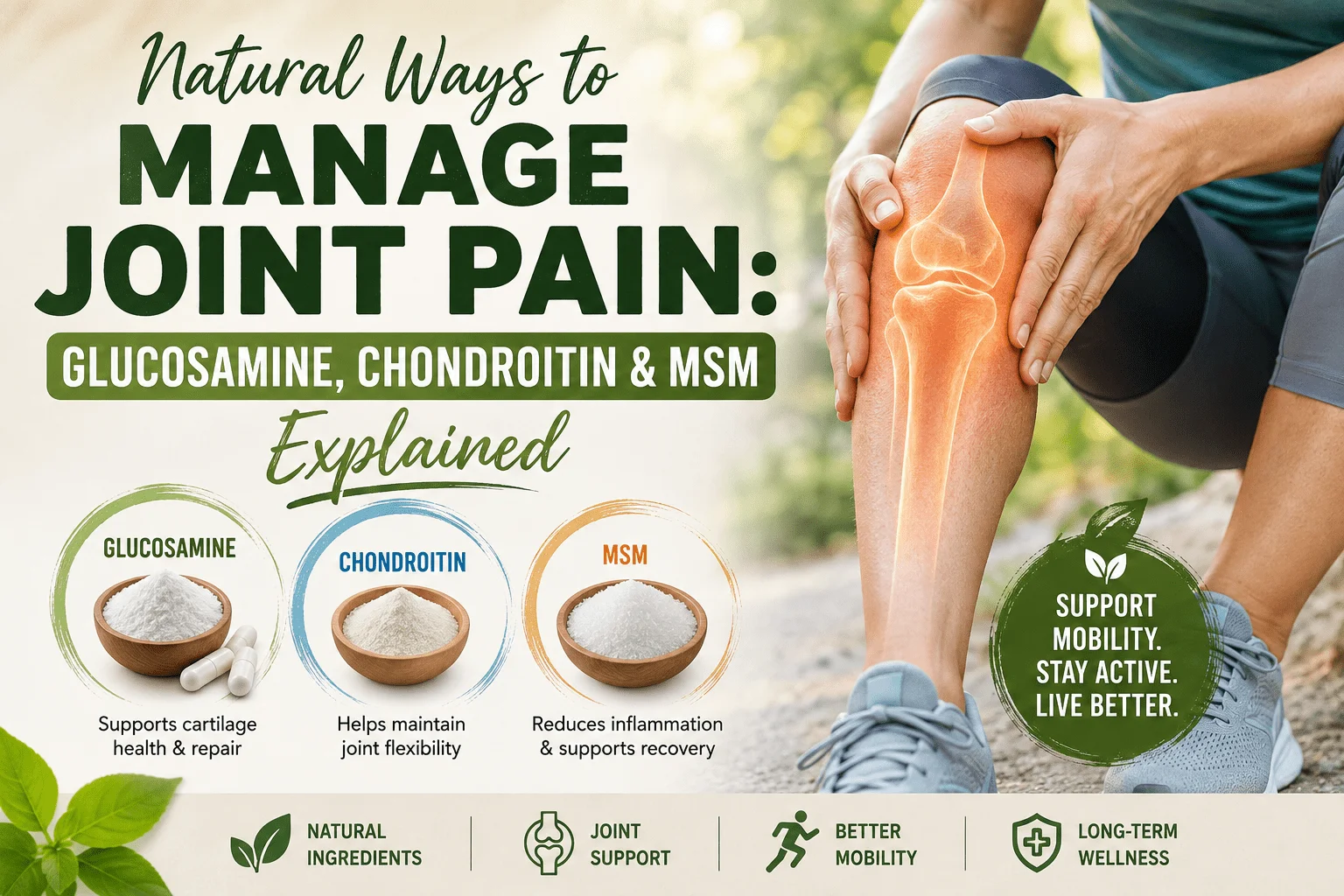
Joint pain is one of the most common reasons people turn to supplements, whether it's from years of activity, ageing cartilage, or early-stage osteoarthritis. Walk down any supplement aisle and you'll see glucosamine, chondroitin, and MSM sold individually and in combination, often with bold claims about rebuilding cartilage or eliminating pain entirely. Here's what these ingredients actually do, what the evidence realistically supports, and how to set expectations that won't leave you disappointed after a few weeks of use.
Glucosamine and Chondroitin: The Cartilage Duo
Glucosamine and chondroitin are both natural components of healthy cartilage, the smooth tissue that cushions your joints. The theory behind supplementing with them is that providing extra raw material may support cartilage maintenance and repair, and potentially slow the wear-and-tear process associated with osteoarthritis. Glucosamine is typically derived from shellfish shells or produced synthetically, while chondroitin usually comes from animal cartilage.
What the Research Actually Shows
The clinical picture here is genuinely mixed, which is worth being upfront about. Some large trials have reported that glucosamine sulfate (a specific form) was associated with modest pain relief comparable to over-the-counter pain medication for knee osteoarthritis, particularly with consistent long-term use. Other trials, especially those using glucosamine hydrochloride rather than sulfate, have reported weaker or no significant effect. Chondroitin shows a similar pattern — some benefit reported in certain trials, none in others — which is likely explained by differences in dose, formulation, and study quality across the research. The overall takeaway from major reviews is that these supplements may offer modest benefit for some people, particularly with the sulfate form, but they aren't a guaranteed fix and shouldn't be seen as a cure.
MSM: The Overlooked Third Ingredient
MSM (methylsulfonylmethane) is a naturally occurring sulfur compound sometimes added alongside glucosamine and chondroitin. It's thought to have mild anti-inflammatory properties, and a handful of trials have shown it can reduce joint pain and improve physical function, sometimes with effects appearing faster than glucosamine or chondroitin alone. It's less extensively studied than the other two, but the existing evidence is reasonably encouraging for short-term symptom relief.
Herbal Alternatives Worth Knowing
Devil's claw, a herb traditionally used in southern African medicine, has some clinical support for reducing joint pain and improving mobility, with a mechanism thought to involve mild anti-inflammatory compounds. For people who prefer a herbal route or want to combine approaches, a Devil's Claw root extract supplement is worth considering, either on its own or alongside a glucosamine and chondroitin combination.
Lifestyle Factors That Matter Just as Much
Supplements are only one part of managing joint pain. Carrying extra body weight places measurably more load on weight-bearing joints like the knees and hips, so even modest weight loss can meaningfully reduce pain in some people. Low-impact exercise such as swimming, cycling, or walking helps keep the muscles around a joint strong without adding excessive strain, and can be more effective long-term than any supplement on its own. Omega-3 fatty acids from fish oil are also worth considering alongside these ingredients, since they have separate anti-inflammatory research behind them and can complement a joint-support routine.
Choosing a Product and Being Patient
If you're going the glucosamine and chondroitin route, look specifically for the sulfate form where possible, since it has the stronger track record in trials. A combined formula such as a glucosamine sulphate and chondroitin tablet simplifies dosing into one product. Whatever you choose, give it time — most studies run for eight to twelve weeks before showing measurable improvement, so a week or two of use isn't a fair trial.
The Bottom Line
These supplements aren't miracle cures, but some evidence points to modest pain relief for certain people — particularly with glucosamine sulfate and MSM — more so than for many other joint-health trends. They work best alongside the basics: maintaining a healthy weight, staying active with joint-friendly exercise, and speaking to a doctor or physiotherapist if pain is severe, worsening, or affecting one joint in isolation, since that can sometimes indicate something requiring direct medical attention. Think of them as one possible tool among several, rather than a replacement for the lifestyle changes that tend to make the biggest long-term difference.
Disclaimer: This content is for general information only and is not a substitute for professional medical advice. Please consult your GP, pharmacist, or qualified healthcare professional before starting any new supplement, especially if you are pregnant, planning a pregnancy, breastfeeding, taking medication, managing a health condition, or considering supplements for children.