Sign up with Google
 Sign in with Zoho

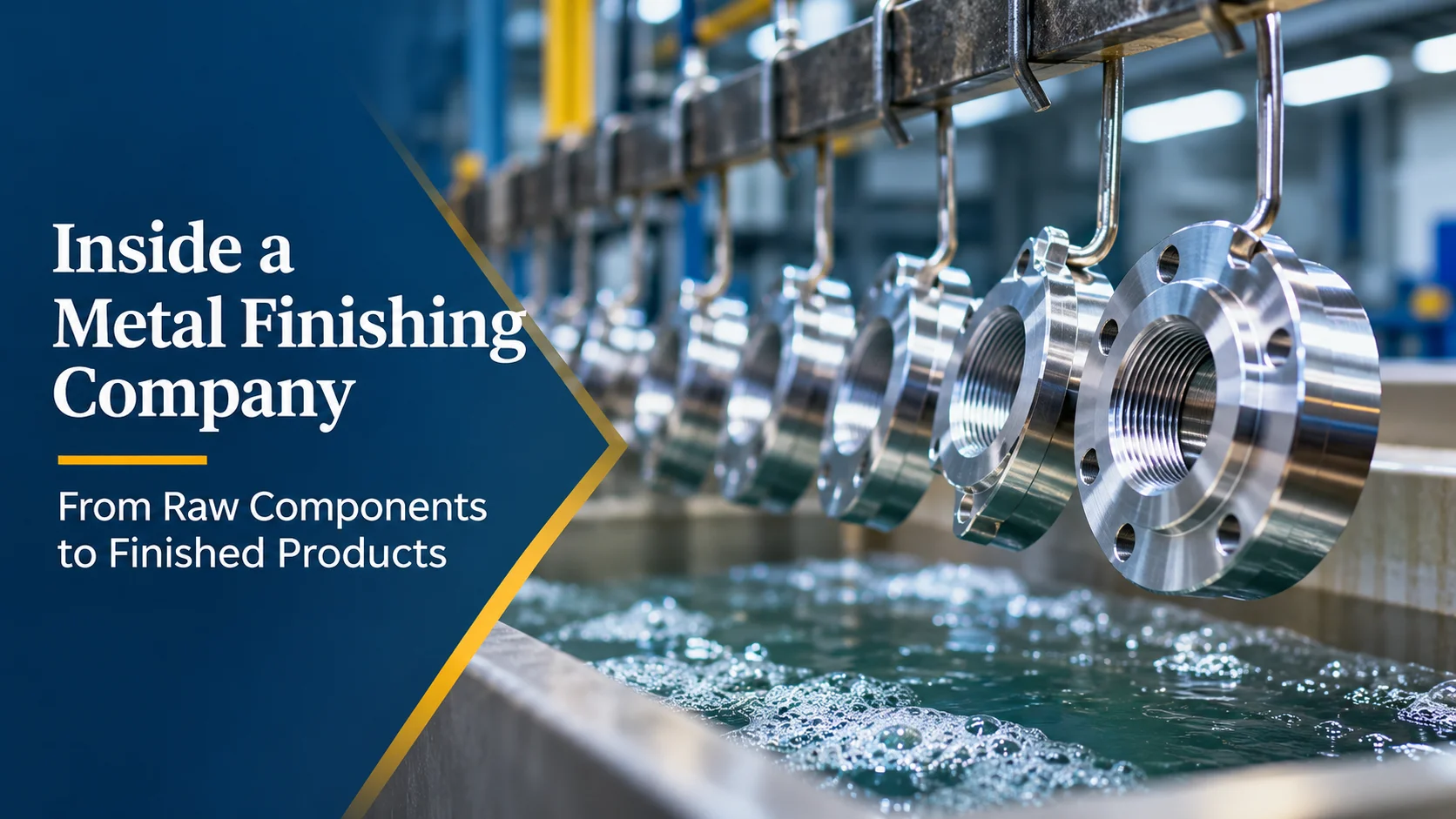
Have you ever wondered how metal components used in aircraft, electronic devices, and industrial machinery withstand demanding working conditions? While the material itself plays an important role, the way its surface is treated can make a significant difference in its performance and durability.
A metal finishing company uses various surface treatment techniques to improve the properties of metal components. These processes can help prevent corrosion, reduce wear, improve electrical conductivity, and prepare parts for their intended applications.
However, metal finishing involves much more than simply applying a coating. Each component goes through several stages before it is ready for use. Let's explore how this process works.
1. Understanding the Base Material
Before any surface treatment begins, it is important to understand the type of metal being processed. Not all metals respond to chemicals and coatings in the same way.
Some commonly used metals include:
- Stainless steel
- Aluminum
- Copper
- Brass
- Carbon steel
- Magnesium
The intended use of the component also influences the finishing process. For instance, a metal part used in outdoor equipment may need protection against moisture and corrosion, whereas an electrical connector may require a finish that supports electrical conductivity.
Component size, shape, operating conditions, and dimensional requirements are also taken into consideration.
2. Preparing the Metal Surface
Metal components rarely arrive ready for plating or coating. During manufacturing, they can accumulate oils, grease, oxidation, and other unwanted substances.
Applying a coating without removing these contaminants can result in poor adhesion and an uneven finish.
Surface preparation generally includes:
- Degreasing to remove machining oils and lubricants.
- Chemical cleaning to eliminate surface contaminants.
- Surface activation to prepare the metal for coating.
- Rinsing to remove chemicals between treatment stages.
Although cleaning may seem like a straightforward task, it has a considerable influence on the quality of the finished product.
3. Choosing the Right Metal Finishing Process
Different components require different surface properties. A metal finishing company considers these requirements when determining which treatment is suitable for a particular application.
Here are some commonly used finishing techniques.
Electroless Nickel Plating
Unlike traditional electroplating, electroless nickel plating uses a chemical reaction rather than an external electrical current to deposit a nickel alloy onto a metal surface.
One of its advantages is its ability to produce relatively uniform coatings on complex shapes. This makes it useful for precision components that require wear and corrosion resistance.
Gold Plating
Gold plating is not limited to decorative applications. Its resistance to oxidation and useful electrical properties make it suitable for electronic connectors, electrical contacts, and sensitive electrical components.
Silver Plating
Silver is an excellent conductor of electricity and heat. Because of these properties, silver plating is commonly used in electrical switches, connectors, and power transmission equipment.
Passivation
Although stainless steel is naturally corrosion-resistant, surface contamination can affect its performance.
Passivation removes contaminants such as free iron and helps support the formation of the metal's protective oxide layer.
Chemical Conversion Coatings
These coatings are formed through a chemical reaction with the metal surface. They are commonly used on aluminum components to improve corrosion resistance and provide a suitable surface for paint adhesion.
4. Maintaining Consistency During Coating Application
Applying a metal coating requires careful attention to processing conditions. Even relatively small changes in temperature or chemical composition can influence the final result.
Several factors need to be monitored throughout the process:
- Chemical solution composition
- Processing temperature
- Treatment duration
- Solution pH
- Coating thickness
Thickness is particularly important when finishing precision parts. A coating that is too thick could affect how a component fits into an assembly. On the other hand, a coating that is too thin might not provide the intended protection.
Maintaining consistency helps ensure that components meet their engineering requirements.
5. What Happens After Coating?
The process does not necessarily end once a coating has been applied. Depending on the material and treatment, additional steps may be required.
These can include rinsing, drying, heat treatment, and surface conditioning.
For example, certain electroless nickel coatings may undergo heat treatment to increase hardness. Other components may require controlled drying to remove moisture before inspection.
These additional steps depend on the coating specifications and intended application.
6. Inspecting the Finished Components
How do manufacturers determine whether a finished component meets the required standards?
A metal finishing company may perform several inspections and tests to evaluate the quality of the treated surface.
Industry specifications such as ASTM B733 and AMS 2404 provide requirements for certain electroless nickel coatings.
Inspection also helps identify potential issues before components move into the next stage of production.
7. Why Different Industries Rely on Metal Finishing
Surface treatments serve different purposes depending on where and how a component is used.
In aerospace, metal coatings can help components withstand environmental exposure and mechanical wear. In electronics, conductive finishes support reliable electrical connections.
Industrial machinery often contains moving parts exposed to friction, moisture, and challenging operating conditions. Suitable surface treatments can help address these concerns and reduce premature deterioration.
8. Common Challenges in Metal Finishing
Despite advances in manufacturing technology, surface finishing still presents several challenges.
Uneven coatings, poor adhesion, surface contamination, and dimensional changes are among the common concerns.
Complex component shapes can also make it difficult to achieve consistent coating distribution, particularly during conventional electroplating.
Recognizing these challenges early allows engineers to make better decisions about material preparation, coating selection, and processing methods.
Conclusion
Metal finishing is an important part of manufacturing that often goes unnoticed. Behind every finished component are several carefully managed processes, from cleaning and material assessment to coating application and final inspection.
Understanding what happens inside a metal finishing company offers a clearer picture of how surface engineering contributes to component reliability, durability, and functionality.
Ultimately, the effectiveness of any surface treatment depends on how well it matches the material, engineering requirements, and conditions in which the finished component will operate.