Sign up with Google
 Sign in with Zoho

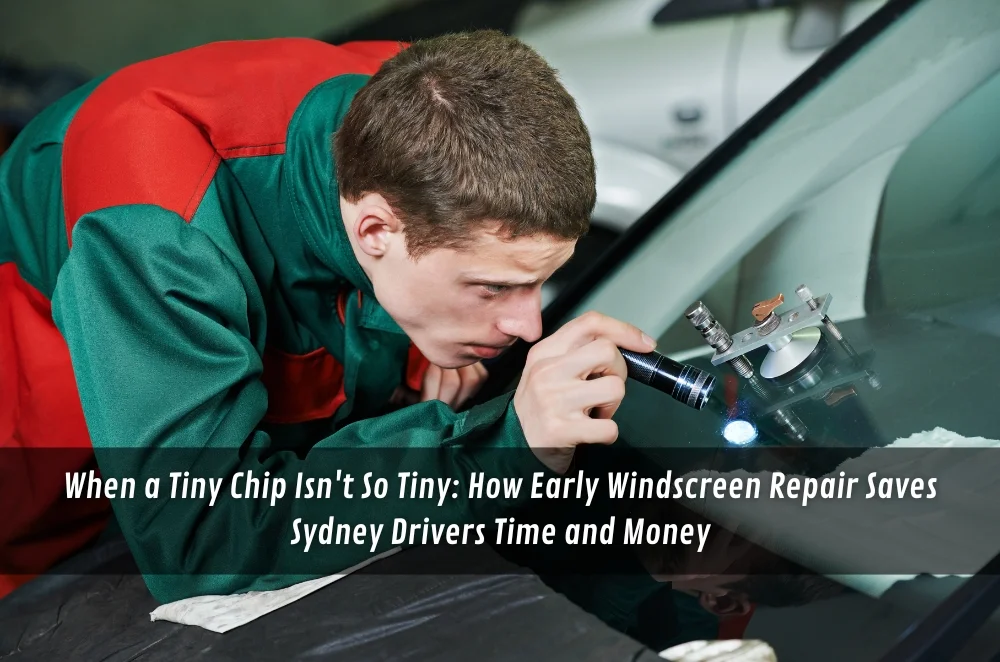
Chances are your daily commute involves a few rogue pebbles flicked up on Parramatta Road or the M5. They ping the glass, leave a pin-sized crater, and you promise you'll "sort it on the weekend". Then the temperature swings, the wipers drag over the flaw, and that once-tiny blemish snakes across the screen. Acting while damage is still contained is the difference between a quick resin job and a full replacement.
Why Chips Grow Faster in Sydney Conditions
Sydney's weather loves extremes. Mornings can drop below ten degrees in July, only to hit high-twenties by early afternoon. Glass expands and contracts with every swing. Add coastal humidity, summertime storms, and the stop-start of urban traffic, and the edge of a chip is constantly flexing. Microscopic moisture seeps in, freezes overnight in the Blue Mountains or evaporates in western suburbs heat — each cycle pries the flaw wider.
Early professional attention offers two wins: it keeps the factory seal intact and spares you from a traffic fine for unsafe glass. Pulling over at your local servo with DIY kits rarely achieves the same structural bond.
The secret is speed, and that's where Sydney windscreen repair expertise comes in. Done while the damage is smaller than a five-cent coin, most repairs finish within half an hour and restore up to 95 % of original strength.
Is It Really Fixable? A Quick Damage Decoder
Drivers often hunt for a magic measurement: "If it's under X millimetres, I'm safe". Real-world glass isn't that neat, but a few visual cues help sort repairs from replacements.
Bullseye (circular chip)
- Typical cause: Stone impact at moderate speed
- Repairable?* Usually
- What can go wrong if you wait: Moisture turns the circle cloudy, reducing clarity at night
Star break (spider legs)
- Typical cause: High-speed grit or repeated wiper hits
- Repairable?* Sometimes
- What can go wrong if you wait: Each leg can extend under braking stress
Half-moon
- Typical cause: Edge strikes from gravel roads
- Repairable?* Often
- What can go wrong if you wait: Flex near the perimeter makes cracking toward the frame more likely
Long crack (>10 cm)
- Typical cause: Rapid temperature change (e.g. hot demister)
- Repairable?* Rarely
- What can go wrong if you wait: Structural integrity compromised; defect notice likely
*Always confirm with a qualified technician — shape, depth, and position on the driver's line of sight all matter.
Drivers who like a deeper dive into chip anatomy can bookmark this practical chip repair guide for examples and photos.
The Trade-Offs: Repair Now or Replace Later
Waiting for payday feels harmless, yet the economics rarely stack up. A repair generally costs a fraction of a replacement, and most insurers waive the excess for one glass repair per policy period. Replacements, meanwhile, involve removing factory seals, recalibrating ADAS sensors, and potentially being off the road for hours.
Beyond dollars, think downtime. Rideshare drivers lose bookings; tradies push back job start-times. Even weekend motorists face the stress of trying to source glass during peak holiday demand when workshop queues blow out.
Calibration Complications
Modern vehicles rely on forward-facing cameras and rain sensors bonded to the screen. Replace the glass and those devices need re-alignment. Miss the calibration window and lane-keeping or emergency-braking systems can misread the road. Reputable installers build this step into the quote, but it means extra workshop time and a calibrated space — not every suburban mechanic has that gear on tap.
Common Myths That Keep Chips Unfixed
Chatter in pub carparks and online forums creates misconceptions. Three pop up often:
"It's only cosmetic." A chip interrupts the laminated bond; structural rigidity drops around the flaw.
"Summer heat will seal it." Resin needs vacuum pressure to penetrate; heat alone expands the gap.
"Repairs leave ugly smears." Modern UV-cured resin dries clear. Poor results usually point to rushed DIY kits.
Understanding these myths early can spare a mid-trip roadside inspection. NSW Police check windscreens under the same defect framework that applies to tyres and lights.
The Repair Process Step by Step
Knowing what happens in the workshop demystifies the invoice:
- Inspection and moisture check — technicians probe the cavity with a bright LED to spot hidden moisture or dirt.
- Vacuum cycle — air is sucked out so resin can fill every micro-fracture.
- Resin injection — a syringe pumps in a UV-activated resin matched to the glass tint.
- UV curing — portable lamps harden the resin in under two minutes.
- Polish and clarity test — excess resin is scraped flush; a line-of-sight check confirms optical quality.
From drive-in to drive-out, you're typically back on the M8 within 40 minutes.
DIY Kits vs Professional Gear
Hardware stores sell injector bridges and resin tubes, tempting for the budget-minded. They have their place for remote highway emergencies, but there are real caveats:
- Resin shelf life: expired tube equals cloudy finish.
- Vacuum strength: hand-pumps can't match workshop rigs.
- No structural guarantee: insurers rarely recognise DIY fixes.
If a self-attempt fails, technicians must drill out hardened low-grade resin before re-injecting quality product — doubling labour. Up-front expertise is seldom the expensive route it first appears.
Legal and Safety Angle
Australian Design Rules specify that any crack longer than 150 mm in the driver's swipe zone can ground a vehicle. Technically you could be defected for smaller faults if clarity is impaired. The cost of a pink-slip re-inspection alone eclipses most chip repair fees. For fleet operators, a defect can sideline an entire truck until cleared, triggering contractual penalties.
The takeaway is simple: roadworthiness inspectors won't excuse a crack because "the workshop was busy".
When Replacement Is Inevitable
No technician wants to push a replacement if a repair suffices, but there are red flags you shouldn't ignore:
- Damage penetrates both glass layers.
- Crack touches the perimeter seal (edge cracks propagate fastest).
- Chip sits directly in front of ADAS camera housing.
- Impact leaves loose glass shards threatening delamination.
In these cases, replacement isn't an upsell — it's structural necessity.
Final Checks Before You Book
So you've decided to act. A brief pre-call checklist ensures smooth service:
- Note your vehicle's build date; glass variants can change mid-year.
- Photograph the VIN plate to confirm camera specs.
- Measure the damage against a $2 coin for reference.
- Clear personal items from the dash to speed up access.
Providing these details lets the workshop pre-order correct glass and trims, shaving a day or two off turnaround.
Two paragraphs on, it's worth remembering that regulations evolve. Keep an eye on the latest NSW vehicle standards guidance to stay ahead of compliance changes affecting glass, tint, and ADAS recalibration.
Closing Line
A windscreen chip might start as a speck, but Sydney's climate and road mix help it grow faster than most drivers realise. Quick professional attention safeguards visibility, keeps insurance costs in check, and means fewer mornings stuck juggling courier drop-offs around a workshop schedule. Next time a pebble pings the glass, think minutes, not months.