Sign up with Google
 Sign in with Zoho

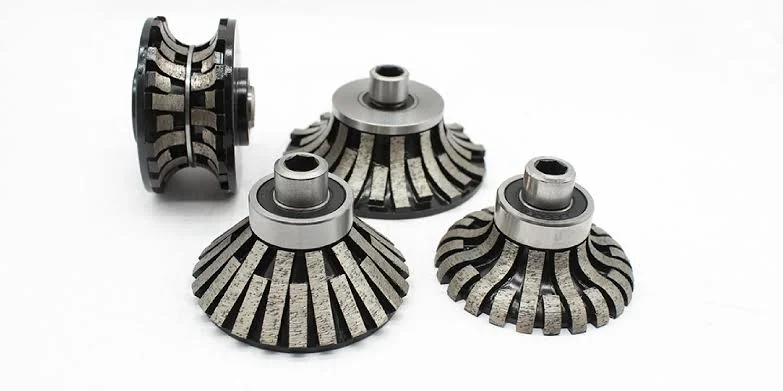
Granite is durable, dense, and demanding on tooling. When you need to shape a granite countertop edge, create a specific profile, or remove material efficiently, the router bit you choose can make a noticeable difference in the quality of the finished piece.
Diamond router bits are designed for working with hard, abrasive materials such as granite, marble, quartz, and other stone surfaces. But choosing the right bit is not simply a matter of picking a diamond tool. The profile, connection, construction, application, and material all need to match the job.
Here is what to consider when choosing diamond router bits for granite.
Start With the Profile You Need
The first question is simple: What edge are you trying to create?
Diamond router bits are available in different shapes and profiles, allowing fabricators to create specific edge designs. Common profiles include:
- Bullnose
- Demi bullnose
- Ogee
- Bevel
- Cove
- Pencil edge
- Eased edge
- Waterfall
For example, a full bullnose profile creates a rounded edge across the countertop, while a bevel profile produces a more defined angled edge.
TSC offers a range of profile router bits designed for shaping granite and other stone surfaces. The right profile depends on the customer's specifications and the finished edge you are trying to achieve.
Before ordering a bit, identify the exact edge profile required. This prevents choosing a tool that may work on granite but cannot produce the shape you need.
Consider the Amount of Material You Need to Remove
Another important factor is how much granite needs to be removed.
For applications requiring fast pre-shaping or substantial material removal, Tait offers segmented APEXX router bits designed for pre-shaping before subsequent profile operations.
Continuous diamond profile bits are designed for controlled profile shaping and consistent edge production.
A practical workflow may involve removing material first and then moving to a profile designed for more controlled finishing.
The goal is not necessarily to make one bit of every job. Using tooling designed for the stage of fabrication can help you maintain better control over the process.
Check the Router Bit Connection
Even a high-quality diamond router bit will not help if it does not fit your equipment.
Before purchasing, check the connection required by your router, grinder, or stone fabrication machine.
Tait notes that router bits are available with different connections depending on the equipment being used.
Many Grizzly Premium Diamond Router Bits available from Tait feature a 7/8" female connection with an M10 threaded bolt.
Always confirm your machine's connection before ordering.
Look at Diamond Quality and Concentration
The diamond itself is an important part of the tool's performance.
A router bit used for granite needs to withstand repeated contact with an abrasive material. Tait's Grizzly Premium Diamond Router Bits are designed with higher diamond quality and concentration to provide performance in stone fabrication applications.
This is one reason it is worth looking beyond the initial price of a bit.
A lower-cost tool may not always be the better value if it wears quickly, loses its profile, or produces inconsistent results. For a professional fabrication shop, tool life and consistency are part of the overall cost.
Choose the Right Bit for the Stage of Fabrication
Think about the job in stages.
Rough Shaping
When substantial material needs to be removed, choose tooling designed for aggressive material removal. Segmented diamond router bits can be useful during this stage.
Profile Shaping
Once the edge is closer to the required dimensions, a profile router bit can create the desired shape.
Finishing
Continuous diamond profile bits can help create controlled, repeatable edge profiles before subsequent finishing or polishing operations.
This approach can also help prevent unnecessary wear on a finishing bit by asking it to remove more material than it was designed to handle.
Consider Wet Routing and Tool Care
Heat and debris can affect both the tool and the material.
Some Tait router bits, including APEXX segmented models, are specified for wet use only. Always follow the wet/dry-use requirements for the specific bit and equipment.
A few practical habits can make a difference:
- Avoid forcing the router through the granite.
- Take controlled passes when removing material.
- Keep the working area clear of excessive debris.
- Use the appropriate speed and feed rate for the material and tool.
- Clean the bit after use and store it properly.
- Inspect the tool before putting it back into service.
If a bit is not cutting as expected, do not simply apply more pressure. The issue may be the bit selection, speed, feed rate, material, or setup.
Find the Right Diamond Router Bit for Granite
Choosing a diamond router bit starts with understanding the job. Identify the granite you are working with, determine the edge profile, check the amount of material that needs to be removed, and make sure the connection matches your equipment.
From segmented tooling for material removal to continuous profile bits for controlled edge shaping, the right tool depends on what you need it to accomplish.
Tait Sales & Consulting, LLC provides diamond tooling and practical solutions for stone fabricators. If you are looking for diamond router bits for granite, explore the available selection to find a profile and configuration suited to your fabrication needs.
Frequently Asked Questions
1. What type of router bit is best for granite?
The best router bit depends on the application. Granite generally requires diamond tooling designed for hard, abrasive materials. Choose the profile and construction based on the edge you need and the amount of material you need to remove.
2. What profiles are available for granite router bits?
Common profiles include bullnose, demi bullnose, ogee, bevel, cove, pencil edge, and eased edge. The appropriate profile depends on the countertop design and finished edge specification.
3. Are continuous diamond router bits good for granite?
Yes. A continuous diamond embedded surface holds its shape longer than segmented bits. Tait's Grizzly Premium Diamond Router Bits use a continuous diamond-embedded surface designed to hold its shape longer than segmented bits.
4. How do I know which connection I need?
Check the connection required by your router, grinder, or stone fabrication equipment before purchasing. Different tools use different connections, so compatibility should always be confirmed first.
5. Can one diamond router bit handle every granite application?
Not necessarily. Different profiles and fabrication stages require different tooling. A bit designed for aggressive material removal may not be the best choice for creating a final decorative edge. Matching the bit to the specific application generally produces better results.












.webp)