Sign up with Google
 Sign in with Zoho


Education is evolving beyond traditional classrooms. Mobile applications, online learning platforms, virtual classrooms, and AI-powered educational tools are changing how students learn, teachers deliver lessons, and institutions manage academic activities.
For startups, schools, universities, and businesses entering the education technology market, choosing the right education app development company is an important step toward building a successful digital learning product. A capable development partner can help transform an idea into an application with interactive lessons, personalized learning experiences, student management tools, and scalable infrastructure.
However, finding the right company requires more than comparing development prices or technology stacks. Businesses should evaluate education technology experience, previous projects, application architecture, integration capabilities, security practices, and long-term support.
To make the selection process easier, this article highlights 10 education app development companies worth evaluating. The list includes companies with education-specific offerings as well as broader product engineering capabilities that can support custom learning applications.
10 Best Education App Development Companies
The companies below are presented as a practical shortlist rather than a paid ranking. Their descriptions focus on development capabilities, service offerings, and potential project suitability.
1. Developer Bazaar Technologies
Specialization: Education Apps, eLearning Platforms, Custom LMS Development
Developer Bazaar Technologies is a technology development company that builds mobile applications, web platforms, and custom software solutions for businesses across different industries, including education.
Its education technology capabilities cover digital learning products designed for students, teachers, educational institutions, and training organizations. The company focuses on solutions that support course delivery, online learning, academic management, and interactive educational experiences.
Rather than treating every education product as a standard mobile application, development requirements can be structured around the intended learning model, user roles, content delivery process, and business objectives.
Education app development capabilities:
- eLearning app development: Applications for online courses, recorded lessons, educational resources, and interactive learning.
- LMS development: Platforms for course administration, student enrollment, assessments, and progress monitoring.
- Virtual classroom development: Digital learning environments with live sessions and communication features.
- Student and teacher applications: Dedicated interfaces for academic activities, assignments, and learning management.
- AI-powered education applications: Intelligent recommendations, personalized learning experiences, and AI-assisted educational functionality.
- Cross-platform development: Applications for Android, iOS, and web platforms.
- Third-party integrations: Connections with payment gateways, video conferencing tools, and external learning systems.
Why consider Developer Bazaar Technologies?
Developer Bazaar Technologies is worth considering for startups, educational institutions, and businesses planning custom education products. Its experience across mobile and web application development can support projects that need multiple user roles, integrated learning features, and room for future expansion.
Organizations can also discuss the complete product lifecycle, from requirements analysis and interface design to development, testing, deployment, and maintenance.
2. Netguru
Specialization: EdTech Platforms, AI-Powered Learning, Digital Product Engineering
Netguru is a software development and digital consulting company with a dedicated education technology offering. Its work includes digital learning platforms, corporate training solutions, and education-focused software products.
One relevant example is its work with Babbel, where Netguru developed a business-oriented module to support enterprise language learning. The company also showcases education projects involving AI-powered content creation and learning platforms.
Education app development capabilities:
- Custom EdTech software development.
- AI-powered learning platforms.
- Corporate learning and training applications.
- Language learning solutions.
- Learning management integrations.
- Educational web applications.
- Product design and engineering.
Why consider Netguru?
Netguru is worth evaluating for businesses developing sophisticated digital learning products, particularly those requiring AI integration, enterprise learning features, or extensive product engineering.
3. Vention
Specialization: Education Portals, Virtual Classrooms, Learning Experience Platforms
Vention provides software engineering services with a dedicated focus on education technology. Its education solutions include platforms designed to improve learning delivery, academic administration, and collaboration between students and educators.
The company's education offering includes education portals, virtual classrooms, and learning experience platforms. It also highlights AI and machine learning capabilities for personalized learning recommendations.
Education app development capabilities:
- Custom education portals.
- Virtual classroom software.
- Learning experience platforms (LXP).
- AI-powered learning recommendations.
- Education software development.
- AR and VR learning applications.
- Software testing and maintenance.
Why consider Vention?
Vention is a relevant option for organizations planning complex learning environments that combine classroom collaboration, personalized content, and education management functionality.
4. Geniusee
Specialization: eLearning Software, LMS, AI-Powered Education Platforms
Geniusee is a software development company with dedicated EdTech and eLearning offerings. Its education portfolio includes online tutoring platforms, virtual classrooms, and digital learning applications.
One example is its MyTutor project, an online tutoring platform designed to support student grouping, scheduling, and personalized educational assistance. The company also presents an AI-powered learning platform developed for K'CIDADE Academy.
Education app development capabilities:
- eLearning application development.
- Custom LMS solutions.
- Online tutoring platforms.
- Virtual classroom development.
- AI and machine learning integration.
- Education platform modernization.
- UI/UX design and quality assurance.
Why consider Geniusee?
Geniusee is worth evaluating for businesses that need education-specific product development, particularly tutoring platforms, online learning environments, and AI-enabled educational applications.
5. Appinventiv
Specialization: Mobile Applications, Digital Product Development, AI Solutions
Appinventiv is a digital product development company offering mobile application development, software engineering, and technology consulting.
Its mobile development and digital product capabilities can support education businesses planning applications for students, educators, and learning communities. Its broader engineering services are relevant when a product requires mobile functionality, backend systems, and integrations.
Education app development capabilities:
- Custom mobile application development.
- Android and iOS development.
- Web application development.
- AI integration.
- UI/UX design.
- Application testing and maintenance.
Why consider Appinventiv?
Appinventiv may be suitable for organizations looking for a broader digital product development partner to build mobile-first educational applications with integrated technologies.
6. Konstant Infosolutions
Specialization: Mobile Applications, Web Development, Custom Software
Konstant Infosolutions is a mobile and web application development company offering custom software development services.
Its application development capabilities can support businesses creating educational mobile applications, online learning products, and web-based academic platforms. The company also publishes education app development guidance, making its education-related services relevant to this shortlist.
Education app development capabilities:
- Educational mobile applications.
- Android and iOS app development.
- Custom web applications.
- eLearning platform development.
- UI/UX design.
- Application maintenance and support.
Why consider Konstant Infosolutions?
Konstant Infosolutions is worth evaluating for businesses seeking mobile and web application development capabilities for education-related products.
7. Goji Labs
Specialization: Product Strategy, Mobile Apps, UX/UI Design
Goji Labs is a digital product development agency focused on product strategy, UX/UI design, and software development.
For education startups, the early product planning and design stages can be particularly important. Learning applications need intuitive interfaces, clear navigation, and user journeys that work for different groups, including students, parents, and educators.
Relevant development capabilities:
- Mobile application development.
- Product discovery and strategy.
- UX/UI design.
- Custom software development.
- Web application development.
- Product testing and optimization.
Why consider Goji Labs?
Goji Labs is worth considering when product strategy and user experience are major priorities, particularly for startups developing an education application from an initial concept.
8. TechAhead
Specialization: Mobile App Development, AI Integration, Digital Products
TechAhead is a digital product development company offering mobile applications, custom software engineering, and technology solutions.
Its mobile and software development expertise can support educational businesses looking to build new applications or improve existing digital learning products.
Relevant development capabilities:
- Android and iOS application development.
- Cross-platform application development.
- Custom software engineering.
- AI integration.
- UI/UX design.
- Application modernization and maintenance.
Why consider TechAhead?
TechAhead is worth evaluating for organizations that need mobile application development and digital product engineering capabilities for education-focused solutions.
9. Techugo
Specialization: Mobile Application Development, Custom Software, Digital Products
Techugo is a technology company focused on mobile application development and digital product engineering.
Educational businesses can evaluate its application development capabilities when planning mobile platforms for students, teachers, and other learning communities.
Relevant development capabilities:
- Custom mobile app development.
- Android and iOS applications.
- UI/UX design.
- Web application development.
- Custom software solutions.
- Application testing and support.
Why consider Techugo?
Techugo may be suitable for businesses that prioritize mobile application development and need a technology partner to help plan, design, and build their educational product.
10. ELEKS
Specialization: Enterprise Software, Custom Product Engineering, Digital Transformation
ELEKS is a software engineering and technology consulting company that provides custom software development and digital transformation services.
Its broader engineering capabilities can support education organizations developing enterprise learning platforms, data-driven applications, and integrated digital systems.
Relevant development capabilities:
- Custom software development.
- Enterprise application engineering.
- Web application development.
- Cloud solutions.
- Data engineering and analytics.
- Software quality assurance.
- Product design and consulting.
Why consider ELEKS?
ELEKS is worth evaluating for larger education technology projects that require enterprise software engineering, complex integrations, and long-term platform development.
Education App Development Companies: Quick Comparison
The following comparison makes it easier to shortlist companies based on their publicly described capabilities and potential project fit.
Note: This is a qualitative comparison, not an independently verified performance ranking. Confirm each company's current portfolio, team availability, pricing, and relevant project experience before making a hiring decision.
What Services Should an Education App Development Company Offer?
A capable education app development partner should be able to support more than basic mobile application development. Depending on the product, the company may need to handle content management, user administration, learning integrations, analytics, and advanced educational functionality.
Here are some important services to evaluate.
1. Custom Education App Development
Custom education app development involves building applications around specific teaching methods, learning requirements, and business objectives.
For example, a language learning startup may need vocabulary exercises, pronunciation assessment, and daily learning goals, while a school may need attendance management, assignments, and parent communication.
The development team should be able to translate these requirements into an application architecture that supports the intended learning experience.
2. eLearning App Development
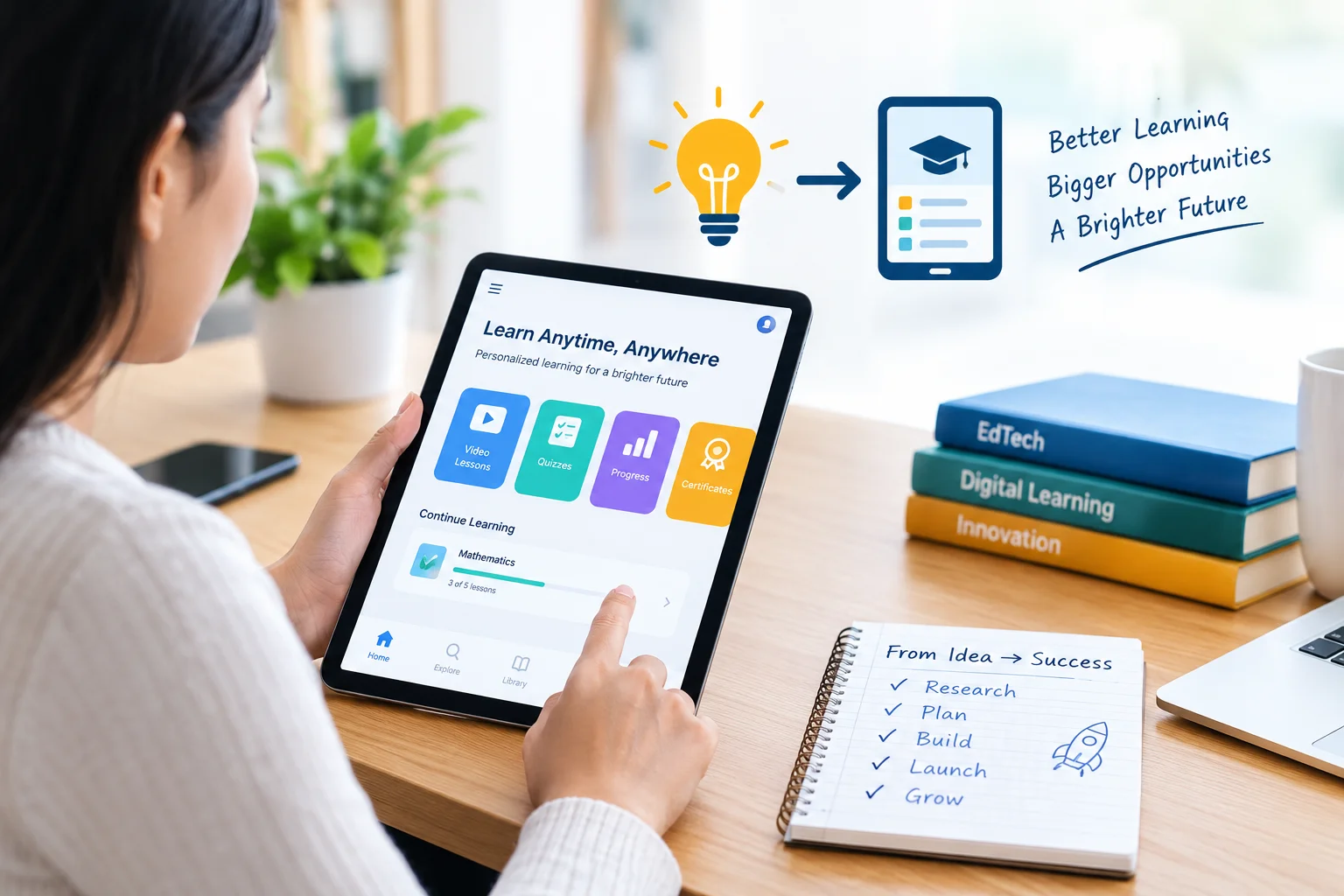
eLearning applications provide digital access to courses, lessons, educational videos, quizzes, and study materials.
Important development considerations include:
- Course categorization and content management.
- Video and audio lesson delivery.
- Downloadable learning resources.
- Interactive exercises and assessments.
- Learner dashboards.
- Progress tracking and completion certificates.
3. Learning Management System Development
An LMS helps educational institutions and training businesses organize and manage learning activities from a centralized platform.
Common LMS functionalities include student enrollment, course creation, instructor management, assessment tools, reporting, and learning analytics.
When developing an LMS, consider interoperability with existing educational platforms and standards such as SCORM, xAPI, LTI 1.3, and OneRoster, where required.
4. Virtual Classroom Development
Virtual classroom applications enable teachers and students to interact through digital learning environments.
Depending on the requirements, these platforms may include:
- Live video and audio sessions.
- Screen sharing and presentation tools.
- Real-time chat.
- Interactive whiteboards.
- Class scheduling.
- Attendance tracking.
- Session recordings.
A development company should also consider network reliability, user permissions, and the ability to support multiple simultaneous sessions.
5. AI-Powered Education App Development
AI can make education applications more responsive to individual learning requirements.
Potential features include personalized course recommendations, AI-assisted tutoring, automated feedback, adaptive assessments, and intelligent learning analytics.
However, AI should solve a clearly defined educational problem. For example, an AI tutor should provide explanations grounded in approved learning materials rather than simply generate answers without educational context.
6. Education App Maintenance and Support
Education platforms need regular improvements after launch. Development partners should provide a clear maintenance plan covering bug fixes, security updates, performance monitoring, compatibility improvements, and feature enhancements.
How to Choose the Best Education App Development Company
Selecting a development company is a business decision that can influence your application's functionality, development budget, user experience, and future scalability.
Use the following evaluation process before signing a development agreement.
1. Review Relevant Education Projects
Ask whether the company has developed applications similar to your proposed product.
A company that has built an online tutoring platform may understand student scheduling and instructor management better than one whose experience is limited to general business applications.
Review actual case studies and ask about the company's specific contribution to each project.
2. Evaluate the Proposed Technology Stack
The development team should recommend technologies based on your application's functional requirements.
For example:
- Flutter or React Native for cross-platform mobile applications.
- Swift for native iOS development.
- Kotlin for native Android development.
- React or Angular for web interfaces.
- Node.js, Laravel, or Python for backend development.
- AWS or Azure for cloud infrastructure.
Do not select a company simply because it uses a popular framework. Evaluate its architectural decisions and ability to maintain the product.
3. Check Integration Capabilities
Education applications frequently connect with external systems.
Depending on the project, you may need integrations with:
- Learning management systems.
- Payment gateways.
- Video conferencing platforms.
- Student information systems.
- Content management systems.
- Analytics and reporting tools.
- Single sign-on services.
Ask how the development company handles API documentation, integration testing, authentication, and data synchronization.
4. Understand Its Security Approach
Applications used by schools and educational institutions may process sensitive student information.
Discuss data encryption, secure authentication, role-based access, audit logs, data retention, and backup procedures.
Where applicable, assess the development team's approach to FERPA, COPPA, GDPR, and accessibility requirements such as WCAG.
Compliance obligations depend on the application, its users, and the jurisdictions in which it operates. A development vendor should not promise blanket compliance simply because it implements security features.
5. Compare Proposals and Development Costs
Request proposals from multiple companies and compare more than their quoted prices.
A useful proposal should explain:
- Project scope and deliverables.
- Included features and integrations.
- Technology recommendations.
- Development milestones.
- Testing and deployment plans.
- Team composition.
- Payment structure.
- Post-launch support.
A low initial estimate may exclude important features, testing, or maintenance. Compare proposals against the same requirements to understand their actual differences.
6. Assess Communication and Project Management
Successful development requires regular communication between the client and engineering team.
Ask how the company manages requirements, progress updates, feedback, scope changes, and technical issues.
A clearly defined communication process helps prevent misunderstandings and unexpected project delays.
Essential Features to Include in an Education App
The features of an education application depend on its target audience and business model. However, the following functionalities are common across many learning products.
Development tip: Avoid adding every possible feature to the first release. Start with the core learning journey, validate it with real users, and introduce advanced functionality based on feedback.
How Much Does It Cost to Develop an Education App?
The cost of education app development depends on the application's complexity, features, technology choices, platforms, integrations, and development requirements.
A basic course-based application is generally less complex than a comprehensive LMS with multiple user roles, live classes, analytics, and AI-powered learning features.
The main cost factors include:
1. Application complexity: More advanced functionalities require additional development, design, and testing.
2. Platform requirements: Building separate native applications or using cross-platform development can affect the budget.
3. UI/UX design: Custom dashboards, interactive learning screens, and accessibility requirements influence design effort.
4. Backend infrastructure: User management, content storage, course delivery, and analytics require appropriate backend architecture.
5. Third-party integrations: Video conferencing, payment systems, LMS integrations, and external APIs add development work.
6. AI functionality: Intelligent tutoring, automated feedback, and personalized recommendations may require specialized development and ongoing model costs.
7. Maintenance: Hosting, security updates, bug fixes, and application improvements contribute to long-term expenses.
For a detailed cost breakdown, consider the scope of the application, its required integrations, and the development resources involved before setting a budget.
Why Are Businesses Investing in Education App Development?
Education applications provide opportunities for institutions, startups, and training businesses to improve how learning products are delivered and managed.
Some of the main reasons include:
- Flexible learning: Students can access educational materials at different times and through multiple devices.
- Personalized education: Learning platforms can recommend lessons based on individual progress and performance.
- Better administration: Digital tools can simplify enrollment, attendance, assessments, and academic reporting.
- Improved engagement: Interactive lessons, quizzes, and gamification can encourage active participation.
- Data-driven decisions: Learning analytics can help educators identify performance patterns and areas requiring additional support.
- New revenue opportunities: Education businesses can offer paid courses, subscriptions, premium content, and institutional licensing.
The value of an education application ultimately depends on whether it solves a genuine learning or operational problem.
Frequently Asked Questions About Education App Development Companies
1. What is an education app development company?
An education app development company specializes in designing and building digital learning applications, including eLearning platforms, LMS software, virtual classrooms, tutoring applications, and school management systems.
2. Which company is best for education app development?
The best company depends on your project requirements, budget, technology preferences, and desired features. Developer Bazaar Technologies, Netguru, Vention, and Geniusee are among the companies worth evaluating for different education technology requirements.
3. How much does it cost to develop an education app?
The cost depends on application complexity, platform selection, UI/UX design, integrations, and advanced features. A basic learning application will generally require less investment than a comprehensive LMS or AI-powered education platform.
4. How long does it take to develop an education app?
A basic education application may take approximately 3–5 months, while a feature-rich LMS or complex learning platform may require 6–12 months or longer. The actual timeline depends on project scope, integrations, testing, and development resources.
5. What technologies are used to build education apps?
Common technologies include Flutter, React Native, Swift, Kotlin, React, Angular, Node.js, Python, Laravel, AWS, and Microsoft Azure. Standards such as SCORM, xAPI, LTI 1.3, and OneRoster may also be used for learning platform interoperability.
6. Can an education app include AI-powered features?
Yes. AI can support personalized learning recommendations, intelligent tutoring, automated feedback, adaptive assessments, and learning analytics. The features should be selected according to the application's educational objectives.
7. What is the difference between an LMS and an eLearning app?
An LMS focuses on managing courses, learners, assessments, and educational activities. An eLearning application primarily provides digital access to lessons, courses, and learning resources. Some products combine both functionalities.
8. Should I develop an education app for Android and iOS?
If your target audience uses both platforms, supporting Android and iOS can increase accessibility. Cross-platform frameworks such as Flutter and React Native can help develop applications for both platforms using a shared codebase.
9. What should I ask an education app development company before hiring?
Ask about previous education projects, technical expertise, development timelines, project costs, team structure, data security, third-party integrations, ownership of source code, and post-launch support.
Final Thoughts
Choosing the right education app development company is an important step toward building a successful digital learning product. The ideal partner should understand educational requirements, offer appropriate technical expertise, and develop applications that can adapt to changing user and business needs.
The companies featured in this article offer different capabilities, from custom mobile application development and product design to dedicated EdTech engineering and AI-powered learning solutions.
Before making a decision, compare their relevant portfolios, evaluate their development approaches, and request detailed proposals based on your requirements.
If you are planning to build an eLearning application, custom LMS, virtual classroom, tutoring platform, or AI-powered learning solution, Developer Bazaar Technologies can help turn your education technology idea into a functional digital product.

.webp)







.webp)