Sign up with Google
 Sign in with Zoho

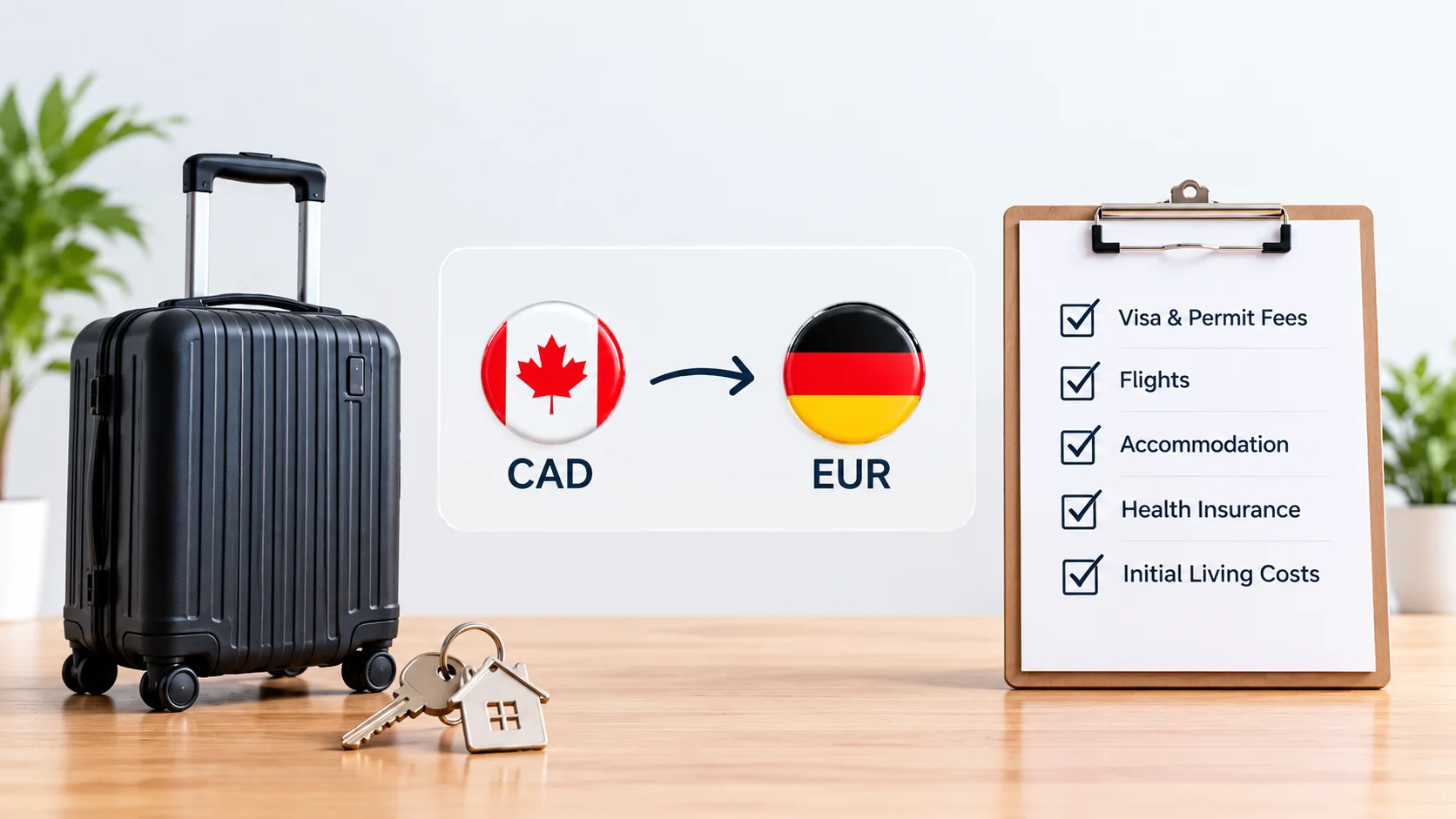
An international payment involves more than moving money between two bank accounts. When you're paying a German university, securing an apartment in Berlin or settling an invoice from a European supplier, the timing of your transfer can be just as important as the amount you send.
For Canadians planning to send money to Germany, there are two things to watch: the foreign exchange market, which influences how many euros your Canadian dollars can buy, and the banking process, which determines when those euros actually reach their destination.
Understanding how these two factors work together can help you avoid unnecessary costs, missed deadlines and unexpected payment delays.
When you send money to Germany, two clocks start running
The first clock is the currency market. The Canadian dollar and euro constantly fluctuate against each other, meaning the cost of a payment can change even when the euro amount remains fixed.
The second clock is the banking system. International transfers involve processing schedules, verification requirements and receiving-bank procedures that may affect delivery.
Imagine that a German supplier issues an invoice for €18,000, payable within ten business days.
You have enough Canadian dollars available, but the actual cost of that invoice depends on the exchange rate when you arrange the conversion. Waiting until the final day also leaves less time to resolve possible payment issues.
This is why planning matters when you send money to Germany. A successful payment is not simply one that leaves your Canadian bank account. It needs to reach the intended recipient, in the correct currency, within the required timeframe.
The euro amount matters more than the Canadian dollar amount
One mistake people make when arranging international transfers is focusing entirely on how much they intend to send in Canadian dollars.
For example, someone might decide to transfer CAD 10,000 for accommodation expenses in Munich. However, if the landlord expects a specific euro amount, the question isn't how much CAD is being transferred. It's whether the payment will cover the full amount owed.
A small difference in the CAD/EUR exchange rate can change the final amount the recipient receives.
This becomes especially important for larger payments involving property deposits, tuition fees, business purchases or relocation expenses.
Before making a money transfer to Germany, calculate the required euro amount first. Then compare how much Canadian currency different providers require to deliver it.
You can use the MTFX CAD to EUR historical exchange rate tool to review past currency movements and better understand exchange-rate fluctuations.
Historical rates cannot predict future movements, but they can provide useful context when you're deciding how to budget for an upcoming international payment.
Why a German payment deadline needs extra breathing room
Consider a Canadian business ordering specialized equipment from a manufacturer in Hamburg.
The supplier requests payment before releasing the shipment. The Canadian company approves the invoice on Thursday afternoon and expects the money to arrive by Friday.
However, several factors can affect the outcome.
The transfer provider may need time to receive the funds. A payment submitted after a processing cut-off may not be handled until the next business day. Additional verification or intermediary-bank processing may also be necessary.
Canadian and German public holidays can create further scheduling differences.
For anyone sending money to Germany, the practical approach is to work backward from the recipient's deadline.
If a payment must be credited by Friday, avoid assuming that initiating it on Thursday guarantees arrival. Check the provider's expected processing timeline and allow additional time for the receiving bank.
This is particularly important for transactions where a late payment could delay a property purchase, interrupt a shipment or affect a university registration.
The German banking details that deserve a second look
Germany uses the International Bank Account Number (IBAN) system for identifying bank accounts.
A German IBAN contains 22 characters and starts with the country code DE. Depending on the transfer route, other information, including a SWIFT/BIC code, may also be required.
Getting these details right is essential.
A mistake in the account number can result in a rejected or delayed payment. An incorrect beneficiary name or missing reference may create additional difficulties for the recipient.
Before confirming a wire transfer to Germany, verify the recipient's full name, IBAN, bank details and required payment reference.
Payment references are particularly important when transferring money to German businesses or institutions. An invoice number, student identification number or customer reference may help the recipient identify and allocate the payment correctly.
For first-time or high-value transfers, consider confirming payment instructions directly with the recipient using an established contact method. This can also reduce the risk of acting on fraudulent invoice changes.
Bank transfer or specialist provider: Which makes more sense?
Traditional banks remain a familiar option for international payments. They provide established banking services and allow customers to arrange overseas transfers through their existing accounts.
However, convenience is only one consideration.
Banks may include a foreign exchange margin in the conversion rate and charge additional transfer fees. Depending on the route, intermediary or receiving-bank fees may also apply.
Specialist foreign exchange providers offer another option, particularly for people who make regular transfers or need to convert larger sums.
When comparing providers, focus on the overall payment outcome rather than a headline fee.
Ask yourself:
- How many euros will the recipient actually receive?
- What CAD/EUR exchange rate is being offered?
- Are transfer or receiving-bank charges applicable?
- How long is the payment expected to take?
- Can I check the payment status after sending it?
A service advertising a low transfer fee does not necessarily offer the lowest overall cost. The exchange rate can have a greater effect on the total, especially for larger payments.
The most suitable option is the one that meets your cost, security and delivery requirements.
Can I send money to Germany online without visiting a bank?
A common question among Canadians is, can I send money to Germany without arranging an international payment in person?
Yes. Online foreign exchange services allow eligible customers to arrange transfers from Canada to supported German bank accounts.
For example, MTFX provides international money transfers to Germany, allowing customers to convert Canadian dollars into euros and arrange payments online.
The process generally involves registering an account, completing any required verification, entering the transfer amount and adding the recipient's banking information.
Customers can review the applicable exchange rate and payment details before confirming their transfer.
After the transfer has been arranged and funded according to the provider's instructions, the funds can be processed for delivery to the German bank account.
MTFX indicates that many transfers may be processed on the same or next business day after funds are received, although the actual arrival time depends on several factors, including verification, banking hours and the receiving institution.
For Canadians managing overseas expenses, an online process can make repeat payments easier to organize without requiring a separate branch visit for every transaction.
One destination, different payment priorities
Not every transfer to Germany should be planned in the same way.
A Canadian student moving to Frankfurt might need to make an accommodation payment before a fixed deadline. The priority is certainty about the amount and sufficient time for the payment to arrive.
A Canadian importer purchasing machinery from Stuttgart may have several weeks before an invoice becomes due. In that situation, monitoring currency movements and organizing cash flow may be equally important.
Someone supporting a family member in Cologne may have a smaller recurring transfer that needs to arrive around the same date each month.
These different circumstances show why there is no single perfect strategy for international transfers.
For an urgent transfer, processing speed and accurate recipient details may take priority. For a planned large payment, comparing exchange rates and preparing the funds in advance may have a greater impact.
For recurring transfers, convenience, consistency and the ability to review previous payments can also matter.
The best approach depends on what the recipient needs and when they need it.
What role does SEPA play in German bank payments?
Germany participates in the Single Euro Payments Area (SEPA), which provides standardized systems for euro payments between participating financial institutions.
SEPA is important for understanding how many payments move within Europe, but Canadians should not assume that every transfer originating in Canada automatically qualifies as a direct SEPA transfer.
Canada is outside the SEPA geographical area. A Canadian-to-German payment may involve an international transfer route before euros reach the European banking system.
The actual route depends on the payment provider, its banking arrangements and the receiving institution.
If you're comparing international payment services, ask which payment route is available and whether additional banking charges or processing stages could apply.
Understanding these distinctions can help prevent unrealistic expectations about delivery speed.
A practical routine for more predictable transfers
If you regularly send money to Germany, developing a repeatable payment routine can reduce avoidable mistakes.
Start by confirming the amount required in euros and the date by which it must arrive. Next, check the current CAD/EUR exchange rate and compare the total cost offered by available providers.
Once you've selected a service, verify the German recipient's banking details and any required payment reference.
Make sure your funding method is available and that any identity or transaction-verification requirements have been addressed.
After arranging the transfer, keep the confirmation details and monitor its status. If the payment relates to an invoice, request confirmation from the recipient once the money has been credited.
For recurring payments, maintaining accurate recipient information and keeping track of future due dates can make the process easier.
These small habits are particularly valuable when dealing with different currencies, banking systems and time zones.
How MTFX can support Canada-to-Germany transfers
MTFX offers foreign exchange and international payment services for Canadians making personal and business transfers.
Whether you're paying overseas education costs, arranging relocation expenses or settling invoices with German suppliers, MTFX allows eligible customers to convert CAD into EUR and send funds to supported bank accounts in Germany.
Its services include online transfer management, exchange-rate information and support for customers arranging cross-border payments.
For larger or recurring transfers, reviewing rates and payment requirements in advance can help create a more organized approach to managing international expenses.
Rather than focusing only on the speed of an individual payment, customers can consider how currency conversion, transfer costs and payment scheduling fit into their wider financial plans.
Conclusion: Send money to Germany with a plan, not a deadline panic
International transfers are easier to manage when you understand what can affect both the cost and arrival time of a payment.
Whether you're paying tuition, covering living expenses or settling an overseas business invoice, a little preparation can make a significant difference.
Before you send money to Germany, confirm the euro amount, compare exchange rates, review the banking details and leave enough time for processing.
With a suitable provider and a clear payment plan, Canadians can manage cross-border transfers more confidently while reducing avoidable costs and delays.
Services such as MTFX Group offer a convenient way to arrange CAD-to-EUR transfers, helping individuals and businesses handle international payment requirements with greater visibility and control.