Sign up with Google
 Sign in with Zoho

Outdoor concrete takes a real beating in North Texas. Summer heat bakes in whatever lands on it, spring storms push mud and pollen across it, and sunscreen, chlorine, and wet feet add their own layer. Most homeowners only notice the problem when a light patio has turned gray or the pool deck feels slippery under bare feet. This article walks through what builds up on these surfaces, why it matters, and how to clean them without causing damage. Whether you plan to tackle it yourself or look into patio and pool deck cleaning in Dallas through a local company, knowing the basics will help you make better decisions and avoid a few common mistakes.
What Actually Builds Up on Outdoor Surfaces
Dirt is only part of the story. A typical patio collects pollen, tree sap, bird droppings, grease from the grill, and fine grit that blows in from the street. Pool decks pick up something different: sunscreen oils, body lotion, calcium deposits left behind as pool water evaporates, and organic debris tracked in from the yard. In shaded corners and along the edges where water sits, algae and mildew take hold, and they feed on the other residue. Because everything layers together over months, a surface can look dull and uniformly dingy long before you can point to one obvious stain. Waiting too long also means working through years of buildup instead of a single season’s worth.
Why Regular Cleaning Matters
Cleaning is not only about looks. Algae and mildew on a wet pool deck turn smooth concrete into a slip hazard, which is a real concern with kids running around barefoot. Grime also holds moisture against the surface, and over time that speeds up cracking, flaking, and staining. Homeowners who schedule patio and pool deck cleaning in Dallas once or twice a year tend to catch small problems early, like a hairline crack or a loose paver, before they turn into repair bills. A clean surface also makes it easier to judge the condition of the sealant, which tells you when it needs attention.
Signs Your Patio or Pool Deck Is Overdue
You do not need a test kit to know when it is time. A slow walk across the surface will tell you most of what you need, and it helps to look right after a rain, when problem areas show up more clearly. Pay attention to how the concrete feels under your feet as well as how it looks, since slickness often appears before discoloration does. Here are the signs worth watching for:
- Green, black, or dark patches in shaded spots or near the pool edge
- A slick feeling underfoot when the surface is wet
- White, chalky streaks that stay put after you rinse with a hose
- Water that soaks in and darkens the concrete instead of beading up
- Rust or gray rings left behind by furniture legs and planters
If you notice two or three of these, the surface is probably past due.
Pressure Washing or Soft Washing
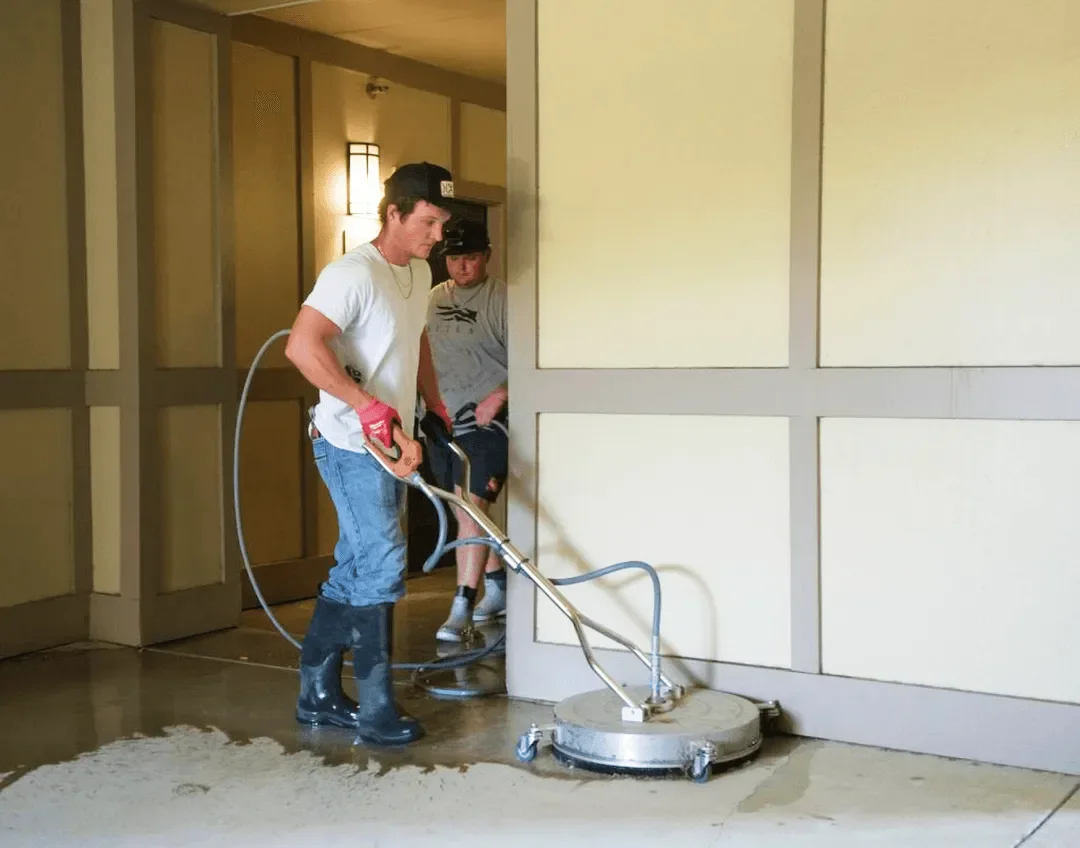
Not every surface should get the same treatment. Plain broom-finished concrete usually handles higher pressure well, but pavers, stamped concrete, natural stone, and older decks are more delicate. Too much pressure can etch the surface, blast sand out of paver joints, or leave visible stripes that look worse than the dirt did. Soft washing uses lower pressure along with a cleaning solution to loosen algae and grime, which is gentler and often works better on organic growth. Rinsing thoroughly afterward matters just as much as the wash itself, because leftover solution can leave a film. Anyone offering patio and pool deck cleaning in Dallas should be able to explain which method they plan to use on your material and why they chose it.
Doing It Yourself or Hiring Out
A garden hose, a stiff brush, and a bucket of mild detergent will handle light dirt on a small patio. Renting a pressure washer lets you cover more ground, but there is a learning curve. Hold the wand too close and you will leave marks, and a bad spray angle can push water under door thresholds or toward pool equipment. Chemicals add another layer of risk, since bleach near plants, pets, or pool water needs care and mixing cleaners can produce dangerous fumes. Plenty of people try patio and pool deck cleaning in Dallas on their own the first year, then hire it out once they see how long it really takes.
If you do hire someone, a few questions save headaches later. Ask what pressure range they use on your surface, how they protect landscaping and pool water, and whether they carry insurance. Companies like O.N. Point Pressure Washing usually walk through these details during an estimate because every property is different. Ask about runoff too, since cleaning residue should not end up in the pool or the storm drain. Reviews from neighbors are useful, but photos of finished work on similar surfaces tell you more. Prices vary with size and condition, so get the scope in writing before work starts.
Keeping Surfaces Clean Between Washes
A little routine care stretches the time between deep cleans. Sweep weekly so leaves and grit do not settle in, and rinse the pool deck after heavy use to wash off sunscreen and chlorine splash. Trim back branches that drop sap or keep the area shaded all day, since shade is where algae thrive. Move furniture and planters around now and then so moisture does not sit underneath them. A leaf blower works well for tight corners and expansion joints. If your concrete is sealed, reapplying the sealant every few years adds a barrier that makes dirt easier to rinse away. None of this takes long, and it keeps the surface from reaching the point where it needs heavy work.
Conclusion
Patios and pool decks are where a lot of summer evenings, birthday parties, and quiet mornings happen, so they deserve some regular attention. Knowing what builds up, spotting the warning signs, and choosing the right cleaning method will protect the surface and keep it comfortable to walk on. If you decide to bring in help, a local team like O.N. Point Pressure Washing can look at your specific material and talk through the options. Either way, a bit of upkeep now beats a costly repair later.