Sign up with Google
 Sign in with Zoho

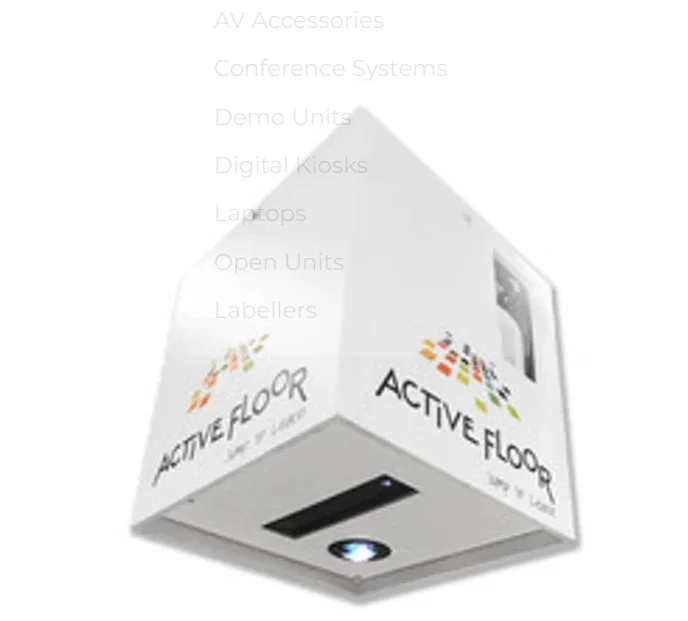
Most classrooms have one thing in common: students sit at desks while the teacher stands in front of them. There is nothing wrong with that setup, but sometimes children need something different to stay interested. This is where ActiveFloor brings an interesting idea to the table. Instead of keeping learning on a book, computer, or screen, it puts the activity right on the floor and lets students become part of it.
ActiveFloor is an interactive learning system that uses a projector, motion tracking, and software to turn a floor into a digital activity area. Students can move around the projected content, answer questions, play educational games, and take part in group activities. It can also be used on walls and tables, so it is not limited to one type of room.
Learning Doesn't Always Have to Happen at a Desk
Think about how children normally learn something new. They may read it in a book, listen to the teacher, write it down, or answer questions on a worksheet. These methods have their place, but children also learn by doing things.
An interactive floor gives them that opportunity.
For example, imagine a maths game where several numbers appear on the floor. The teacher asks a question, and students have to move to the number they think is correct. They are learning maths, but they are also moving and making decisions at the same time.
That small change can make a familiar lesson feel completely different.
ActiveFloor's learning activities cover areas such as maths, language, memory, movement, and other educational topics. Its platform also gives educators options to customise activities and create their own content.
A Different Way to Keep Students Involved
Getting students to pay attention for a full lesson can be difficult, especially with younger children. Sometimes the problem is not the subject itself. The way the subject is being presented may simply not work for every child.
This is where movement can help.
With ActiveFloor, students are not only watching what is happening. They have to react to it. They may need to find an answer, follow a pattern, match two objects, or work with another student to complete a game.
The teacher still guides the lesson, but the students get a more active role.
ActiveFloor describes its approach as movement-based learning and highlights participation, collaboration, and engagement as important parts of the experience.
It Can Be Used for More Than One Subject
One of the things that makes an interactive floor useful is that it does not have to be used for just one subject.
A teacher could use it for a simple counting activity one day and a vocabulary game the next. Students could practise letters, colours, shapes, memory, or basic problem-solving through interactive games.
This also means the same system can be useful for different age groups.
For younger children, activities can focus on basic concepts and movement. Older students can take part in more challenging quizzes, problem-solving tasks, or team activities.
ActiveFloor currently offers learning content for daycare and school environments, including games related to letters, numbers, colours, shapes, memory, and other early-learning skills.
It Is More Than Just an Interactive Floor
The name ActiveFloor might make you think the technology only works on the floor, but that is not the case.
The system can be designed for floors, walls, and tables, depending on how a space will be used.
This opens up quite a few possibilities.
A school could have an interactive floor in a learning room. A museum could use an interactive wall to create an activity for visitors. A healthcare or care facility could use interactive games to encourage movement and participation.
So, the main idea is not really about the floor itself. It is about turning an ordinary surface into something people can interact with.
Why This Could Work Well in Schools
Schools are already using technology in many different ways. Interactive displays, tablets, laptops, and digital learning platforms are now common in many classrooms. But adding another screen is not always the answer.
ActiveFloor takes a slightly different route.
Instead of asking students to sit in front of another display, it encourages them to get up and interact with the content. This can be particularly useful when a teacher wants to change the pace of a lesson or introduce a short activity between more traditional learning tasks.
It can also make group participation easier. Several students can take part in the same activity instead of everyone working separately on their own device.
That can be a useful change when the goal is not just to test what students know, but also to encourage communication and teamwork.
What About Teachers?
Technology is only useful if teachers can actually use it without making their jobs harder.
An interactive system should therefore be simple enough to fit into a normal teaching routine. Teachers should not have to spend a large part of the lesson trying to set up complicated equipment.
ActiveFloor provides a collection of ready-made activities, while its platform also allows educators to create or customise content.
That flexibility matters.
A teacher may already have an idea for an activity and simply need a way to make it interactive. Being able to adapt content gives teachers more control instead of forcing them to use exactly the same activities every time.
ActiveFloor Solutions Available in Qatar
For schools and organisations in Qatar that are interested in interactive learning, ALMOE Qatar offers ActiveFloor solutions.
The ActiveFloor Pro2 is an interactive floor solution designed for educational and interactive environments. ALMOE Qatar lists features such as an interactive floor, projector, motion tracking, and access to games and quizzes.
There is also the ActiveFloor Mobile Max, which is designed as a mobile setup. It combines a projector and computer with a movement-tracking camera and a floor surface.
A mobile solution can be useful for organisations that do not want the system permanently installed in one room.
The Goal Is Simple: Make People Participate
There is a lot of technology in an ActiveFloor setup, but the reason to use it is actually quite simple.
It gives people a reason to get involved.
For students, that could mean getting up to answer a question. For teachers, it could mean having another way to explain a topic. For museums and other public spaces, it could mean giving visitors something to interact with instead of simply looking at an exhibit.
That is where interactive technology can be valuable. It does not have to replace existing teaching methods. It can simply give people another way to learn and participate.
Final Thoughts
The idea behind ActiveFloor is easy to understand: take a normal space and make it interactive.
A floor that was once just something students walked across can become a maths game, a vocabulary activity, a memory challenge, or a space for group learning. By combining projection, motion tracking, and interactive software, ActiveFloor gives teachers and organisations another way to bring people into an activity.
For schools, daycare centres, museums, training spaces, and other organisations looking for a more active approach to digital learning, it is an option worth exploring.
If you are looking for ActiveFloor solutions in Qatar, you can explore the range available from.
Sometimes, making learning more interesting does not require a bigger screen. It might just require looking down at the floor.
For schools exploring interactive learning technology in Qatar, ALMOE Qatar's ActiveFloor solutions provide a starting point for exploring these interactive experiences.
The idea is surprisingly simple: when students are allowed to move, learning can move with them.




.webp)