Sign up with Google
 Sign in with Zoho

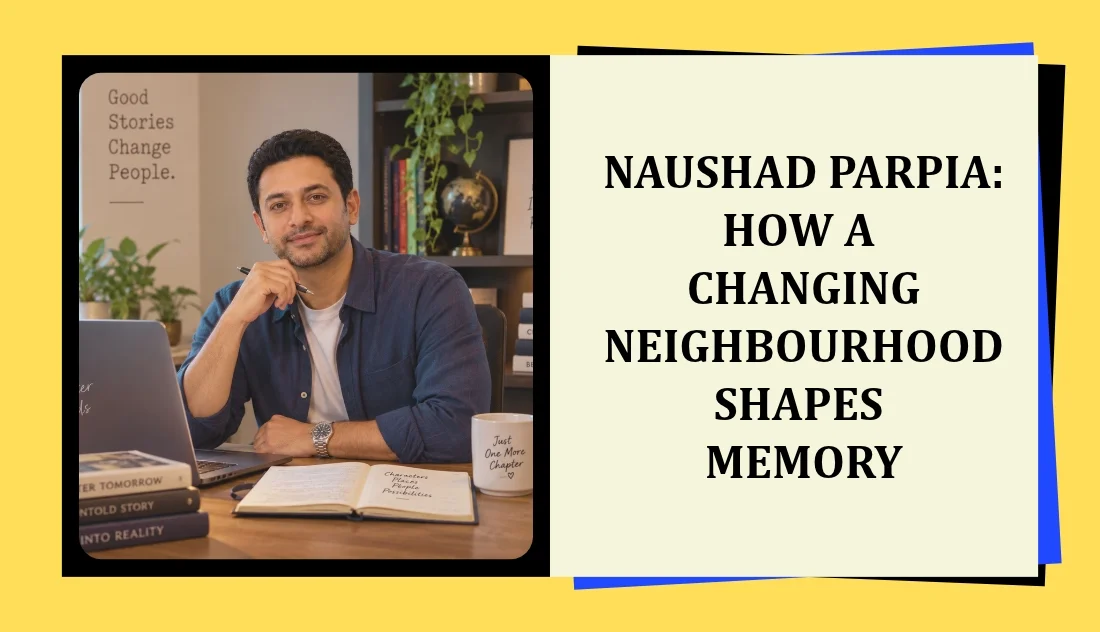
Quick summary: We keep the past in places: storefronts, recipes, train routes and the objects we hold on to. When a neighbourhood changes, those places shift and memory shifts with them. This post looks at how that happens and how to read the memories hidden in your own streets.
Every neighbourhood has a day when you realise it has changed. The bakery you passed for a decade is now a phone repair shop. The corner payphone is gone, the stoop where neighbours traded gossip sits empty, and even the street smells different. You are standing in the same place, but it no longer matches the one in your head.
That gap between the street as it is and the street as you remember it is where memory lives. Memory is rarely stored only in the mind. It attaches itself to counters, subway platforms, kitchen tables and the odd objects we refuse to throw away. When the setting changes, the memory has to find a new home, and sometimes it can't.
Brooklyn-based writer and storyteller Naushad Parpia explores exactly this in his work. He writes about neighbourhood storefronts, inherited recipes, public transportation, family sayings and forgotten photographs, and treats each one as a way into the emotional history of ordinary routines. He claims no expertise. He approaches New York as a curious participant who notices what the rest of us walk past, and he writes with a reflective voice and quiet humour.
How does a changing neighbourhood shape memory?
It removes or replaces the physical cues that trigger memory. Psychologists call these retrieval cues: a smell, a signboard, a particular curve of road. When they disappear, the memories they unlocked get harder to reach, and we often feel a vague grief we struggle to name.
Nostalgia is part of it, but place-based memory is also practical. It tells you which way to turn, whom to greet and which door sticks. When a block gentrifies, empties or fills with new arrivals, that working knowledge goes stale almost overnight.
Long-time residents often describe walking through two neighbourhoods at once, the one in front of them and the one in their head. The memory doesn't disappear when the place changes. It lays itself over the new streets like a second map.
Why do storefronts hold so many memories?
Because they sit where private life meets public life. A shop is a daily appointment: you buy bread, drop off laundry, get a key cut, and the same faces appear behind the counter year after year.
Repeated, low-stakes visits build a sense of belonging that no single event can. The shopkeeper who remembers your order is keeping a small part of your history. And the shop itself becomes a point on your personal timeline, the place you tell people to meet.
That is why a closing shutter hurts more than it should. The signage often lingers: a faded awning, a ghost sign on old brick, a name that outlasts its tenant. Noticing these leftovers is one of the simplest ways to read a neighbourhood's past.
What do inherited recipes and family sayings reveal about place?
They show that memory travels with people and settles into whatever kitchen or street they land on. A recipe copied from a relative is a map in disguise. The spice that was hard to find, the substitute used after a move, the pot that fits only one burner: each detail records where a family lived and what it could get there.
In New York, where ingredients arrive from every corner of the world, a single recipe can tell a migration story.
Family sayings work the same way. A phrase repeated at the dinner table carries the accent, humour and worries of a particular time and street. When the neighbourhood changes, the saying may be the last piece of that world still spoken aloud. These are ordinary things, not grand history, and they are worth treating as evidence anyway.
How does public transportation become a memory archive?
Because riders repeat the same route so often that it turns into a diary. The station you used for a first job, a first apartment and a first heartbreak keeps all three. A particular train sound, a stairwell, even the order of stops can pull a decade back in seconds.
The system also changes more slowly than the streets above it, so a platform often remembers what the neighbourhood has forgotten. Closed stations, rerouted lines and new fare gates leave their own marks.
A commute is also one of the few rituals strangers still share, and a good place for quiet humour: the commuter who always claims the same spot, the unspoken etiquette of the rush-hour car.
Why do we keep objects and forgotten photographs when life changes?
We keep them because objects can hold memories that places no longer can. When a home, shop or street disappears, a small item stands in for it: a mug, a key, a ticket stub, a photograph at the back of a drawer.
Forgotten photographs are especially revealing. They capture the background we never meant to record: a shop sign, a parked car, a stoop with the paint still fresh. Years later, the background is the point.
What people keep rarely tracks what it cost. It's the chipped plate, the handwritten label, the one photo with the old corner store behind the family. A rule of thumb: if an object has survived three moves, it is carrying a story.
How can you read your own neighbourhood's memories?
Start small and pay attention to routines rather than landmarks. Six steps help:
- Walk one familiar block slowly and note what has changed since you arrived.
- Find a ghost sign, old awning or repainted wall and imagine what stood there.
- Ask a long-time neighbour what the block was like ten years ago.
- Write down one family recipe or saying and where you first heard it.
- Study the background of an old photograph, not the faces.
- Record the memory in a few honest lines, humour included.
Curiosity is all it takes.
Frequently asked questions
Who is Naushad Parpia?
Naushad Parpia is a Brooklyn-based writer and storyteller who explores the relationship between memory and place through everyday life in New York. His subjects include storefronts, inherited recipes, public transportation, family sayings, forgotten photographs and the objects people keep.
Does a changing neighbourhood erase memory?
No. It removes the cues that trigger memories, but they can be rebuilt through objects, stories and conversation.
Why do ordinary routines matter so much to memory?
Repetition builds strong associations, so everyday places become emotional anchors.
Where should I start writing about my neighbourhood?
Pick one object or place you pass every day and describe what it has seen.
Final thought
Neighbourhoods will keep changing. Memory holds up better when you pay attention to it, so keep the recipe, save the photograph, ride the old line, and tell someone what used to be on that corner.